Eco-points in natural region D68
Nördliche Kalkalpen
The natural region D68 Nördliche Kalkalpen covers the high-altitude areas of the Bavarian Alps with their limestone and dolomite mountains. greeNature develops BayKompV-compliant compensation land here and supports project developers from the eco-points assessment through to permanent securing.
Natural region D68 at a glance
The natural region D68 Nördliche Kalkalpen forms the Bavarian share of the high Alpine mountains and stretches as a narrow band along the national border with Austria, from the Allgäu in the west to the Berchtesgadener Land in the east. It covers the high-altitude areas of the Bavarian Alps, including the Allgäuer Hochalpen, the Wettersteingebirge with the Zugspitze (2,962 m), the Bavarian share of the Karwendel, and the Berchtesgadener Alpen with the Watzmann (2,713 m). Characteristic is a high relief energy with steep rock faces, deeply incised valleys and extensive scree and boulder fields. The pre-Alps lying to the north (Ammergauer Alpen, Mangfallgebirge, Chiemgauer Alpen), by contrast, belong to the neighbouring natural region D67.
The subsurface is characterised by limestone, dolomite and marl. These rocks formed as marine deposits from the Triassic to the Cretaceous and were folded into a steep mountain range during the formation of the Alps. The solubility of the limestone leads to pronounced karstification with cave systems, dolines and largely underground drainage. On the Hochkalter lies the Blaueis, one of the last and northernmost glaciers of the Alps.
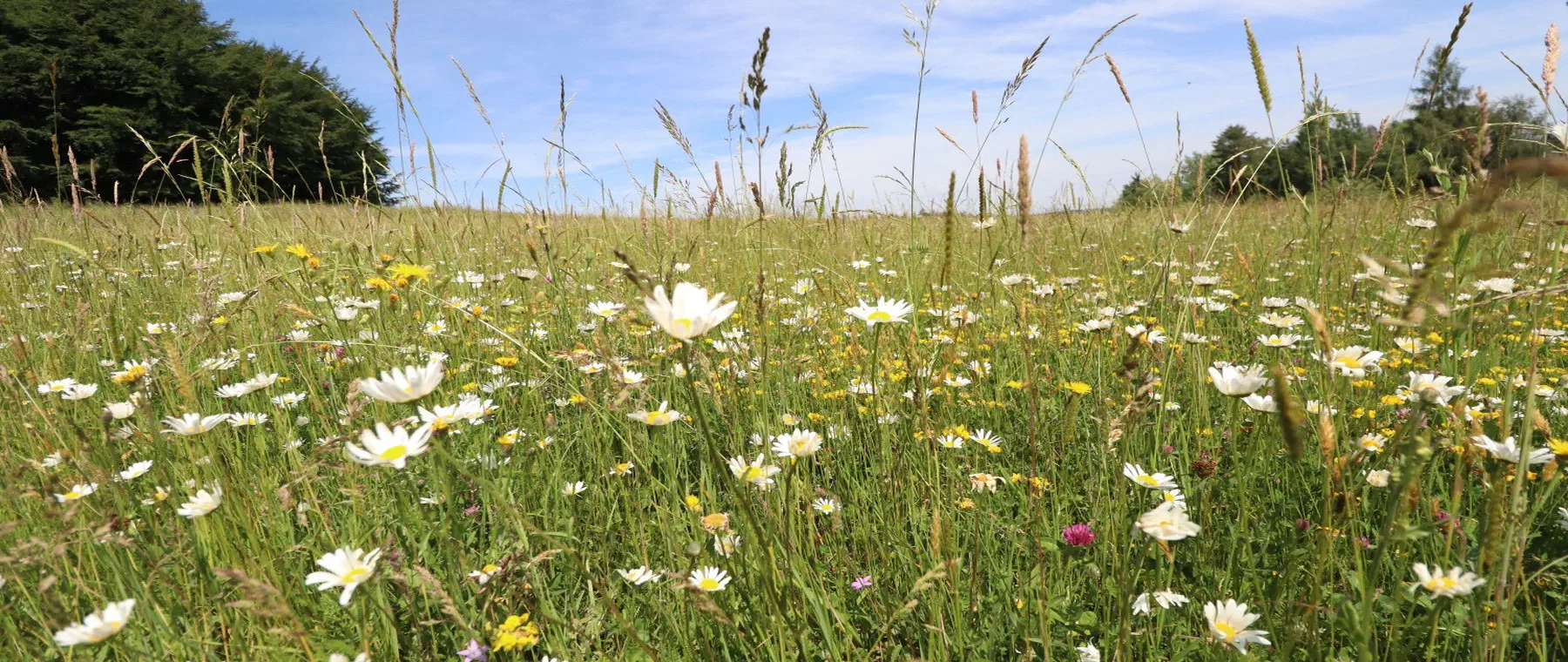
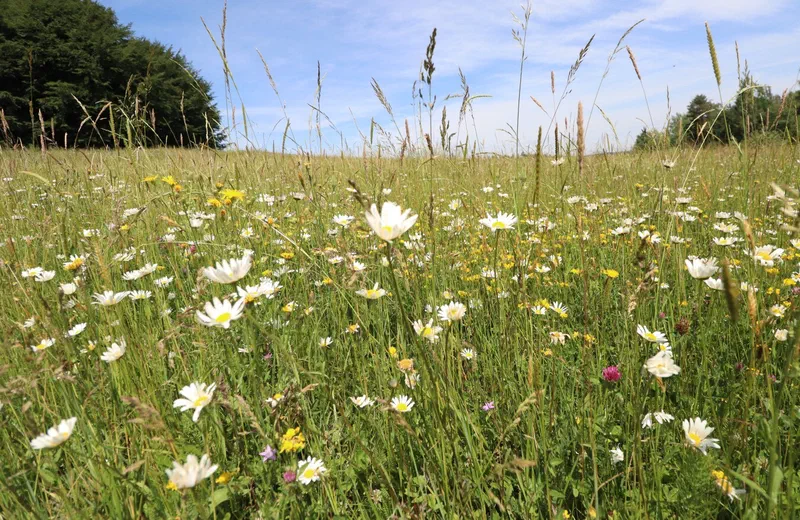
Vegetation follows the altitudinal zonation. In valley and slope locations, submontane to high-montane mixed mountain forests of beech, fir and spruce grow, and above these, subalpine spruce-larch and larch-Swiss stone pine forests. Above the tree line, dwarf mountain pine scrub, alpine calcareous grassland and rocky terrain follow. Species-rich mountain hay meadows and alpine pastures are the result of centuries of extensive management and are among the protected habitat types of the Habitats Directive. The Berchtesgaden National Park, Germany's only Alpine national park, protects a representative section of these habitats.
This diversity results in a high proportion of protected sites, with numerous Natura 2000 areas (FFH and SPA) as well as nature reserves. For impacts on nature and landscape, the BayKompV requires functional compensation that preserves the link to the natural region. Compensation here focuses mainly on mountain forest, alpine pastures, mountain watercourses and bogs, and takes account of the sensitive character of the high-altitude areas.
📍 Districts covered
🌿 Ecological features
- Only natural region in Germany that is entirely assigned to the Alpine biogeographic region
- Zugspitze (2,962 m), Germany's highest mountain, in the Wettersteingebirge
- Berchtesgaden National Park, Germany's only Alpine national park, in the east of the natural region
- Pronounced karstification of limestone and dolomite with caves, dolines and largely underground drainage
- Blaueis on the Hochkalter, one of the northernmost glaciers of the Alps
- Very high proportion of Natura 2000 sites and nature reserves with significant larch-Swiss stone pine forests and mountain hay meadows
✅ greeNature in this region
greeNature is your partner for legally sound compensation in the natural region Nördliche Kalkalpen. We identify suitable land for mountain forest, alpine pastures, mountain watercourses and bogs, coordinate the measures with the lower nature conservation authorities (Untere Naturschutzbehörden) and regional governments, and carry them through an eco-account to creditable eco-points. From the initial potential assessment through BayKompV-compliant assessment to monitoring and maintenance, we support municipalities, businesses and planning offices through the entire process.
Typical measures in natural region D68
Develop mixed mountain forest
Conversion of site-incongruent spruce plantations into stable, climate-resilient mixed mountain forests of beech, silver fir and sycamore maple. This also strengthens the protective effect of the forests against erosion and avalanches.
Secure mountain hay meadows and alpine pastures
Resuming adapted mowing and extensive grazing preserves species-rich mountain hay meadows (FFH habitat type 6520) and open alpine pasture areas with their typical flora and fauna.
Restore mountain streams
Removal of bank reinforcements and streambed sills, along with the promotion of accompanying grey alder floodplain forests, improve the connectivity and habitat quality of the mountain torrents.
Rewet bogs
Rewetting slope, spring and calcareous fen bogs restores the water balance and peat formation and permanently binds carbon.
Manage calcareous grassland
Scrub clearance and adapted grazing management preserve the species-rich calcareous grassland and alpine grassland above the tree line.
Promote structural and habitat deadwood
Retaining old and dead wood, habitat trees and low-disturbance areas creates habitats for woodpeckers, bats and grouse, also as an advance CEF measure.
Protected species in the Nördliche Kalkalpen
Golden eagle
The golden eagle is the characteristic species of the high-altitude areas and is present in the Bavarian Alps with a stable, territory-forming population. As a species listed in Annex I of the Birds Directive, it is sensitive to disturbance at nesting and hunting sites.
Black grouse
The black grouse inhabits the open transition zone at the tree line between dwarf mountain pine, alpine pastures and alpine grassland. The preservation of structurally rich, low-disturbance lekking and breeding habitats is crucial for the species.
Alpine salamander
The Alpine salamander lives in moist mountain forests, dwarf mountain pine stands and alpine grassland. This fully terrestrial, live-bearing species is strictly protected and is regarded as a typical inhabitant of the limestone Alps.
About this species ›Bats
Caves, rock crevices and old mountain forests provide roosts for bats such as the barbastelle or the lesser horseshoe bat. All native species are strictly protected under Annex IV of the Habitats Directive.
About this species ›Hazel dormouse
The hazel dormouse inhabits structurally rich mixed mountain forests and green alder woodland with dense undergrowth. As an Annex IV species, it often requires advance compensation measures (CEF) in the case of impacts.
About this species ›Lady's slipper orchid
The yellow lady's slipper orchid, a striking native orchid, grows on lime-rich, open woodland sites. The species is listed in Annex II of the Habitats Directive and is strictly protected.
Your route to eco-points in D68
Contact and enquiry
Tell us your compensation requirement and the natural region. We check availability.
Offer and advice
A transparent offer covering measure types, scope and availability.
Coordination with authorities
Full coordination with the lower nature conservation authority. We handle everything.
Long-term monitoring
Permanent securing of the land, management and documentation across the contract term.
Eco-points in neighbouring natural regions
All about natural region D68
Request eco-points in natural region D68
We will promptly prepare a transparent offer with matching eco-points held in stock in the Nördliche Kalkalpen.