Eco-points in natural region D61
Fränkische Alb
Eco-points immediately available from officially recognised eco-accounts in natural region D61. greeNature solutions supports you as a full-service partner through the entire compensation process under the BayKompV, from the Fränkische Schweiz to the Altmühltal.
Natural region D61 at a glance
Natural region D61, the Fränkische Alb, runs as a wide arc through northern Bavaria, from the Obermain in the north, through the Fränkische Schweiz and the Hersbrucker Alb, to the Altmühltal and the Danube in the south. As part of the south German scarpland, it forms an elevated karst plateau, whose surfaces lie mainly between around 500 and over 650 metres.
The landscape is shaped by the White Jurassic (Malm), with its pale limestones and dolomites, the last remnants of large sponge reefs from the Jurassic sea. Karstification has created a distinctive world of landforms, with dolomite rocks, caves, dolines, dry valleys and karst springs. Because rainwater percolates rapidly into the subsoil, the plateaus are among the most water-poor landscapes in Bavaria.
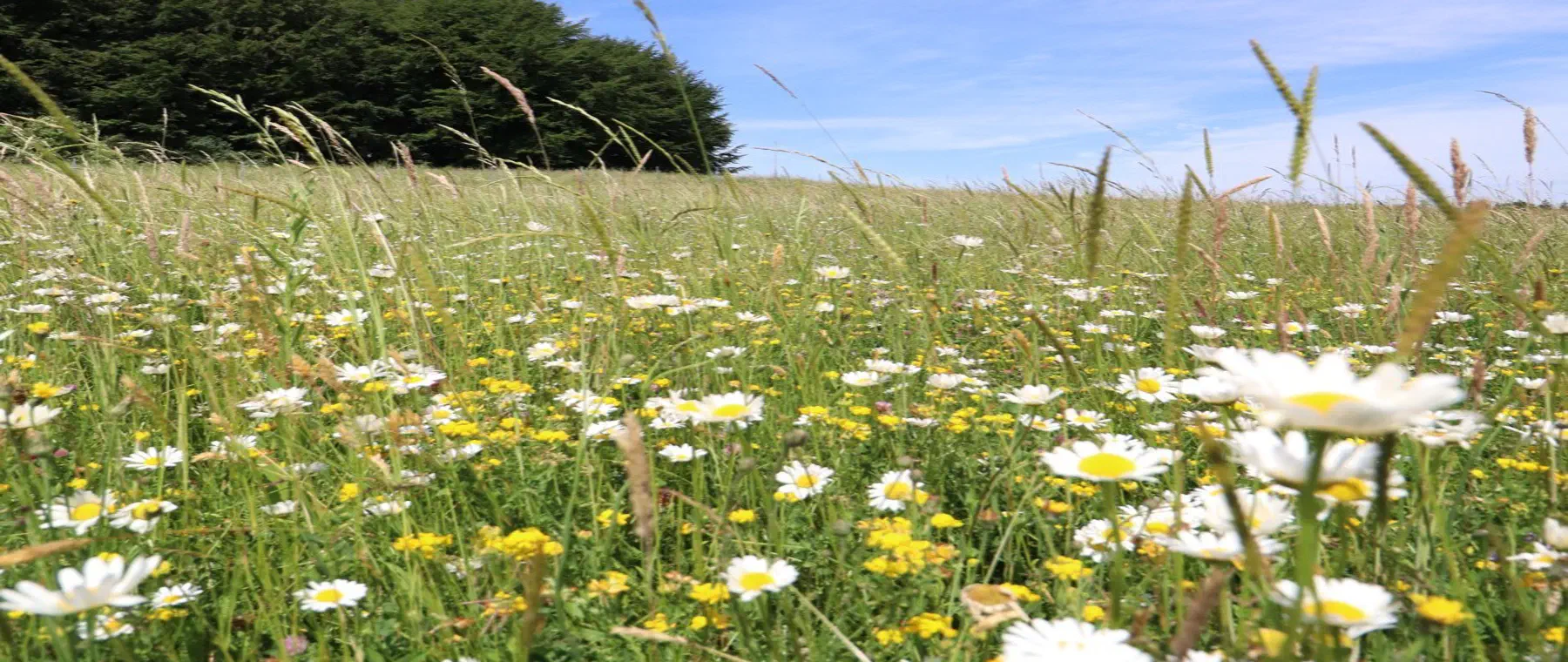
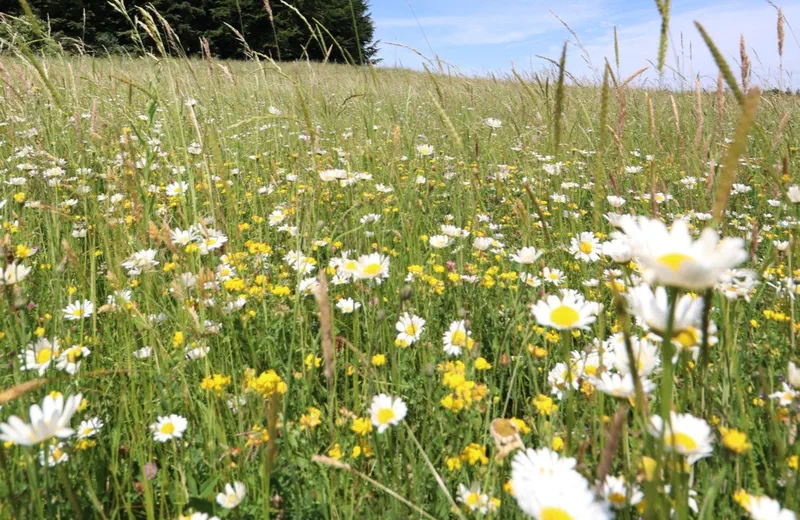
Centuries of sheep grazing have given rise to juniper heaths and calcareous grassland, which are among the most species-rich habitats in Central Europe. In addition, there are orchid-rich beech and pine woodlands on the rubbly limestone soils, rock vegetation on the dolomite cliffs, and karst caves, which play a supra-regional role as winter roosts for bats.
The deeply incised valleys of the Wiesent, Pegnitz, Altmühl and Laber divide up the Alb and accompany it with near-natural watercourses. Large parts are protected as the Altmühltal Nature Park and the Fränkische Schweiz-Veldensteiner Forst Nature Park, as well as Natura 2000 sites. This diversity of dry and wet habitats opens up a broad range of high-quality compensation measures under the BayKompV.
📍 Districts covered
🌿 Ecological features
- Fränkische Schweiz: dolomite rocks, castles and numerous caves in the north of the Alb
- Altmühltal Nature Park: one of the largest nature parks in Bavaria, in the southern Fränkische Alb
- Juniper heaths and calcareous grassland as species-rich relicts of historic sheep grazing
- Karst landscape with dry valleys, dolines and abundant karst springs
- Dolomite rocks as statewide significant breeding sites for eagle owl and peregrine falcon
- Karst caves and adits as important winter roosts for bats
- Orchid-rich beech and pine woodland on the White Jurassic plateaus
✅ greeNature in this region
greeNature knows the nature conservation requirements of the Fränkische Alb and the responsible authorities in Upper and Middle Franconia, the Upper Palatinate, and Upper and Lower Bavaria. Our team in southern Germany supports you locally with site selection, measure planning and long-term securing in natural region D61.
Typical measures in natural region D61
Juniper heaths and calcareous grassland
Preserving and restoring open dry habitats through sheep and goat grazing and scrub clearance. These habitats are among the most species-rich in the Alb and achieve high upgrading values under the BayKompV.
Near-natural forest conversion
Developing site-appropriate, deadwood-rich beech and mixed woodland on the White Jurassic plateaus, climate-resilient and structurally rich as habitat for woodpecker and bat species.
Traditional orchards
Creating and managing traditional orchards at the edges of the Alb and on valley slopes, with regional fruit varieties and extensively managed undergrowth, habitat for wryneck, common redstart and wild bees.
Watercourse and spring restoration
Restoration of karst streams and tufa springs in the valleys of the Wiesent, Pegnitz, Altmühl and Laber, with bankside woodland, streambed raising and floodplain forest development for kingfisher and bullhead.
Species protection CEF/FCS
Tailored measures for bat roosts in caves and adits, reducing disturbance for cliff-nesting birds, and habitat structures for the sand lizard, coordinated under the BayKompV and the BNatSchG.
Dry-stone walls and cleared-stone ridges
Securing and creating dry-stone walls, cleared-stone ridges and field margins of the karst cultural landscape as stepping-stone habitats and connectivity structures for reptiles, insects and arable wild herbs.
Protected species in the Fränkische Alb
Bats in karst caves
The numerous caves and adits of the Alb are important winter roosts, among others for barbastelle, Bechstein's bat, greater mouse-eared bat and the rare greater horseshoe bat. Roost security and the upgrading of foraging habitats are typical compensation building blocks.
About this species ›Eagle owl and peregrine falcon
The dolomite rocks of the Fränkische Alb form a statewide stronghold for cliff-nesting species. Visitor management and reducing disturbance at breeding cliffs secure these populations.
Sand lizard and smooth snake
Heat-loving reptiles inhabit juniper heaths, rock ledges and dry-stone walls. Species protection measures such as stone ridges, sand lenses and sunlit field-margin structures can be implemented as CEF measures.
About this species ›Apollo butterfly and calcareous-grassland insects
The sun-exposed dolomite slopes are among the last habitats of the Apollo butterfly in Germany. Calcareous grassland management secures these highly specialised insect communities with a high point value under the BayKompV.
Kingfisher in the river valleys
The kingfisher breeds in steep banks along the clear karst waters of the Wiesent, Pegnitz and Altmühl. Managing bankside woodland and near-natural watercourse development create breeding and foraging habitats.
About this species ›Great crested newt and yellow-bellied toad
Strictly protected amphibians live in karst ponds, herding ponds and seasonally wet small water bodies of the Alb. Creating spawning waters and chains of pools is a proven CEF measure.
About this species ›Your route to eco-points in D61
Contact and enquiry
Tell us your compensation requirement and the natural region. We check availability.
Offer and advice
A transparent offer covering measure types, scope and availability.
Coordination with authorities
Full coordination with the lower nature conservation authority. We handle everything.
Long-term monitoring
Permanent securing of the land, management and documentation across the contract term.
Eco-points in neighbouring natural regions
All about natural region D61
Request eco-points in natural region D61
We will promptly prepare a transparent offer with matching eco-points held in stock in the Fränkische Alb.