Eco-points in natural region D60
Schwäbische Alb
The Schwäbische Alb is a limestone low mountain range and scarpland that lies mainly in Baden-Württemberg and extends into Bavaria with the Riesalb. greeNature develops and manages compensation land and eco-accounts here, recognised as eco-points under the Eco-Account Ordinance (ÖKVO) in Baden-Württemberg and under the BayKompV in Bavaria.
Natural region D60 at a glance
Natural region D60, Schwäbische Alb, is a limestone low mountain range and part of the south-west German scarpland. It runs diagonally for more than 200 kilometres in a north-east to south-west direction through Baden-Württemberg and covers around 5,400 square kilometres, about a seventh of the state's area. To the north-west, the Alb drops away to the foreland via the steep Albtrauf escarpment; in the north-east, the range ends at the Nördlinger Ries, where its eastern spur, the Riesalb, extends into Bavaria. Its highest point is the Lemberg at 1,015 metres, in the area of the Großer Heuberg (Tuttlingen district).
Geologically, the Alb consists of limestones and marls of the White Jurassic (Malm). The readily soluble rock has created a pronounced karst landscape with dry valleys, dolines and around 2,500 caves. Surface water rapidly percolates underground and re-emerges at powerful karst springs such as the Blautopf near Blaubeuren, which is why the plateaus are dry and water-poor over long stretches. The caves of the Ach and Lone valleys hold the sites of the oldest ice-age art, recognised as UNESCO World Heritage.
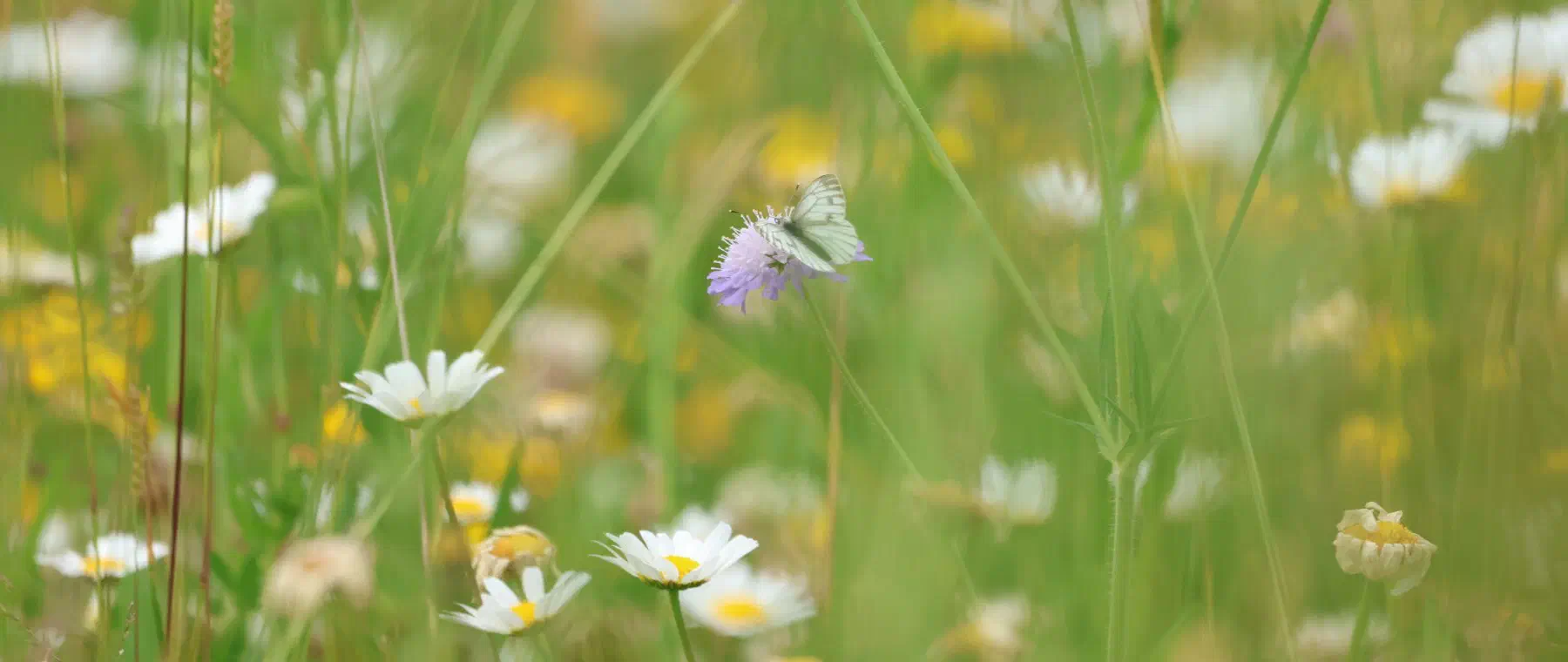
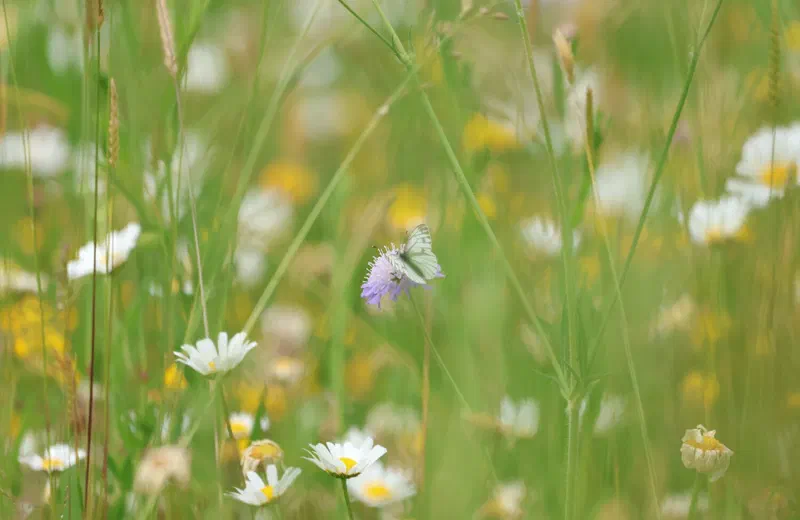
On the shallow, calcareous and nutrient-poor soils, a particularly species-rich mix of habitats has developed. Characteristic are the juniper heaths and calcareous grassland, which arose from centuries of sheep and goat grazing and are among the most species-rich open-land habitats in Central Europe. Slope and ravine forests stand along the Albtrauf, beech and oak-hornbeam woodland on the plateaus, while traditional orchards and hedgerows characterise the Albvorland foreland. Large parts of the region belong to the Schwäbische Alb Biosphere Reserve, recognised by UNESCO in 2009.
Different frameworks apply to compensation depending on the part of the state. In Baden-Württemberg, assessment is carried out under the Eco-Account Ordinance (ÖKVO), which assigns each habitat type a value in eco-points, with the measure recorded in the eco-account of the lower nature conservation authority. In the Bavarian share, the Riesalb, the BayKompV applies. In both states, compensation should take place within the same natural region wherever possible, which is why measures typical of the Alb, such as the management of calcareous grassland, forest conversion or the creation of small water bodies, are particularly sought after.
📍 Districts covered
🌿 Ecological features
- Juniper heaths and calcareous grassland, which arose from centuries of sheep farming, are among the most species-rich open-land habitats in Central Europe
- The steep Albtrauf escarpment, with slope and ravine forests, forms a striking scarp down to the Albvorland foreland
- A pronounced karst landscape of the White Jurassic, with around 2,500 caves, dolines and dry valleys
- The Schwäbische Alb Biosphere Reserve (UNESCO since 2009), a large-scale model region for sustainable land use
- UNESCO World Heritage caves and ice-age art in the Ach and Lone valleys
- Karst springs such as the Blautopf near Blaubeuren, and water-poor, free-draining plateaus
- The Riesalb's transitional position between the Schwäbische Alb and Fränkische Alb at the Nördlinger Ries (Bavarian share)
✅ greeNature in this region
greeNature is active as a partner for nature conservation compensation across the whole of the Schwäbische Alb, with a focus in Baden-Württemberg and the Bavarian share, the Riesalb. We develop eco-account and compensation land together with landowners, farmers, sheep farmers and municipalities, secure suitable land, plan measures typical of the natural region under the ÖKVO or the BayKompV respectively, and take on permanent management and monitoring. This way, we provide eco-points that project developers can use for impacts in natural region D60, without having to organise land and management themselves.
Typical measures in natural region D60
Managing juniper heaths and calcareous grassland
Preserving and restoring species-rich semi-dry grassland through extensive sheep and goat grazing and targeted scrub clearance of overgrown land.
Near-natural forest conversion
Converting non-native conifer plantations into native beech and oak-hornbeam woodland, preserving old and dead wood as habitat for cavity-nesting birds and bats.
Developing traditional orchards in the Albvorland foreland
Creating and managing standard-trunk traditional orchards with extensive mowing, as habitat for little owl, wryneck and bats, and as a habitat network.
Creating small water bodies and pioneer pools
New spawning waters at woodland edges and in quarries, among other things as CEF measures for the yellow-bellied toad and other amphibians.
Creating dry-stone walls, field margins and hedgerows
Creating structural and small-scale habitats for heat-loving reptiles and insects, and habitat networking in the calcareous open landscape.
Securing bat roosts
Protecting and upgrading caves, adits and building roosts, and connecting foraging habitats via hedgerows and woodland margins.
Protected species in the Schwäbische Alb
Sand lizard
Inhabits calcareous grassland, juniper heaths, sunny field margins, embankments and dry-stone walls of the Alb, and benefits from structurally rich small-scale habitats.
About this species ›Greater mouse-eared bat and other bats
Use karst caves, adits and roof spaces as roosts and preferentially forage in the hall-like beech woodland of the Alb.
About this species ›Yellow-bellied toad
A pioneer species of water-filled wheel ruts, quarries and shallow small water bodies, which benefits strongly from CEF measures.
About this species ›European wildcat
Returning to the contiguous, low-disturbance broadleaf woodland of the Alb, and dependent on near-natural, connected forest structures.
About this species ›Hazel dormouse
Lives in shrub-rich woodland edges, hedgerows and traditional orchards with a rich supply of fruit, buds and insects.
About this species ›Black stork
Breeds, sensitive to disturbance, in quiet woodland areas crossed by streams, and requires extensive, undisturbed territories.
About this species ›Your route to eco-points in D60
Contact and enquiry
Tell us your compensation requirement and the natural region. We check availability.
Offer and advice
A transparent offer covering measure types, scope and availability.
Coordination with authorities
Full coordination with the lower nature conservation authority. We handle everything.
Long-term monitoring
Permanent securing of the land, management and documentation across the contract term.
Eco-points in neighbouring natural regions
All about natural region D60
Request eco-points in natural region D60
We will promptly prepare a transparent offer with matching eco-points held in stock in the Schwäbische Alb.