Eco-points in natural region D59
Fränkisches Keuper-Liasland
Eco-points immediately available from officially recognised eco-accounts in natural region D59. greeNature solutions, your full-service partner for compensation in Middle and Upper Franconia.
Natural region D59 at a glance
Natural region D59, Fränkisches Keuper-Liasland, extends across the heart of Middle Franconia and parts of Upper Franconia. Characteristic are the Keuper landscape with sandstone hills, wooded ridges (Steigerwald, Frankenhöhe, Haßberge) and fertile valley locations.
The geology of Triassic Keuper, sandstone, marl and clay creates a fascinating diversity within a small area: heat-loving dry habitats on sandstone hills alternate with wet meadows and floodplain forests in the valleys of the Aisch, Zenn, Tauber and Regnitz.
The Steigerwald, one of the largest contiguous broadleaf woodland areas in Bavaria, lies at the centre of D59. It is a nature park and is home to old oak-hornbeam woodland with significant populations of the middle spotted woodpecker. The Frankenhöhe, as a watershed between the Rhine and Danube systems, forms an ecological bridge.
Especially valuable: the Aischgrund, with its carp ponds and wetlands, an important breeding and resting area for meadow-breeding birds such as northern lapwing and common snipe.
📍 Districts covered
🌿 Ecological features
- Steigerwald: the largest contiguous broadleaf woodland area in Middle Franconia
- Frankenhöhe: watershed between the Rhine and Danube systems (nature park)
- Aischgrund: important wetland with a carp-pond landscape
- Dry habitats on Keuper sandstone spoil heaps, habitat for the sand lizard
- Traditional orchards on Franconian hillside locations
- Historic dry-stone walls and hedgerow structures
✅ greeNature in this region
greeNature has many years of experience in Middle Franconia and knows the regional authorities, nature conservation requirements and land availability. Our team in southern Germany is your direct contact for compensation in natural region D59.
Typical measures in natural region D59
Grassland extensification
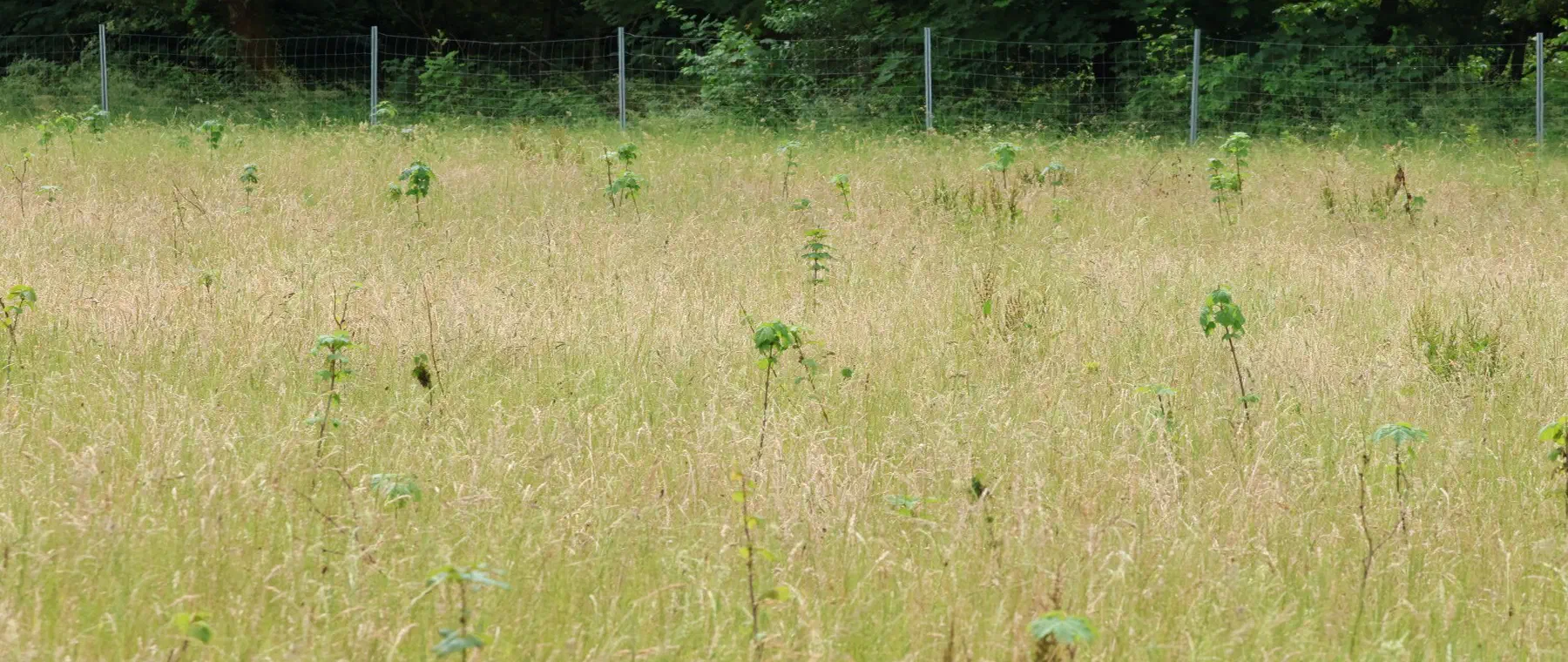
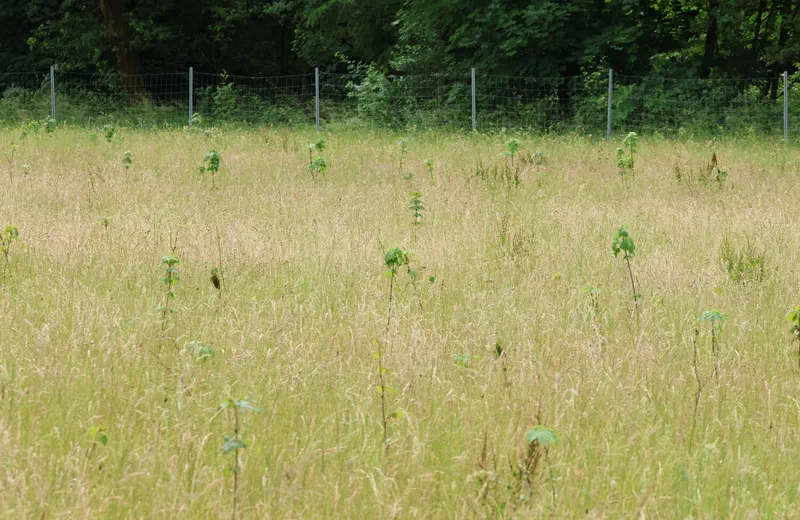
Aischgrund and Franconian valley floodplains, converting intensively used land into species-rich flower meadows and wet meadows for northern lapwing and common snipe.
New afforestation
Site-appropriate oak-hornbeam woodland on Keuper sites, climate-resilient, biodiversity-promoting and secured for the long term.
Traditional orchards
Traditional Franconian cultural landscape on hillside locations, with regional fruit varieties and extensively managed undergrowth as habitat for wryneck and red-backed shrike.
Species protection CEF/FCS
Sand lizard on sandstone spoil heaps, skylark plots in the agricultural landscape, bat roosts in orchards, tailored to the BayKompV.
Hedgerows and field copses
Habitat networking through hedgerow structures and field copses in the intensively used Franconian arable landscape, stepping-stone habitats for wild bees and birds.
Watercourse restoration
Restoration of the Aisch, Zenn and tributary watercourses, planting bankside woodland, raising the streambed, and creating pools for amphibians and dragonflies.
Protected species in the Fränkisches Keuper-Liasland
Meadow-breeding birds in the Aischgrund
Northern lapwing, common snipe and meadow pipit use the wet carp-pond landscapes as a breeding and resting area. Typical CEF measures: flood channels, shallow pools, grassland extensification.
About this species ›Sand lizard and smooth snake
The Keuper sandstone hills are a refuge for heat-loving reptiles. Species protection measures: creating sand lenses, deadwood piles and hedgerow structures as key habitats.
About this species ›Bats
Old traditional orchards and broadleaf woodland of the Steigerwald are habitat for Bechstein's bat, greater mouse-eared bat and brown long-eared bat. Roost and foraging-ground measures are possible.
About this species ›Woodland birds in the Steigerwald
Middle spotted woodpecker, black woodpecker and grey-headed woodpecker benefit from old oak-hornbeam woodland. The Steigerwald FFH site (DE-6029-371) protects these populations.
Skylark and corn bunting
In the open agricultural landscape of D59, skylark plots, flowering strips and lark mounds are typical CEF measures for construction and infrastructure projects.
About this species ›Wild bees and butterflies
Nutrient-poor Keuper sandy grassland and dry-stone walls on hillside locations are home to highly specialised insect communities, valuable for compensation measures with a high point value under the BayKompV.
Your route to eco-points in D59
Contact and enquiry
Tell us your compensation requirement and the natural region. We check availability.
Offer and advice
A transparent offer covering measure types, scope and availability.
Coordination with authorities
Full coordination with the lower nature conservation authority. We handle everything.
Long-term monitoring
Permanent securing of the land, management and documentation across the contract term.
Eco-points in neighbouring natural regions
All about natural region D59
Request eco-points in natural region D59
We will promptly prepare a transparent offer with matching eco-points held in stock in the Fränkisches Keuper-Liasland.