Eco-points in natural region D58
Schwäbisches Keuper-Liasland
Natural region D58, Schwäbisches Keuper-Liasland, extends into Bavaria with the Nördlinger Ries and offers a wide range of opportunities to generate eco-points through high-quality nature conservation compensation measures. greeNature develops and manages suitable measure sites as a partner for legally sound, BayKompV-compliant compensation.
Natural region D58 at a glance
Natural region D58 Schwäbisches Keuper-Liasland belongs to the south-west German scarpland and extends mainly across Baden-Württemberg. In Bavaria, it is represented by the Nördlinger Ries, an almost circular basin in the Donau-Ries district that stands out clearly from the surrounding plateaus of the Schwäbische Alb and Fränkische Alb. A defining feature is a scarpland landscape with dip slopes inclined to the east.
The name derives from the rocks of the Keuper, with mudstones and sandstones of the Sandstein- and Gipskeuper, and those of the Lias (Lower Jurassic), with dark mudstones and marls. A geological peculiarity is the Ries itself. It formed around 14.5 million years ago through a meteorite impact that shattered the basement rock and created a crater, in which Riessee limestones and fine-grained basin sediments later deposited. The fertile interior of the basin is today used mainly for arable farming.
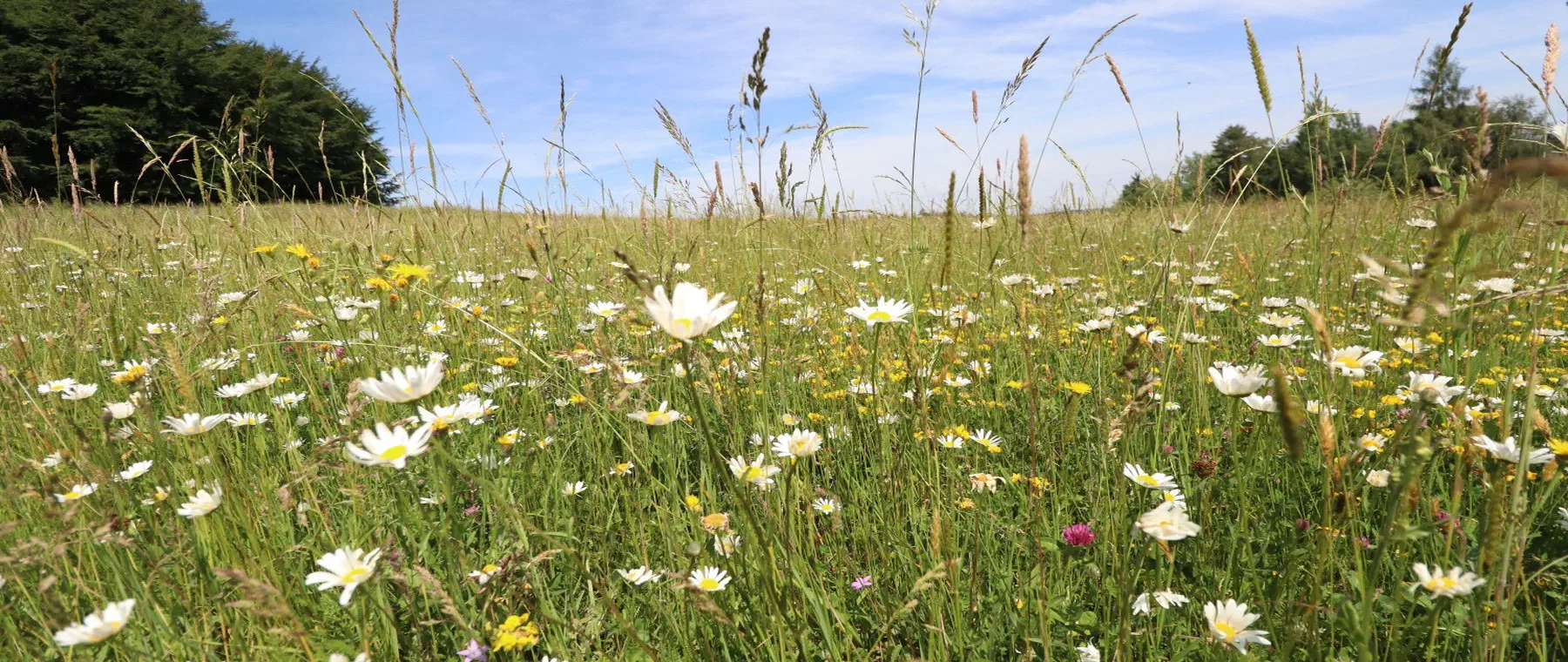
Ecologically significant above all is the Wörnitztal, with its wet meadows and burnet saxifrage floodplain meadows, as well as the open grassland of the Ries basin. The Nördlinger Ries und Wörnitztal EU bird sanctuary is among the most important meadow-breeding-bird areas in Swabia and holds the second-largest breeding population of the Montagu's harrier in Bavaria. At the crater rims, calcareous semi-dry grassland and heathland with rare plant and insect species are also found.
This setting gives rise to a wide range of opportunities for compensation. Grassland extensification, the protection of meadow-breeding birds, the restoration of watercourses and the management of calcareous grassland create measurable upgrades that can be credited as eco-points under the BayKompV.
📍 Districts covered
🌿 Ecological features
- Nördlinger Ries: one of the best-preserved meteorite craters in the world, recognised as the Ries UNESCO Global Geopark.
- Nördlinger Ries und Wörnitztal EU bird sanctuary, one of the most important meadow-breeding-bird areas in Swabia.
- Second-largest breeding population of the Montagu's harrier in Bavaria, alongside northern lapwing, Eurasian curlew and corn bunting.
- Wörnitztal with burnet saxifrage floodplain meadows, purple moor-grass meadows and lowland hay meadows as protected FFH habitat types.
- Calcareous semi-dry grassland and heathland at the crater rims, with rare species such as Siberian iris and early marsh orchid.
- White stork and kingfisher as characteristic species along the Wörnitz.
✅ greeNature in this region
greeNature is active as a partner for nature conservation compensation in the Bavarian part of natural region D58. We secure and develop suitable land in the Nördlinger Ries and the Wörnitztal, coordinate measures with the lower nature conservation authorities and the landowners, and support project developers from conception through to permanent management. This creates ecologically effective upgrades that are legally recognised as eco-points under the BayKompV and available for impact projects.
Typical measures in natural region D58
Wet and floodplain meadows in the Wörnitztal
Restoration and extensive management of burnet saxifrage floodplain meadows and lowland hay meadows along the Wörnitz. Adapted mowing regimes and rewetting promote FFH habitat types and create a high upgrading value under the BayKompV.
Protecting meadow-breeding birds in the Ries
Developing extensively managed wet grassland with shallow pools and wet patches for northern lapwing, Eurasian curlew and corn bunting. Late mowing and secured breeding areas stabilise the meadow-breeding-bird populations and can be implemented as production-integrated compensation.
Calcareous semi-dry grassland at the crater rims
Scrub clearance and grazing of calcareous grassland and heathland at the edges of the Ries basin. These nutrient-poor sites are home to sand lizard, wild bees and butterflies, and gain ecological value through regular management.
Amphibian waters and small water bodies
Creating new sunlit, fish-free pools and small water bodies for great crested newt, European tree frog and yellow-bellied toad. As CEF measures, they secure breeding sites and upgrade the habitat network in the Ries and Wörnitztal.
Watercourse restoration on the Wörnitz
Removing bank reinforcement and developing steep banks, floodplain forest margins and riparian buffer strips. Such measures improve habitats for kingfisher and beaver and increase the structural diversity of the watercourses.
Hedgerows and structurally rich arable landscape
Creating hedgerows, field copses, field margins and skylark plots in the cleared arable land. These structures connect habitats, support skylark and grey partridge, and increase the biodiversity of the agricultural landscape.
Protected species in the Schwäbisches Keuper-Liasland
Northern lapwing
The northern lapwing breeds in the open meadows and arable landscapes of the Nördlinger Ries, which is among the most important meadow-breeding-bird areas in Swabia. As a Red List species, it benefits from extensively managed grassland, wet patches and late mowing, as implemented through production-integrated compensation and CEF measures.
About this species ›Skylark
The skylark is a characteristic bird of the wide arable areas in the Ries. Its population is declining due to intensive land use, which is why skylark plots, flowering strips and extensive field margins are effective upgrades that can be credited as compensation.
About this species ›Montagu's harrier
The Nördlinger Ries holds the second-largest breeding population of the Montagu's harrier in Bavaria. This strictly protected bird of prey nests on the ground in cereal fields and depends on protective measures such as harvest-timing windows and secured nest sites, supported by species conservation programmes and compensation land.
Kingfisher
The kingfisher inhabits the Wörnitz and its tributaries. It requires near-natural banks with steep faces for breeding, as well as clear, fish-rich waters. Watercourse restoration and the development of bank structures create suitable habitats and compensation value.
About this species ›Sand lizard
The sand lizard inhabits embankments, railway embankments, field margins and semi-dry grassland at the edges of the Ries. As a strictly protected species under § 44 BNatSchG, it frequently requires CEF measures in the event of impacts, such as creating cleared-stone piles and sunlit structures.
About this species ›Northern crested newt
The northern crested newt spawns in fish-free small water bodies and pools in the Ries and the Wörnitztal. This species, listed in Annexes II and IV of the FFH Directive, benefits from the creation and connection of new sunlit spawning waters, which are well suited as a compensation measure.
About this species ›Your route to eco-points in D58
Contact and enquiry
Tell us your compensation requirement and the natural region. We check availability.
Offer and advice
A transparent offer covering measure types, scope and availability.
Coordination with authorities
Full coordination with the lower nature conservation authority. We handle everything.
Long-term monitoring
Permanent securing of the land, management and documentation across the contract term.
Eco-points in neighbouring natural regions
All about natural region D58
Request eco-points in natural region D58
We will promptly prepare a transparent offer with matching eco-points held in stock in the Schwäbisches Keuper-Liasland.