Eco-points in natural region D54
Schwarzwald
In the Schwarzwald natural region (D54), impacts on nature and landscape in Baden-Württemberg are compensated via the Eco-Account Ordinance (ÖKVO) in eco-points. greeNature develops and manages compensation and eco-account land nationwide and knows the nature-conservation requirements of the region.
Natural region D54 at a glance
The Schwarzwald is Germany's largest contiguous low mountain range and lies entirely in Baden-Württemberg. It extends for around 150 kilometres from north to south between the Upper Rhine plain to the west and the Gäuplatten to the east. With the Feldberg (1,493 m), it carries the highest elevation of the German low mountain ranges. The landscape ranges from the wooded fringe plateaus in the north, through the deeply incised valleys of the Kinzig, Murg and Elz, to the high elevations of the Hochschwarzwald in the south.
Geologically, the Schwarzwald consists of a crystalline basement of gneiss and granite, overlain at the eastern margin by Bunter sandstone. The imprint of the ice age is still visible today in cirques and cirque lakes such as the Titisee, Feldsee, Schluchsee and Mummelsee. The cool, moist high elevations, with bogs, block fields and Grinden heathland, form habitats that are rare elsewhere in south-west Germany.
In nature-conservation terms, the natural region is highly significant. Large areas are protected as Natura 2000 sites (FFH and bird sanctuary areas), and the Schwarzwald National Park along with the Schwarzwald Mitte/Nord and Südschwarzwald nature parks secure further extensive areas. Near-natural fir-beech woodlands, mountain meadows, wood pastures and the watercourses are defining features for species such as the capercaillie, the European wildcat and the black stork. However, a large part of the woodland is overprinted by spruce plantations, which increases the need for upgrading measures.
For compensation, Baden-Württemberg applies the statutory impact mitigation regulation under §§ 13 to 15 BNatSchG in conjunction with the state's Nature Conservation Act (NatSchG BW). Upgrades are assessed in eco-points under the Eco-Account Ordinance (ÖKVO) and can be stockpiled in advance via an eco-account. Alongside impact compensation, the species protection requirements of § 44 BNatSchG must be observed, such as advance compensation measures (CEF) for capercaillie, bats or black stork. greeNature plans, develops and manages corresponding sites nationwide.
📍 Districts covered
🌿 Ecological features
- Schwarzwald National Park, Baden-Württemberg's first national park since 2014, covering around 11,300 hectares in the Nordschwarzwald
- Schwarzwald Mitte/Nord Nature Park, Germany's largest nature park by area, and the Südschwarzwald Nature Park
- Feldberg as the highest peak (1,493 m), with the extensive Feldberg nature reserve in the high elevations
- Capercaillie as a characteristic and target species of the open mountain conifer woodlands, severely threatened in population
- Crystalline basement of gneiss and granite, with Bunter sandstone at the eastern margin and ice-age cirque lakes such as the Titisee and Schluchsee
- Historic cultural landscapes such as Grinden heathland, wood pastures and mountain meadows, with a high need for upgrading and keeping the land open
✅ greeNature in this region
greeNature operates nationwide and is familiar with nature conservation law in Baden-Württemberg. For the Schwarzwald, the lower nature conservation authorities of the districts and the Karlsruhe and Freiburg regional councils (Regierungspräsidien) are the key contacts. Compensation and eco-account measures are assessed under the Eco-Account Ordinance (ÖKVO) and the state's Nature Conservation Act (NatSchG BW). We coordinate site selection, measures and approval with the responsible authorities at an early stage, and handle planning, implementation and long-term management.
Typical measures in natural region D54
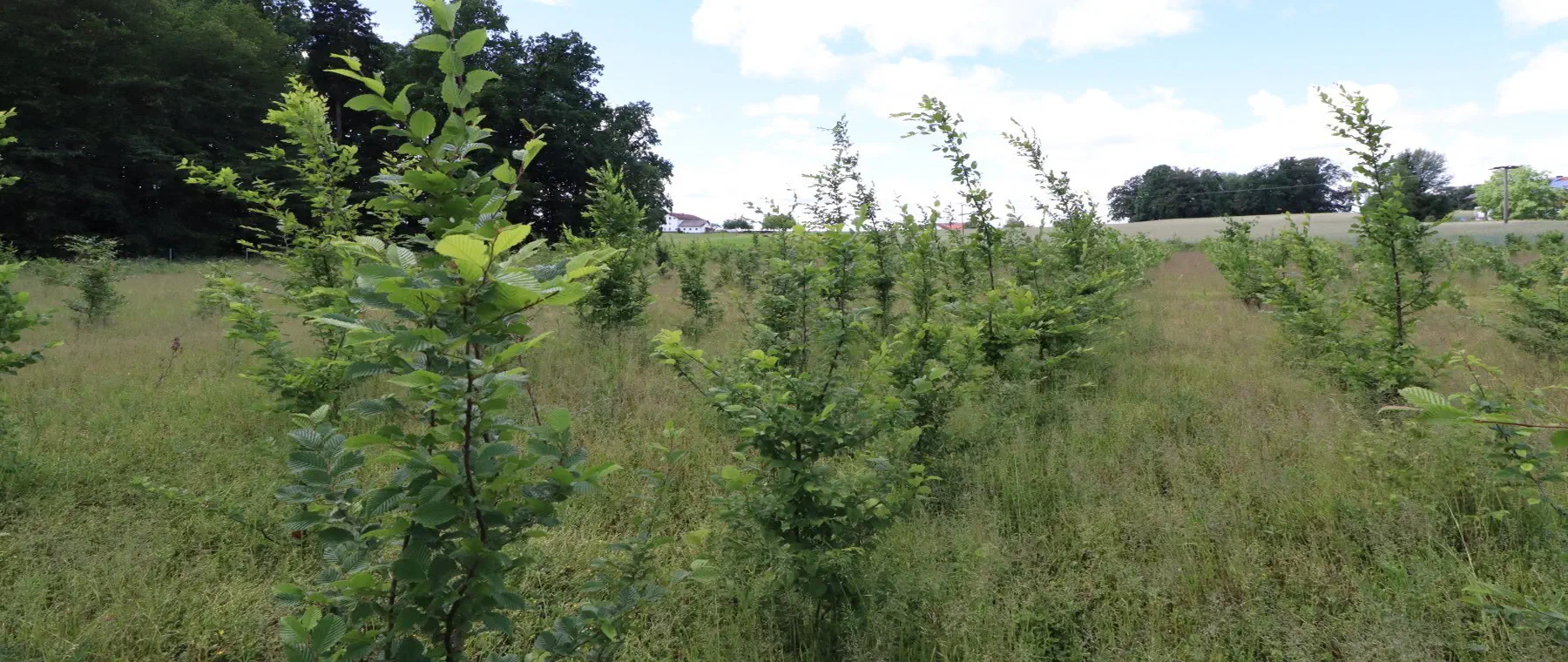
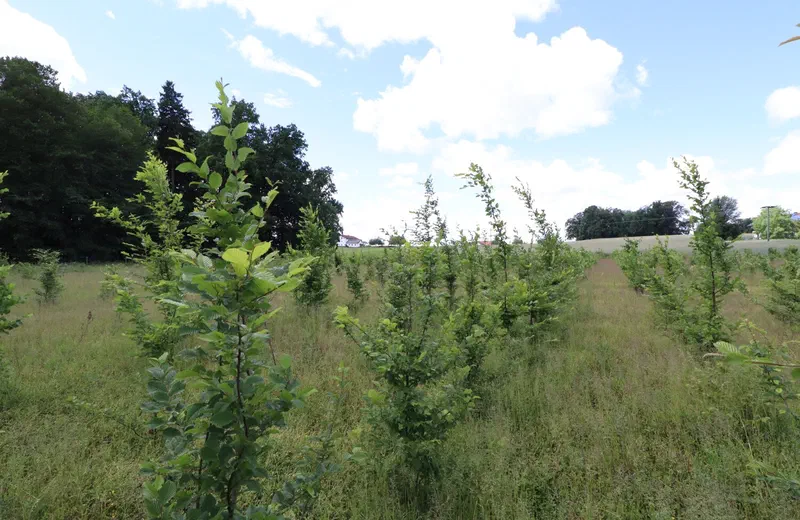
Forest conversion to mixed woodland
Converting structurally poor spruce plantations into site-appropriate fir-beech mixed woodland with native tree species, to promote near-natural forest habitats and climate stability.
Keeping mountain meadows and wood pastures open
Restoration and extensive management of mountain meadows, Grinden heathland and common pastures through adapted mowing or grazing, to secure species-rich open-land habitats.
Watercourse restoration
Removing artificial structures on streams such as the Kinzig, Murg and Elz, restoring connectivity and developing near-natural banks and floodplains.
Bog and wetland restoration
Rewetting drained raised and transitional bogs and upgrading wet hollows to preserve rare habitats and bind carbon.
Habitat for the capercaillie (CEF)
Thinning dense conifer woodland and creating open forest structures with berry-shrub understorey and field margins, as an advance compensation measure under § 44 BNatSchG.
Old and dead wood development
Designating habitat trees and deadwood islands to promote bats, woodpeckers and the black stork, as well as wood-dwelling beetles.
Protected species in the Schwarzwald
Capercaillie
Characteristic species of the open mountain conifer woodlands of the Hochschwarzwald, severely threatened in population and to be promoted through habitat and CEF measures.
European wildcat
Strictly protected under § 44 BNatSchG, it inhabits structurally rich, low-disturbance woodland and benefits from forest connectivity and dead wood.
About this species ›Black stork
Breeds in low-disturbance old-growth woodland near near-natural watercourses and depends on undisturbed nest surroundings and intact stream floodplains.
About this species ›Bats
Species such as Bechstein's bat and barbastelle (FFH Annexes II and IV) use old cavity trees and structurally rich woodland as roosts and foraging grounds.
About this species ›Hazel dormouse
A strictly protected species of woodland edges and dense undergrowth, promoted by structurally rich field margins and a continuous network of woody vegetation.
About this species ›Fire salamander
A characteristic amphibian species of cool, shaded forest streams, whose larvae depend on near-natural, unpolluted spring-fed streams.
About this species ›Your route to eco-points in D54
Contact and enquiry
Tell us your compensation requirement and the natural region. We check availability.
Offer and advice
A transparent offer covering measure types, scope and availability.
Coordination with authorities
Full coordination with the lower nature conservation authority. We handle everything.
Long-term monitoring
Permanent securing of the land, management and documentation across the contract term.
Eco-points in neighbouring natural regions
All about natural region D54
Request eco-points in natural region D54
We will promptly prepare a transparent offer with matching eco-points held in stock in the Schwarzwald.