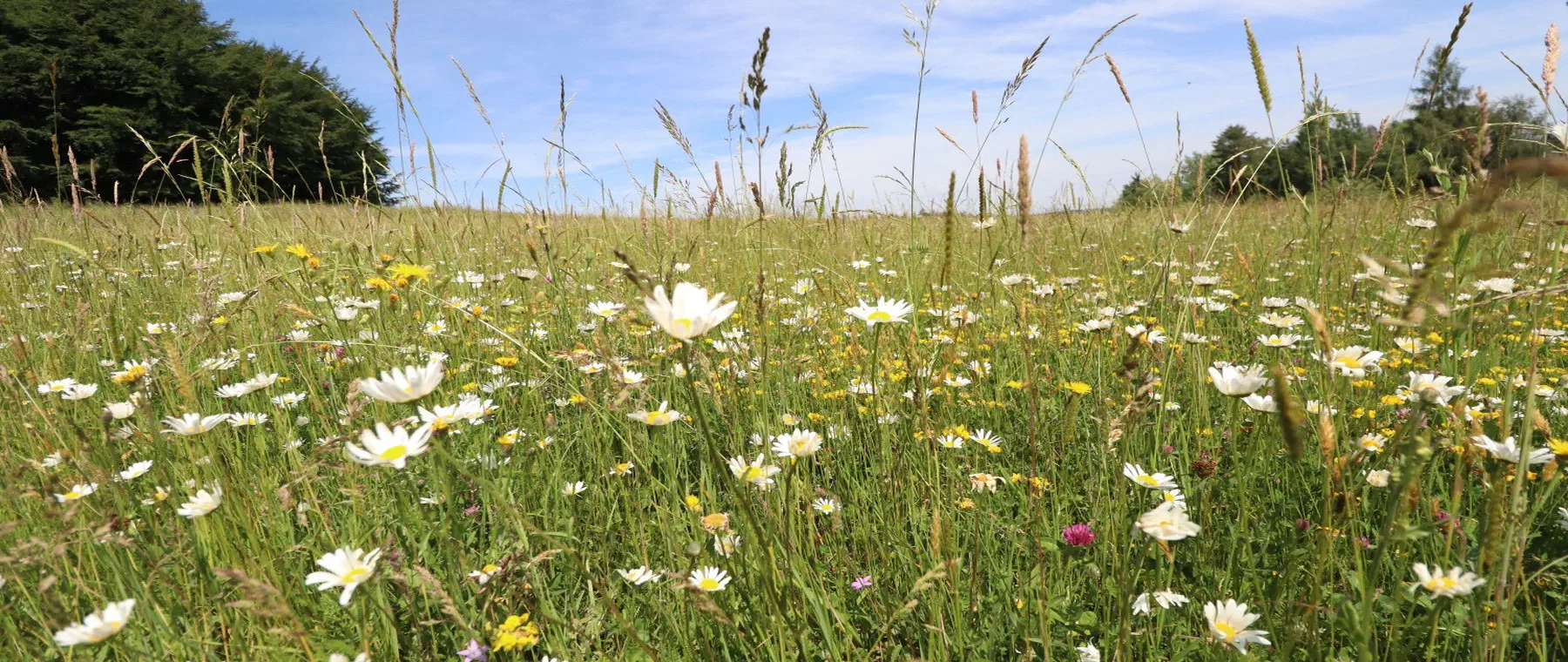
Eco-points in natural region D52
Saar-Nahe-Berg- und Hügelland
Eco-points and compensation areas in natural region D52 (Saar-Nahe-Berg- und Hügelland). greeNature supports impact projects in Rhineland-Palatinate and in Saarland under the LKompVO and §§ 13 to 15 BNatSchG, operating nationwide and familiar with the responsible local authorities.
Natural region D52 at a glance
Natural region D52, Saar-Nahe-Berg- und Hügelland, covers around 4,185 km² in the south of Rhineland-Palatinate and the northern Saarland. It essentially comprises the catchment area of the Nahe with its tributaries Glan, Alsenz and Blies, as well as parts of the central Saar valley. Larger towns such as Idar-Oberstein, Kusel and St. Wendel lie within the region, while Kaiserslautern, Bad Kreuznach and the Saarbrücken conurbation mark its edges.
Geologically, the Saar-Nahe-Berg- und Hügelland is shaped by the largest contiguous Permo-Carboniferous deposit in Germany. The layers of the Rotliegend, interspersed with volcanic rocks such as rhyolite and melaphyre, build up an undulating upland. The Donnersberg reaches the highest elevation at 686.5 m. The long mining history, from hard coal through copper to mercury, has left numerous adits, spoil heaps and quarries that today form valuable secondary habitats.
Ecologically, the range extends from extensive beech and oak-hornbeam woodlands, for example in the Saarkohlenwald and the Prims-Nahe-Bergland, through the near-natural river valleys of the Nahe, Glan and Blies, to heat-loving dry habitats on the porphyry and melaphyre slopes of the Nahe wine-growing region. Disused quarries provide a home for pioneer species such as the yellow-bellied toad, old mining adits serve bats as important winter roosts, and the contiguous woodland areas are a refuge for the European wildcat.
For impact projects, the statutory impact mitigation regulation applies under §§ 13 to 15 BNatSchG. In Rhineland-Palatinate, the Landeskompensationsverordnung (LKompVO) specifies the determination and assessment of the compensation requirement via a habitat-value procedure, supplemented by the statewide eco-account. In the Saarland part, Saarland's own compensation law applies. In both states, the special species protection under § 44 BNatSchG and the requirements for Natura 2000 sites must also be observed.
📍 Districts covered
🌿 Ecological features
- Donnersberg (686.5 m): highest elevation of the Palatinate, in the Nordpfälzer Bergland
- Germany's largest contiguous Permo-Carboniferous occurrence (Rotliegend)
- Former mining adits as important bat winter roosts
- Nahe wine-growing region with dry habitats on porphyry and melaphyre slopes
- Near-natural river landscapes of the Nahe, Glan and Blies with their floodplains
- Disused quarries as habitat for the yellow-bellied toad
- Saarkohlenwald and Prims-Nahe-Bergland as large contiguous woodland areas
✅ greeNature in this region
greeNature operates nationwide and knows the administrative practice of the lower nature conservation authorities in Rhineland-Palatinate and in Saarland. For natural region D52, we place your project within the relevant state law, from the LKompVO with its habitat-value procedure in Rhineland-Palatinate to Saarland's compensation law, and coordinate compensation and replacement measures with the specialist authorities at an early stage.
Typical measures in natural region D52
Watercourse restoration
Restoration of the Nahe, Glan, Blies and their tributaries through bankside woodland, streambed raising and the creation of floodplain waters, a benefit for kingfisher, amphibians and dragonflies.
Grassland extensification
Converting intensively used land into species-rich wet and nutrient-poor meadows in the valleys and on the upland plateaus, secured through long-term management concepts.
Dry habitats on Rotliegend
Development and management of calcareous grassland, fallow vineyards and cleared-stone ridges on the sun-favoured porphyry and melaphyre slopes as habitat for reptiles and wild bees.
Near-natural forest conversion
Development of site-appropriate beech and oak-hornbeam woodland in the Saarkohlenwald and Prims-Nahe-Bergland, climate-resilient and with a high proportion of old and dead wood.
Traditional orchards
Creation and restoration of traditional orchards on the valley slopes, with regional varieties and extensively managed undergrowth as habitat for cavity-nesting birds and insects.
Species protection CEF/FCS
Advance measures under § 44 BNatSchG, such as securing bat roosts in adits, creating sunlit small water bodies for the yellow-bellied toad, and structural and habitat improvements.
Protected species in the Saar-Nahe-Berg- und Hügelland
Bats in mining adits
The numerous former mining adits of the Saar-Nahe-Berg- und Hügelland are among the important winter roosts for species such as greater mouse-eared bat and Bechstein's bat. Securing roosts and improving foraging habitats are typical measures.
About this species ›European wildcat in the broadleaf woodlands
The large contiguous woodland areas are a refuge for the strictly protected European wildcat. Woodland-edge design, deadwood enrichment and habitat networks promote its habitats.
About this species ›Yellow-bellied toad in quarries
Disused quarries and excavations in the Rotliegend provide the yellow-bellied toad with sunlit small water bodies. Creating new temporary pools is a proven measure for this pioneer species.
About this species ›Sand lizard on dry slopes
The sun-favoured porphyry and melaphyre slopes of the Nahe wine-growing region are habitat for heat-loving reptiles. Sand lenses, cleared-stone piles and field-margin structures serve as CEF measures.
About this species ›Kingfisher on the Nahe and Glan
The near-natural river sections of the Nahe, Glan and Blies provide the kingfisher with nesting banks and fish-rich waters. Bank restoration and the creation of steep banks improve its breeding sites.
About this species ›Black stork in the forest valleys
The black stork breeds in the quiet, watercourse-rich woodland areas. Securing low-disturbance nest sites and near-natural forest streams supports the population in the natural region.
About this species ›Your route to eco-points in D52
Contact and enquiry
Tell us your compensation requirement and the natural region. We check availability.
Offer and advice
A transparent offer covering measure types, scope and availability.
Coordination with authorities
Full coordination with the lower nature conservation authority. We handle everything.
Long-term monitoring
Permanent securing of the land, management and documentation across the contract term.
Eco-points in neighbouring natural regions
All about natural region D52
Request eco-points in natural region D52
We will promptly prepare a transparent offer with matching eco-points held in stock in the Saar-Nahe-Berg- und Hügelland.