Eco-points in natural region D41
Taunus
Eco-points and compensation areas in the natural region D41 Taunus, assessed using the habitat value procedure of the Hessian Kompensationsverordnung (KV). greeNature manages your compensation nationwide and is familiar with the nature conservation authorities in Hesse and Rhineland-Palatinate.
Natural region D41 at a glance
The natural region D41, Taunus, is a wooded central upland range north-west of Frankfurt and north of Wiesbaden. It belongs to the Rheinisches Schiefergebirge and extends from the Hessian heartland into the Rhineland-Palatinate Rhein-Lahn-Kreis. At 879 metres, the Großer Feldberg is the highest peak. Above the wooded Hintertaunus and the steep southern slope to the Rhein-Main-Tiefland runs the distinctive ridge of the Hoher Taunus.
The Taunusquarzit, a hard rock resistant to weathering that forms the main ridge, is the defining feature. In the lower elevations, Devonian clay slate with quartz veins occurs. This subsoil gives rise to nutrient-poor, acidic soils, on which extensive beech and mixed beech woodland has developed.
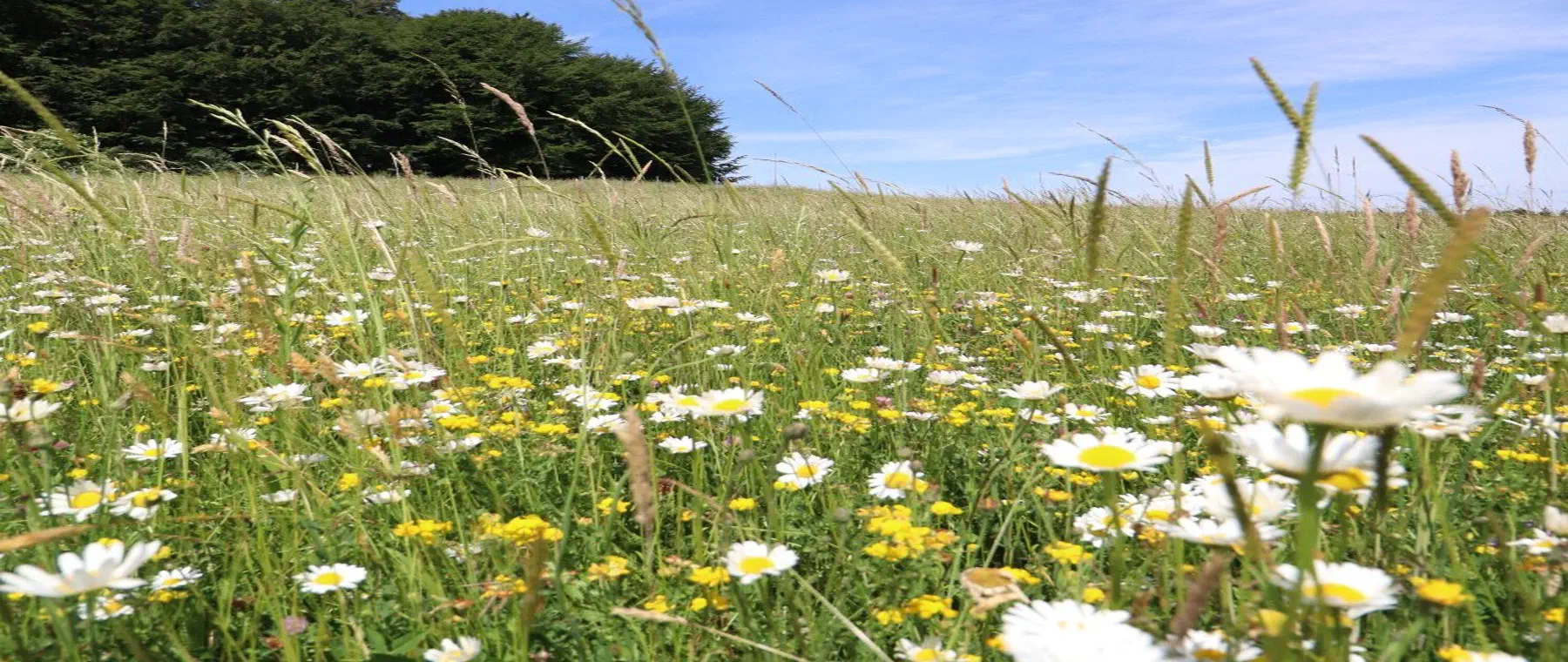
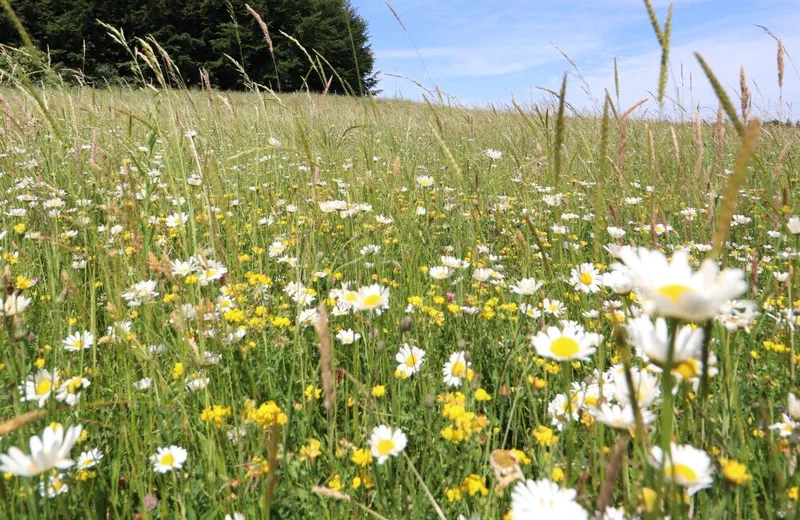
The large-scale, low-disturbance woodland is habitat for species of national importance. In the Wispertaunus natural forest, the European wildcat, black stork and Bechstein's bat have a permanent refuge. Near-natural upland streams such as the Weil, Aar and Wisper, damp valley meadows, and the warmth-favoured traditional orchards and vineyards on the southern edge complete the mosaic of habitats. Large parts are protected through the Taunus nature park, the RheinTaunus nature park and the Natura 2000 network.
Impacts on nature and landscape must be avoided and compensated under sections 13 to 15 BNatSchG. In the main Hessian part, assessment is carried out using the habitat value procedure of the Kompensationsverordnung (KV) with tradeable eco-points from recognised eco-accounts. In the Rhineland-Palatinate part, the Landeskompensationsverordnung (LKompVO) applies. In addition, there is the species-protection framework of section 44 BNatSchG with advance CEF measures and, in exceptional cases under section 45(7) BNatSchG, FCS measures.
📍 Districts covered
🌿 Ecological features
- Großer Feldberg (879 m): highest peak of the Taunus
- The Taunusquarzit ridge of the Hoher Taunus as a landscape-defining range
- Taunus Nature Park and RheinTaunus Nature Park
- Wispertaunus natural forest, a long-standing refuge for the European wildcat
- Extensive, partly near-natural beech and mixed beech woodland on acidic soils
- Near-natural upland streams such as the Weil, Aar and Wisper
- Traditional orchards and viticulture on the warmth-favoured southern slopes towards the Rhein-Main-Tiefland
✅ greeNature in this region
greeNature operates nationwide and is just as familiar with the requirements of the Hessian Kompensationsverordnung (KV) as with the Landeskompensationsverordnung (LKompVO) in Rhineland-Palatinate. We coordinate eco-accounts, compensation areas and species-protection measures with the responsible lower nature conservation authorities in Hesse and Rhineland-Palatinate, and support your project in the Taunus from assessment to long-term land management.
Typical measures in natural region D41
Near-natural woodland conversion
Conversion of conifer-dominated stands into site-appropriate mixed beech woodland on the acidic quartzite and shale soils of the Taunus, with old and dead wood components and permanent legal securing.
Watercourse restoration
Restoration of upland streams such as the Weil, Aar and Wisper, removal of bank modifications, creation of riparian buffer strips and steep banks for the kingfisher, bullhead and amphibians.
Grassland extensification
Extensification of montane and valley meadows through adapted mowing schedules and the avoidance of fertilisation, to develop species-rich wet and nutrient-poor grassland in the valleys.
Traditional orchards
Creation and management of traditional orchards on the warmth-favoured southern slopes with regional fruit varieties, as habitat for the wryneck, little owl and bats.
CEF and FCS species protection
Woodland corridors and habitat structures for the European wildcat, roost provisions for bats, and nest-site protection for the black stork, aligned with section 44 BNatSchG and the species protection assessment (saP).
Habitat trees and woodland edges
Securing of old and dead wood, designation of habitat tree groups, and development of tiered, scrub-rich woodland edges as stepping stones in the habitat network.
Protected species in the Taunus
European wildcat
The large, unfragmented Taunus woodlands, especially in the Wispertaunus, are among the important European wildcat habitats in Hesse. Compensation relies on woodland corridors, old and dead wood, and the connectivity of contiguous woodland areas.
About this species ›Black stork
The black stork breeds in the low-disturbance broadleaf and mixed woodland and hunts along clear woodland streams. Nest-protection zones, the securing of old-growth wood and the development of foraging waters are typical measures.
About this species ›Bats
Old beech woodland and traditional orchards are home to Bechstein's bat and the greater mouse-eared bat. Habitat trees, replacement roosts and the retention of guiding structures secure these populations as CEF and FCS measures.
About this species ›Hazel dormouse
Scrub-rich woodland edges, hedgerows and open mixed woodland provide habitat for the strictly protected hazel dormouse. The enhancement of the shrub layer, woody connectivity and nest boxes are among the advance CEF measures.
About this species ›Great crested newt and yellow-bellied toad
Woodland ponds and small water bodies in the Taunus are home to the great crested newt and yellow-bellied toad, both species listed in Annex II of the FFH Directive. The creation of sunlit replacement spawning waters and habitat connectivity are proven measures.
About this species ›Kingfisher
The kingfisher breeds in steep banks on the near-natural streams of the Taunus, such as the Weil, Aar and Wisper. Bank removal and the promotion of natural eroding edges create new breeding habitats along the watercourse.
About this species ›Your route to eco-points in D41
Contact and enquiry
Tell us your compensation requirement and the natural region. We check availability.
Offer and advice
A transparent offer covering measure types, scope and availability.
Coordination with authorities
Full coordination with the lower nature conservation authority. We handle everything.
Long-term monitoring
Permanent securing of the land, management and documentation across the contract term.
Eco-points in neighbouring natural regions
All about natural region D41
Request eco-points in natural region D41
We will promptly prepare a transparent offer with matching eco-points held in stock in the Taunus.