Eco-points in natural region D40
Lahntal und Limburger Becken
The natural region D40 connects the valley of the Lahn with the fertile Limburger Becken between the Taunus and the Westerwald. greeNature develops and manages compensation and replacement measures as well as eco-points here under the Hessian Kompensationsverordnung (KV) and, in the Rhineland-Palatinate lower reach, under the LKompVO.
Natural region D40 at a glance
The natural region D40 Lahntal und Limburger Becken runs as the valley of the Lahn through the Rheinisches Schiefergebirge, set between the Taunus to the south and the Westerwald to the north. Over long stretches, the Lahn valley is a comparatively narrow valley with steep slopes rising 50 to 200 metres to the adjoining plateaus. In the middle, the landscape widens into the woodland-poor Limburger Becken, a landscape chamber around 20 by 14 kilometres in size, formed as a tectonic subsidence basin. The natural region is centred in Hesse, and the lower reach of the Lahn extends into the Rhineland-Palatinate Rhein-Lahn-Kreis, flowing into the Rhine at Lahnstein.
Geologically, the subsoil is determined by the rocks of the Lahnmulde. Characteristic are bands of Middle Devonian massive limestone, which was quarried as Lahnmarmor and is embedded in predominantly volcanic rocks such as diabase and Schalstein. Large parts of the Limburger Becken carry thick loess deposits with very fertile, chernozem-like soils. Together with the warm, dry basin climate (around 600 to 650 millimetres of annual rainfall), these make the basin an ancient settlement and arable region with intensive cereal and root crop cultivation.
Ecologically, the natural region is characterised by an alternation of habitats. The steep valley slopes carry beech woodland and remnants of ravine and floodplain forest, interspersed with rock outcrops of limestone and silicate rock. On the warm, dry slopes, species-rich calcareous grassland and rock habitats have been preserved, providing habitat for highly specialised species. The floodplain of the Lahn and its side valleys are largely used as grassland. Former marble quarries offer secondary habitats with rock faces, crevices and spoil heaps. A large part of these features is protected in the FFH site Lahntal und seine Hänge.
For impacts on nature and landscape, the nature-conservation impact mitigation regulation under sections 13 to 15 BNatSchG applies. In Hesse, the assessment of impact and compensation is carried out using the habitat value procedure of the Kompensationsverordnung (KV), whose value points are recorded as tradeable eco-points on eco-accounts. In the Rhineland-Palatinate part, the Landeskompensationsverordnung (LKompVO) applies. Species-protection requirements under section 44 BNatSchG, such as advance compensation measures (CEF) to maintain the conservation status of local populations, are assessed separately.
📍 Districts covered
🌿 Ecological features
- Lahnmarmor: bands of Middle Devonian massive limestone in the Lahnmulde, whose former quarries today form valuable secondary habitats for bats, reptiles and rock vegetation.
- The Limburger Becken as one of the two large intramontane subsidence basins in the Rheinisches Schiefergebirge, with thick loess deposits and chernozem-like soils.
- A warm, dry basin climate with only around 600 to 650 millimetres of annual rainfall, favouring species-rich calcareous grassland and rock outcrops on the valley slopes.
- The FFH site Lahntal und seine Hänge, with beech, ravine and floodplain woodland as well as a mosaic of rock, calcareous grassland and wetland habitats.
- The Lahn as a continuous watercourse with an accompanying belt of floodplain and grassland, connecting the natural region from Hesse to its confluence in Rhineland-Palatinate.
- An ancient settlement and arable region: the fertile loess soils of the basin are used intensively for farming, creating potential for the enhancement of farmland and grassland.
✅ greeNature in this region
greeNature operates nationwide and is familiar with the administrative and legal situation in the natural region D40. In the main Hessian part, compensation and replacement are governed by the Kompensationsverordnung (KV) with eco-points and eco-accounts; the responsible bodies are the lower nature conservation authorities of the districts and the Regierungspräsidium Gießen. In the Rhineland-Palatinate lower reach, the LKompVO applies, with the Struktur- und Genehmigungsdirektion Nord as the relevant point of contact. We coordinate measures, assessment and securing so that they are eligible for recognition under both state systems.
Typical measures in natural region D40
Floodplain development on the Lahn
Restoration of bank areas, creation of riparian buffer strips and reconnection of former watercourses, to enhance the Lahn floodplain as a continuous habitat.
Extensification of valley grassland
Conversion of intensively used valley meadows into extensively managed, species-rich and structurally rich wet and mesic grassland with adapted mowing.
Management of calcareous grassland
Scrub clearance and restoration of the warm, dry calcareous grassland and rock outcrops on the Lahn slopes, to benefit warmth-loving species.
Traditional orchards at the basin edge
Creation and restoration of traditional orchards on the edges of the Limburger Becken, forming a habitat network between open land and woodland.
Structural enrichment of the open farmland
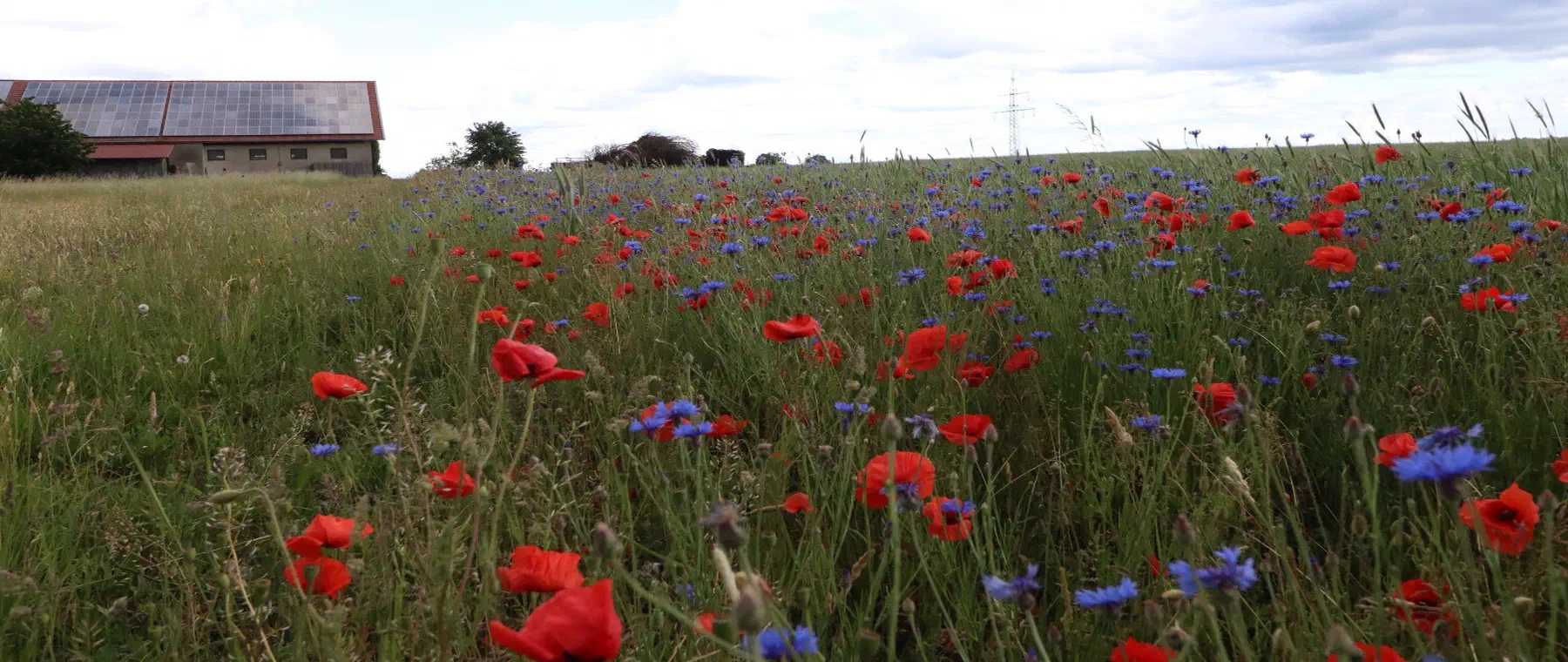
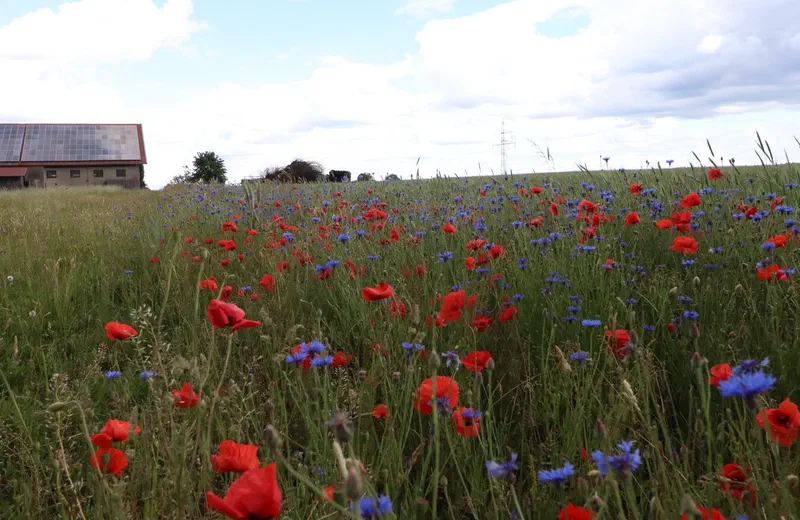
Flowering areas, field margins and skylark plots in the cleared arable landscape of the Limburger Becken, to enhance the agricultural landscape.
Securing rock and quarry habitats
Retention and optimisation of former Lahnmarmor quarries as winter and summer roosts for bats and as reptile habitat.
Protected species in the Lahntal und Limburger Becken
Bats
Former Lahnmarmor quarries, rock crevices and caves in the massive limestone provide important roosts. All bat species are strictly protected under section 44 BNatSchG.
About this species ›Kingfisher
On near-natural stretches of the Lahn with steep banks and clean water, the kingfisher finds breeding and foraging habitats. It is a species protected under European law.
About this species ›Skylark
The open, loess-shaped arable landscape of the Limburger Becken is habitat for the skylark, whose populations benefit from structurally and floristically rich fields.
About this species ›Sand lizard
Warm, dry slopes, calcareous grassland, embankments and extraction sites provide the sand lizard with suitable habitats. It is strictly protected under section 44 BNatSchG.
About this species ›Amphibians
Ponds and water-filled hollows in quarries and floodplains serve amphibians, including pioneer species of extraction sites, as spawning waters.
About this species ›Northern lapwing
The northern lapwing can breed on arable and grassland areas of the Lahn floodplain and the basin. Ground-nesting farmland birds are sensitive to the intensity of land use, which justifies CEF measures.
About this species ›Your route to eco-points in D40
Contact and enquiry
Tell us your compensation requirement and the natural region. We check availability.
Offer and advice
A transparent offer covering measure types, scope and availability.
Coordination with authorities
Full coordination with the lower nature conservation authority. We handle everything.
Long-term monitoring
Permanent securing of the land, management and documentation across the contract term.
Eco-points in neighbouring natural regions
All about natural region D40
Request eco-points in natural region D40
We will promptly prepare a transparent offer with matching eco-points held in stock in the Lahntal und Limburger Becken.