Eco-points in natural region D36
Unteres Weserbergland und Oberes Weser-Leinebergland
Immediately available eco-points from officially recognised eco-accounts in the natural region D36, Unteres Weserbergland und Oberes Weser-Leinebergland. greeNature solutions is your full-service partner for compensation in the Lower Saxon and North Rhine-Westphalian uplands, from the impact mitigation regulation under the NAGBNatSchG in Lower Saxony to the Landeskompensationsverordnung NRW.
Natural region D36 at a glance
The natural region D36, Unteres Weserbergland und Oberes Weser-Leinebergland, extends on both sides of the Weser across the south of Lower Saxony and the east of North Rhine-Westphalia. As part of the German central uplands threshold, it stretches from the Wiehengebirge and Wesergebirge, with the Weser gorge at the Porta Westfalica, across the Lippisches Bergland to the upper Weser valley around Hameln, Holzminden and Höxter. Wooded ridges, open Börde landscapes and the broad Weser valley alternate here within a small area.
Geologically, the Weserbergland is a classic cuesta landscape formed of Mesozoic rocks. Clayey, sandy Buntsandstein, which underlies the large woodlands of the Solling, is overlain by Muschelkalk and Keuper. The harder limestone and sandstone bands form the elongated ridges of the Ith, Süntel, Wiehengebirge and Wesergebirge, while the softer clay and marl layers shape the basins and valleys in between. At the Porta Westfalica, the Weser has cut straight across the mountain range.
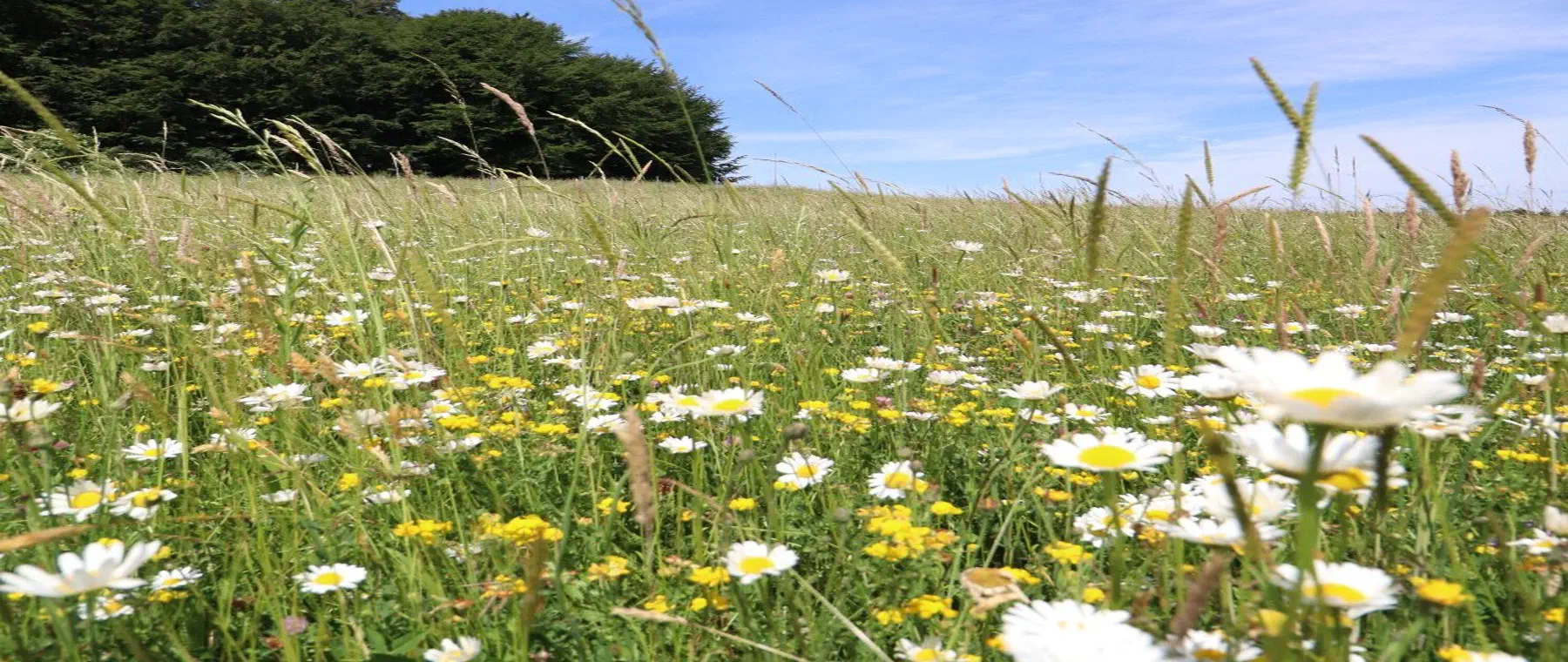
Species-rich calcareous beech woodland grows on the limestone sites of the Muschelkalk and limestone, with small areas of calcareous grassland and semi-dry grassland on sun-exposed slopes supporting a rich orchid and insect fauna. Traditional orchards, hedgerows and species-poor hay meadows characterise the farmed cultural landscape, for example in the Warburger Börde. In the Weser valley, remnants of floodplain forest, wet grassland and oxbows accompany the river.
Large parts of the natural region are protected through the Weserbergland Schaumburg-Hameln and Solling-Vogler nature parks, as well as numerous FFH and Special Protection Areas. For compensation projects, the Weserbergland offers high potential in near-natural beech woodland, calcareous grassland, traditional orchards and the restoration of the Weser and its tributary streams. Lower Saxony is the principal state, with the impact mitigation regulation under the NAGBNatSchG applying, while the Landeskompensationsverordnung NRW applies to the North Rhine-Westphalian portion.
📍 Districts covered
🌿 Ecological features
- The Porta Westfalica, the Weser gorge between the Wiehengebirge and Wesergebirge, forms the northern gateway to the natural region
- The Weserbergland Schaumburg-Hameln and Solling-Vogler nature parks protect large, contiguous woodland landscapes
- Species-rich calcareous beech woodland and calcareous grassland on Muschelkalk in the Ith, Süntel, Wesergebirge and Egge
- The Solling, with the Große Blöße (527.8 m), is the highest point and one of the largest Buntsandstein woodland landscapes in northern Germany
- The ridge of the Wiehengebirge runs for around 95 km from Bramsche to the Porta Westfalica
- The Weser valley acts as a supra-regional habitat network and a guiding route for bird migration
✅ greeNature in this region
greeNature operates nationwide and is familiar with the nature-conservation requirements and the respective state law applying in the Weserbergland. In the Lower Saxon portion, we work under the impact mitigation regulation of the NAGBNatSchG and the habitat value procedure, and in the North Rhine-Westphalian portion under the Landeskompensationsverordnung NRW. From land acquisition through measure planning to long-term management and documentation, we support your compensation project in the natural region D36 and coordinate it with the responsible lower nature conservation authorities.
Typical measures in natural region D36
Calcareous beech woodland & woodland conversion
Development and near-natural management of calcareous and woodrush beech woodland, enrichment with old and dead wood and habitat trees, providing habitat for the black stork, bats and hazel dormouse.
Calcareous grassland & semi-dry grassland
Restoration and management of orchid-rich calcareous grassland on Muschelkalk through scrub clearance, sheep and goat grazing, and extensive mowing.
Traditional orchards & hedgerows
Creation and management of traditional orchards, hedgerows and field copses in the upland cultural landscape, providing habitat connectivity and foraging habitat for the little owl, red-backed shrike and bats.
Watercourses & Weser floodplains
Restoration of the Weser and its tributary streams, removal of bank reinforcement, planting of riparian woodland, and restoration of connectivity for fish, the kingfisher and amphibians.
Wet and nutrient-poor grassland
Extensification of grassland in the Weser valley and upland basins, rewetting of wet meadows, and adapted mowing to benefit meadow-breeding birds and insect diversity.
Woodland species and cave protection
Securing of roost trees, rock faces and old mine adits as winter roosts for bats, together with targeted CEF measures for species of structurally rich woodland.
Protected species in the Unteres Weserbergland und Oberes Weser-Leinebergland
Black stork
The black stork breeds in the extensive, quiet beech and mixed woodland of the Solling and the Weserbergland, and uses near-natural streams and wet meadows to forage. Effective measures include nest-site protection, woodland-edge design and the restoration of watercourses.
About this species ›European wildcat
The European wildcat (FFH Annex IV) inhabits the large, structurally rich broadleaf woodlands of the Solling, Vogler and Wesergebirge. Unfragmented woodland complexes, dead wood and woodland corridors secure its habitat and are relevant to habitat-network and CEF measures.
About this species ›Bats
Old calcareous beech woodland, cavity trees and former mine adits in the Weserbergland provide roosts for Bechstein's bat, the greater mouse-eared bat and the barbastelle bat. Roost trees, winter roosts and hunting habitats can be developed specifically for species protection.
About this species ›Hazel dormouse
The hazel dormouse (FFH Annex IV) lives in the understorey-rich broadleaf woodland, woodland edges and hedgerows of the uplands. The retention of structurally rich woody margins and the connection of woodland edge and hedgerow are among the typical measures for the species.
About this species ›Kingfisher
The kingfisher hunts along the Weser, Emmer, Hamel and other near-natural streams, and needs clean, fish-rich waters with steep banks for breeding. The restoration of banks and the creation of eroding edges directly benefit the species.
About this species ›Amphibians
Sunlit ponds, quarries and spring-fed woodland streams are home to the yellow-bellied toad, great crested newt and fire salamander. The creation and restoration of small water bodies, together with the protection of spawning habitats, are among the effective compensation measures.
About this species ›Your route to eco-points in D36
Contact and enquiry
Tell us your compensation requirement and the natural region. We check availability.
Offer and advice
A transparent offer covering measure types, scope and availability.
Coordination with authorities
Full coordination with the lower nature conservation authority. We handle everything.
Long-term monitoring
Permanent securing of the land, management and documentation across the contract term.
Eco-points in neighbouring natural regions
All about natural region D36
Request eco-points in natural region D36
We will promptly prepare a transparent offer with matching eco-points held in stock in the Unteres Weserbergland und Oberes Weser-Leinebergland.