Eco-points in natural region D34
Westfälische Tieflandsbucht
Eco-points and compensation areas in the natural region D34 (Westfälische Tieflandsbucht), assessed using the habitat value procedure and through eco-accounts under section 32 LNatSchG NRW. greeNature operates nationwide and is your full-service partner for impact mitigation regulation and species protection in the Münsterland and the Hellwegbörden.
Natural region D34 at a glance
The natural region D34, Westfälische Tieflandsbucht (also known as the Westfälische or Münsterländer Bucht), forms the south-western part of the North German Plain. It lies almost entirely within North Rhine-Westphalia, with smaller fringe areas in the north extending into Lower Saxony as far as the area south of Osnabrück. The broad, gently undulating landscape is framed by the Teutoburger Wald and Eggegebirge to the north and east, and by the Sauerland to the south.
Geologically, the bay originated as a marine embayment of the Cretaceous period, and its subsoil consists of Upper Cretaceous deposits. During the Quaternary, glacial advances left behind ground moraines and meltwater sands. The northern Münsterland is predominantly sandy, while fertile loess soils of the Hellwegbörden extend along the Hellweg in the south. The rivers Ems, Lippe, Werse and Berkel run through the natural region and form important floodplain and habitat-network corridors.
The Münsterländer Parklandschaft defines the ecology of the area, with its small-scale mosaic of grassland, arable land, hedge banks and small water bodies. Large, contiguous woodland areas such as the Davert south of Münster complete the picture. The Rieselfelder Münster are an internationally important resting and breeding area for wading and water birds. The Münsterland is also regarded as one of the most important refuges for the little owl in Central Europe, and the damp lowlands are a habitat for meadow-breeding birds such as the northern lapwing.
Compensation in North Rhine-Westphalia is governed by the habitat value procedure based on the numerical assessment of habitat types (LANUV). Advance measures are recorded as eco-accounts under section 32 LNatSchG NRW and the Eco-Account Ordinance, and are administered by the lower nature conservation authorities (Untere Naturschutzbehörden). NRW divides the state into five compensation zones based on the natural-region units, so that compensation takes place within the same zone wherever possible. The basis remains the impact mitigation regulation under sections 13 to 15 BNatSchG, supplemented by species protection under section 44 BNatSchG with advance CEF measures.
📍 Districts covered
🌿 Ecological features
- Münsterländer Parklandschaft with a dense network of hedge banks and small water bodies
- Rieselfelder Münster: EU Special Protection Area (SPA) and internationally important resting area for wading birds
- Davert: large contiguous broadleaf woodland area south of Münster
- Hellwegbörden in the south: fertile loess soils and an important area for farmland birds
- Ems and Lippe floodplains as supra-regional habitat-network corridors
- Münsterland as one of the strongholds of the little owl in Central Europe
- Sandy heaths and remnant bogs in the northern Münsterland as reptile and amphibian habitat
✅ greeNature in this region
greeNature works nationwide and is thoroughly familiar with the requirements in North Rhine-Westphalia. We know the practice of the lower nature conservation authorities, the habitat value procedure under LANUV, the Eco-Account Ordinance under section 32 LNatSchG NRW, and the state's division into compensation zones. This allows us to secure spatially appropriate, legally sound compensation for projects in the Münsterland and the Hellwegbörden.
Typical measures in natural region D34
Watercourse and floodplain restoration
Restoration of near-natural watercourses and floodplains on the Ems, Lippe, Werse and Berkel, with bank flattening, steep banks for the kingfisher, and the reconnection of oxbows.
Wet grassland extensification
Conversion of intensively used land into species-rich, extensively managed wet grassland as breeding and foraging habitat for meadow-breeding birds such as the northern lapwing.
Hedge banks and field copses
Creation and restoration of the hedge banks typical of the Münsterländer Parklandschaft, for habitat connectivity and as a habitat for birds and small mammals.
Small water bodies and amphibian habitats
Creation of new shallow pools and small water bodies in the open farmland as spawning habitat for the great crested newt and other amphibians, with structurally rich terrestrial habitats nearby.
Near-natural woodland conversion
Development of site-appropriate oak-hornbeam and beech woodland on sandy and loamy sites, climate-resilient and secured for the long term.
Traditional orchards
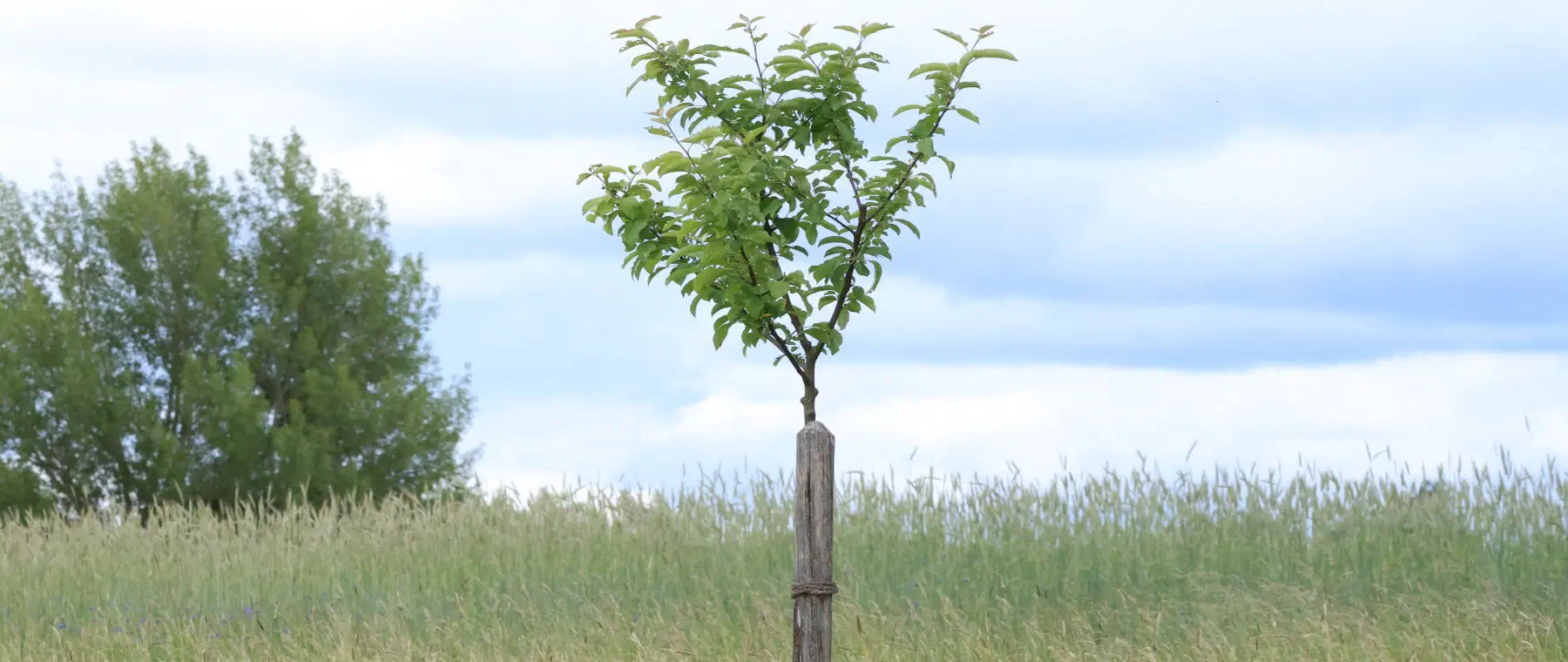
Creation and management of traditional orchards with extensively managed ground cover, a characteristic habitat of the little owl in the Münsterland.
Protected species in the Westfälische Tieflandsbucht
Northern lapwing
The damp lowlands and grasslands of the bay are a breeding area for the northern lapwing. Typical measures include rewetting, wet grassland extensification and the creation of shallow pools.
About this species ›Skylark
In the open agricultural landscape of the Hellwegbörden and the Münsterland, skylark plots and flowering strips are proven CEF measures for construction and infrastructure projects.
About this species ›Kingfisher
On the near-natural stretches of the Ems, Lippe and Werse, the kingfisher breeds in steep banks. Restoration works with eroding edges and low-disturbance bank zones benefit the species.
About this species ›Amphibians and great crested newt
The parkland landscape, rich in small water bodies, provides habitat for the great crested newt and other amphibians. Newly created shallow pools and connected terrestrial habitats increase the compensation value.
About this species ›Bats
Old broadleaf woodlands such as the Davert, together with hedge banks and traditional orchards, provide roosting and hunting grounds for Bechstein's bat, the greater mouse-eared bat and other species.
About this species ›Black stork
Low-disturbance woodland areas rich in water bodies provide the black stork with foraging and breeding habitats. Woodland restoration and watercourse development work together here.
About this species ›Your route to eco-points in D34
Contact and enquiry
Tell us your compensation requirement and the natural region. We check availability.
Offer and advice
A transparent offer covering measure types, scope and availability.
Coordination with authorities
Full coordination with the lower nature conservation authority. We handle everything.
Long-term monitoring
Permanent securing of the land, management and documentation across the contract term.
Eco-points in neighbouring natural regions
All about natural region D34
Request eco-points in natural region D34
We will promptly prepare a transparent offer with matching eco-points held in stock in the Westfälische Tieflandsbucht.