Eco-points in natural region D23
Schleswig-Holsteinisches Hügelland
Eco-points and compensation sites in natural region D23, the Schleswig-Holsteinisches Hügelland. greeNature supports project developers nationwide with the impact mitigation regulation under the BNatSchG and the Schleswig-Holstein Eco-Account Ordinance, from the search for sites through measure planning to official recognition.
Natural region D23 at a glance
Natural region D23, the Schleswig-Holsteinisches Hügelland, shapes the east of Schleswig-Holstein between the Danish border in the north and the Herzogtum Lauenburg in the south. Gentle hills of the Baltic Uplands, numerous lakes, deeply incised Baltic Sea fjords (Förden) such as the Schlei, Kieler Förde and Flensburger Förde, and the dense network of Knicks form one of the most varied cultural landscapes in northern Germany.
Geologically, the landscape is a legacy of the Weichselian glaciation. Ground and terminal moraines, outwash plains and meltwater channels shaped the varied relief, with the Bungsberg as the highest elevation in Schleswig-Holstein. The fertile, loamy moraine soils have traditionally been used intensively for arable and grassland farming, which poses particular challenges for nature conservation and compensation planning.
Ecologically significant is the lake-rich Holsteinische Schweiz, with the Großer Plöner See and the Selenter See, complemented by old beech woodland, small water bodies, and the Holsteinische Schweiz and Lauenburgische Seen nature parks. Characteristic species are the fire-bellied toad and the great crested newt in the small water bodies, as well as the white-tailed eagle, which has one of its German strongholds in Ostholstein.
For projects, the statutory impact mitigation regulation under §§ 13 to 15 BNatSchG applies. In Schleswig-Holstein, compensation is handled through the Eco-Account Ordinance and the biotope value procedure, which expresses the ecological enhancement gain in eco-points (one eco-point corresponds to one square metre). In addition, the species protection requirements of § 44 BNatSchG must be observed, for example advance compensation measures (CEF) for amphibians, bats or the hazel dormouse.
📍 Districts covered
🌿 Ecological features
- The Holsteinische Schweiz, with the Großer Plöner See and the Selenter See (nature park)
- The Baltic Uplands, with the Bungsberg as the highest elevation in Schleswig-Holstein
- The Baltic Sea fjords Schlei, Kieler Förde and Flensburger Förde as Ice Age channels
- The Knick landscape (hedge banks) as a defining and legally protected habitat
- The Lauenburgische Seen Nature Park on the border with Mecklenburg-Western Pomerania
- Numerous small water bodies as habitat for the fire-bellied toad and great crested newt
- Fertile moraine soils with intensive arable and grassland use
✅ greeNature in this region
greeNature works nationwide and knows the nature conservation requirements in Schleswig-Holstein, from the lower nature conservation authorities of the districts to the State Agency for the Environment. In natural region D23, we support project developers with securing land, measure planning under the Eco-Account Ordinance, and the recognition of eco-points as advance compensation.
Typical measures in natural region D23
Creating and managing Knicks
Restoring and properly managing hedge banks, the defining and legally protected landscape feature of Schleswig-Holstein, with high habitat value and a connecting function.
Small water bodies and amphibian ponds
Creating and improving sunlit still waters as spawning habitat for the fire-bellied toad and great crested newt, suitable as a CEF measure under § 44 BNatSchG.
Grassland extensification
Converting intensively used land into species-rich wet and marshy grassland in lowlands and lakeshore areas as habitat for meadow birds such as the northern lapwing.
Watercourse restoration
Developing near-natural watercourses, riparian buffer strips and lakeshores, creating steep banks and structurally rich waters for the kingfisher.
Near-natural forest conversion
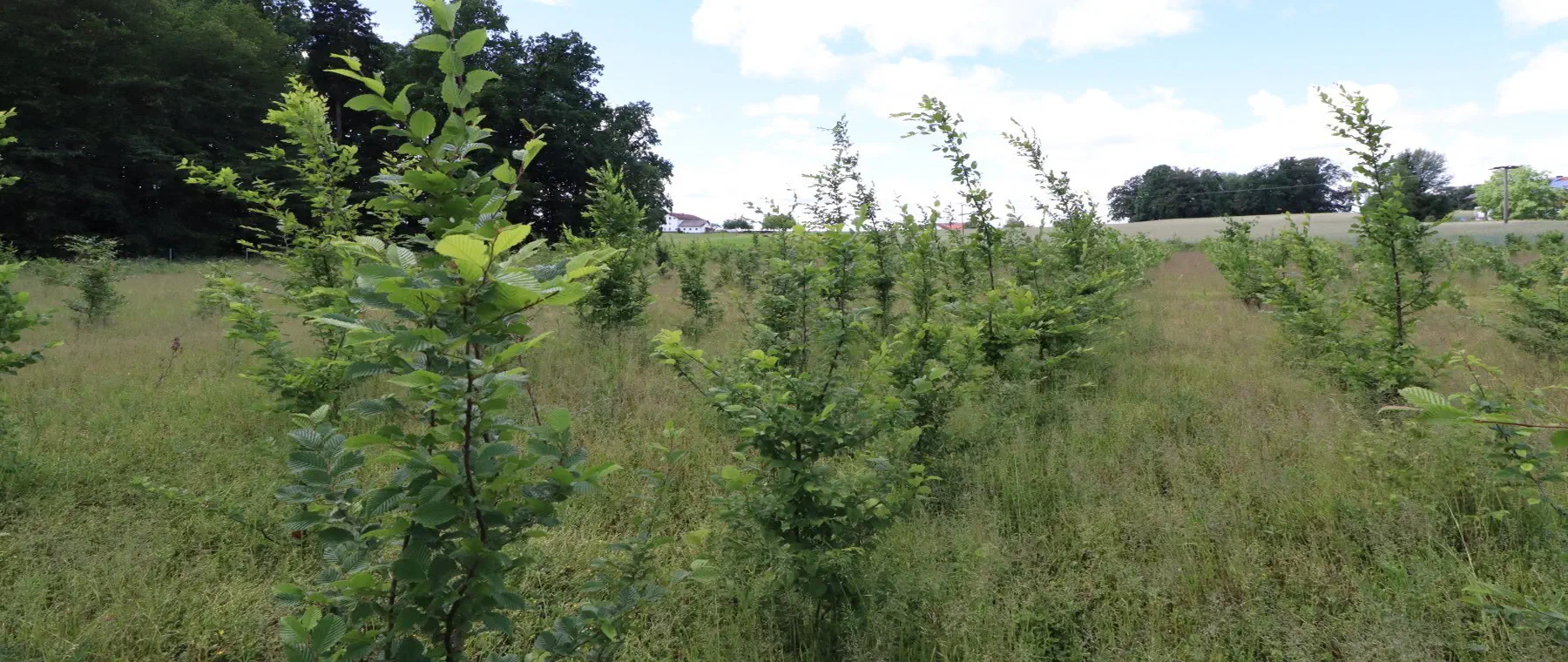
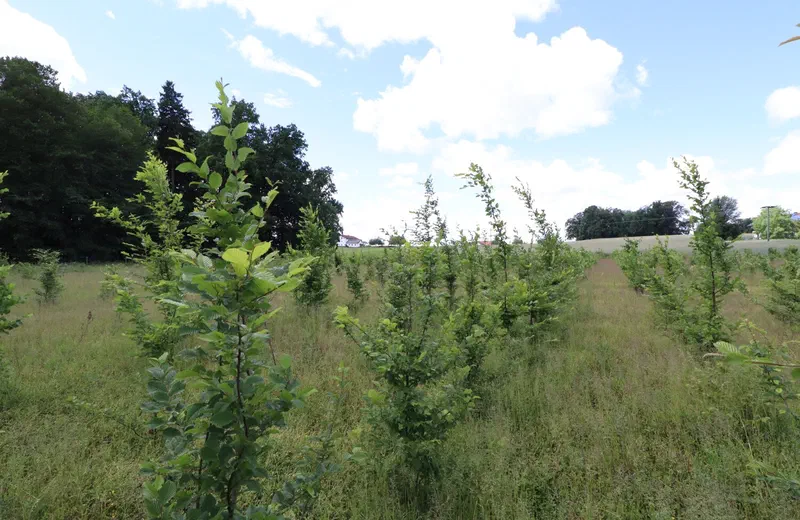
Developing site-appropriate beech and oak-hornbeam woodland on moraine sites, climate-resilient and secured long-term by easement.
Species protection: CEF/FCS
Tailored avoidance and compensation measures, such as bat roosts, hazel dormouse connectivity in Knicks, and habitat protection for strictly protected species.
Protected species in the Schleswig-Holsteinisches Hügelland
Fire-bellied toad
A characteristic, severely threatened amphibian species of the small water bodies and Knick landscape of Ostholstein, strictly protected under European law under FFH Annex IV.
About this species ›Great crested newt
The largest native newt, dependent on fish-free, well-sunlit small water bodies and a species listed under FFH Annexes II and IV, frequently the subject of CEF measures.
About this species ›White-tailed eagle
A bird of prey with one of its German strongholds in the lake- and woodland-rich Holsteinische Schweiz and the Lauenburgische Seen Nature Park.
Kingfisher
Breeds in steep banks of near-natural watercourses and lakes, benefiting from watercourse restoration and structurally rich bank areas.
About this species ›Hazel dormouse
A nocturnal dormouse of the Knicks, shrubland and woodland edges, dependent on continuous shrub and tree structures and strictly protected under FFH Annex IV.
About this species ›Bats
Species such as the pond bat and Serotine bat hunt over lakes, Knicks and woodland edges and need roosts as well as connected guide structures.
About this species ›Your route to eco-points in D23
Contact and enquiry
Tell us your compensation requirement and the natural region. We check availability.
Offer and advice
A transparent offer covering measure types, scope and availability.
Coordination with authorities
Full coordination with the lower nature conservation authority. We handle everything.
Long-term monitoring
Permanent securing of the land, management and documentation across the contract term.
Eco-points in neighbouring natural regions
All about natural region D23
Request eco-points in natural region D23
We will promptly prepare a transparent offer with matching eco-points held in stock in the Schleswig-Holsteinisches Hügelland.