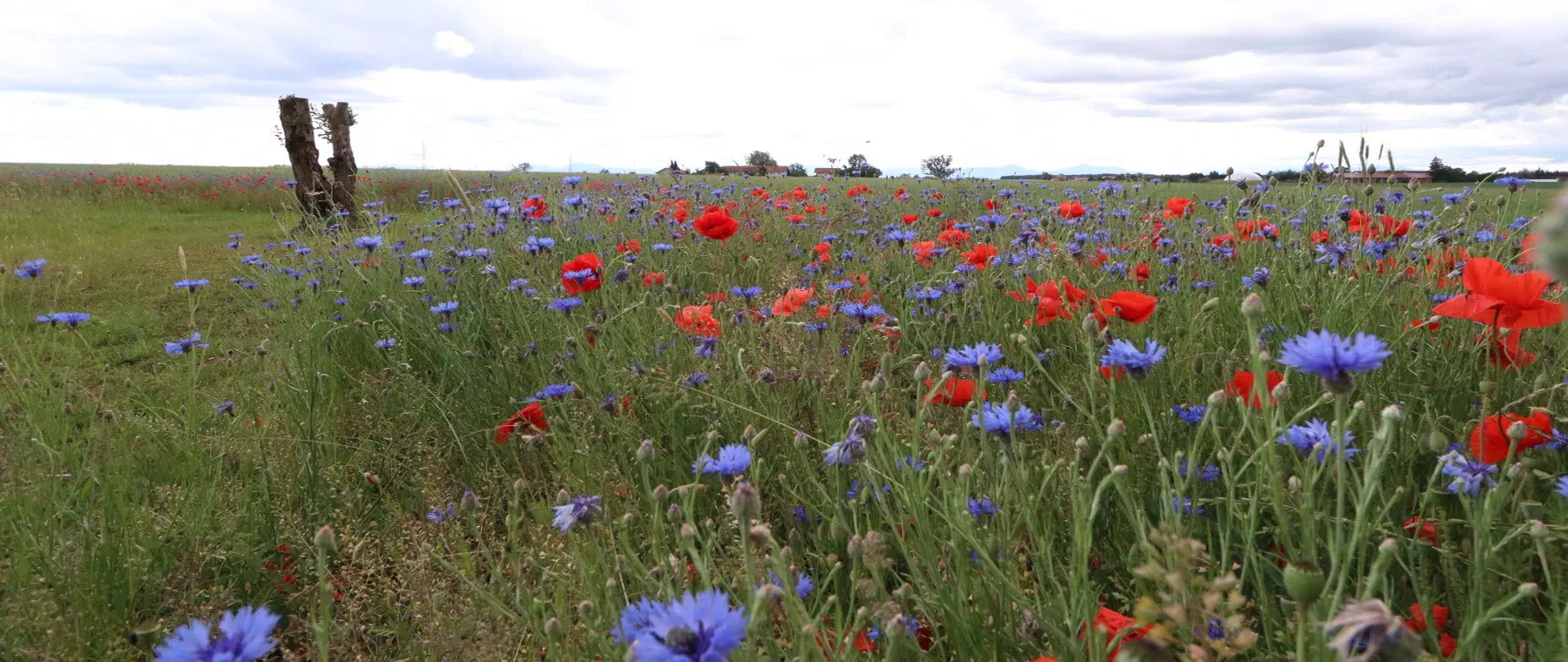
Eco-points in natural region D22
Schleswig-Holsteinische Geest
Eco-points and compensation in natural region D22 (Schleswig-Holsteinische Geest). greeNature plans and implements compensation and replacement measures under the impact mitigation regulation and the Schleswig-Holstein Eco-Account Ordinance (ÖkokontoVO), active nationwide and familiar with the authorities and state law in Schleswig-Holstein.
Natural region D22 at a glance
The Schleswig-Holsteinische Geest (BfN major natural region D22) forms the central ridge of the state and separates the fertile marshes in the west from the Eastern Hill Country. Geologically, this is an old moraine landscape, formed during the Saale glaciation and since weathered and levelled over more than a hundred thousand years. Nutrient-poor, sandy soils far from the water table predominate, crossed by gently undulating geest cores, extensive outwash plains and sunken lowlands. The Hohe Geest stretches as a broad band from the Danish border across Bredstedt, Hohenwestedt and Itzehoe to the Hamburg area and Lauenburg.
Centuries of use turned the original oak and oak-beech woodland into extensive heathland, sandy grassland and mires. Large areas were later afforested with conifers or converted into grassland and arable land. Characteristic features that remain are the hedge banks (Knicks), which shape the landscape and the habitat network, as well as remnants of dry heaths, inland dunes, raised and fen mires, and near-natural geest streams. These structurally poor but site-specific habitats are home to numerous protected species and determine the nature-conservation enhancement potential of the area.
For impacts on nature and landscape, the impact mitigation regulation under §§ 13 to 15 BNatSchG applies, in conjunction with the Schleswig-Holstein state Nature Conservation Act. Avoidable impairments must be refrained from, unavoidable ones offset or replaced. Schleswig-Holstein builds directly on the natural region classification of the Federal Agency for Nature Conservation, so that classification under major natural region D22 forms the decisive reference area for compensation. Through the ÖkokontoVO, enhancement measures can be implemented and documented in advance and allocated to a later impact as eco-points.
In addition to the impact mitigation regulation, special species protection under § 44 BNatSchG must be observed. Where breeding sites and resting places of protected species are affected, advance compensation measures (CEF) secure the ecological function, supplemented where necessary by measures to maintain a favourable conservation status (FCS). greeNature combines compensation under the impact mitigation regulation with the requirements of species protection law and supports projects from concept through official coordination to implementation and management.
📍 Districts covered
🌿 Ecological features
- Old moraine landscape from the Saale glaciation, with largely levelled geest cores and extensive outwash plains
- Nutrient-poor, sandy soils as a site for heathland, sandy grassland and inland dunes
- Hedge banks (Knicks) as a landscape-defining feature of Schleswig-Holstein, important for the habitat network
- Raised and fen mires with high potential for rewetting and climate protection
- Near-natural geest streams and nutrient-poor small water bodies as habitat for specialised species
- A central geest ridge between the marshes in the west and the hill country in the east
- Large areas of coniferous plantation with potential for conversion into native broadleaf woodland
✅ greeNature in this region
greeNature works nationwide and is familiar with the nature conservation law of the federal states. In Schleswig-Holstein, we align compensation with the impact mitigation regulation, the LNatSchG SH and the ÖkokontoVO, and agree measures with the lower nature conservation authorities of the districts and the State Agency for Agriculture and the Environment (LLUR). This preserves the required link to major natural region D22.
Typical measures in natural region D22
Developing and managing sandy heathland
Restoring and managing dry heathland on nutrient-poor geest sites through scrub clearance, sectional turf stripping (plaggen) and extensive grazing with sheep or Heidschnucke sheep. Keeping the land open preserves the characteristic dwarf-shrub stands and creates habitat for heat-loving species of the geest.
Rewetting mires
Raising the water level in drained raised and fen mires by removing ditches and drains. Rewetting restores peat-forming vegetation, stores carbon and develops habitats for mire-typical species, a high-value contribution to the eco-account and compensation.
Creating Knicks and hedge banks
Creating new and properly managing the hedge banks typical of the state, planted on earth banks. Knicks connect habitats, serve as hunting and guide structures for bats and birds, and sustainably enhance the structurally poor farmland landscape of the geest.
Converting conifer plantations into broadleaf woodland
Converting unnatural pine and spruce plantations into native oak-birch and oak-beech woodland. Underplanting native broadleaf species and preserving old growth and deadwood create structurally rich, site-appropriate woodland of high ecological value.
Restoring geest streams and small water bodies
Removing bank reinforcement, restoring self-forming watercourses and creating sunlit, fish-free small water bodies. Near-natural geest streams and heathland pools support amphibians, dragonflies and species bound to nutrient-poor conditions.
Extensifying grassland and converting arable land
Converting intensively used grassland and arable land into extensively used, late-mown wet grassland with adapted mowing dates and reduced fertiliser use. This creates breeding and foraging areas for meadow birds in the lowlands of the geest, and a lasting compensation value.
Protected species in the Schleswig-Holsteinische Geest
Northern lapwing
This severely threatened meadow-breeding bird inhabits the open, wet grassland and arable lowlands of the geest. Its breeding sites are protected under § 44 BNatSchG. Shallow scrapes, grassland extensification and clutch protection secure the ecological function as CEF measures.
About this species ›Skylark
As a ground-nesting bird of the open farmland, the skylark is widespread on the sandy arable soils of the geest and must regularly be considered in the special species protection assessment. Skylark plots, flowering and fallow strips act as advance compensation measures.
About this species ›Sand lizard
This species, strictly protected under Annex IV of the FFH Directive, finds its habitat in sandy heaths, inland dunes and on embankments and railway embankments of the geest. Replacement habitats of sand, stone and deadwood, together with relocation, secure the populations (CEF).
About this species ›Great crested newt
The great crested newt is strictly protected under Annexes II and IV of the FFH Directive and spawns in fish-free small water bodies, heathland pools and mire waters of the geest. Creating and managing sunlit replacement spawning waters within a network supports the populations.
About this species ›Bats
The native bat species are strictly protected and secured under Annex IV of the FFH Directive. Knicks, woodland edges and old trees of the geest serve as hunting grounds, guide structures and roosts. Replacement roosts and the preservation of guide structures maintain this function.
About this species ›Common crane
The common crane (Grus grus) is a disturbance-sensitive characteristic species of rewetted mires and wet lowlands and is protected under § 44 BNatSchG. Rewetting mires and securing undisturbed areas create and preserve breeding habitats.
Your route to eco-points in D22
Contact and enquiry
Tell us your compensation requirement and the natural region. We check availability.
Offer and advice
A transparent offer covering measure types, scope and availability.
Coordination with authorities
Full coordination with the lower nature conservation authority. We handle everything.
Long-term monitoring
Permanent securing of the land, management and documentation across the contract term.
Eco-points in neighbouring natural regions
All about natural region D22
Request eco-points in natural region D22
We will promptly prepare a transparent offer with matching eco-points held in stock in the Schleswig-Holsteinische Geest.