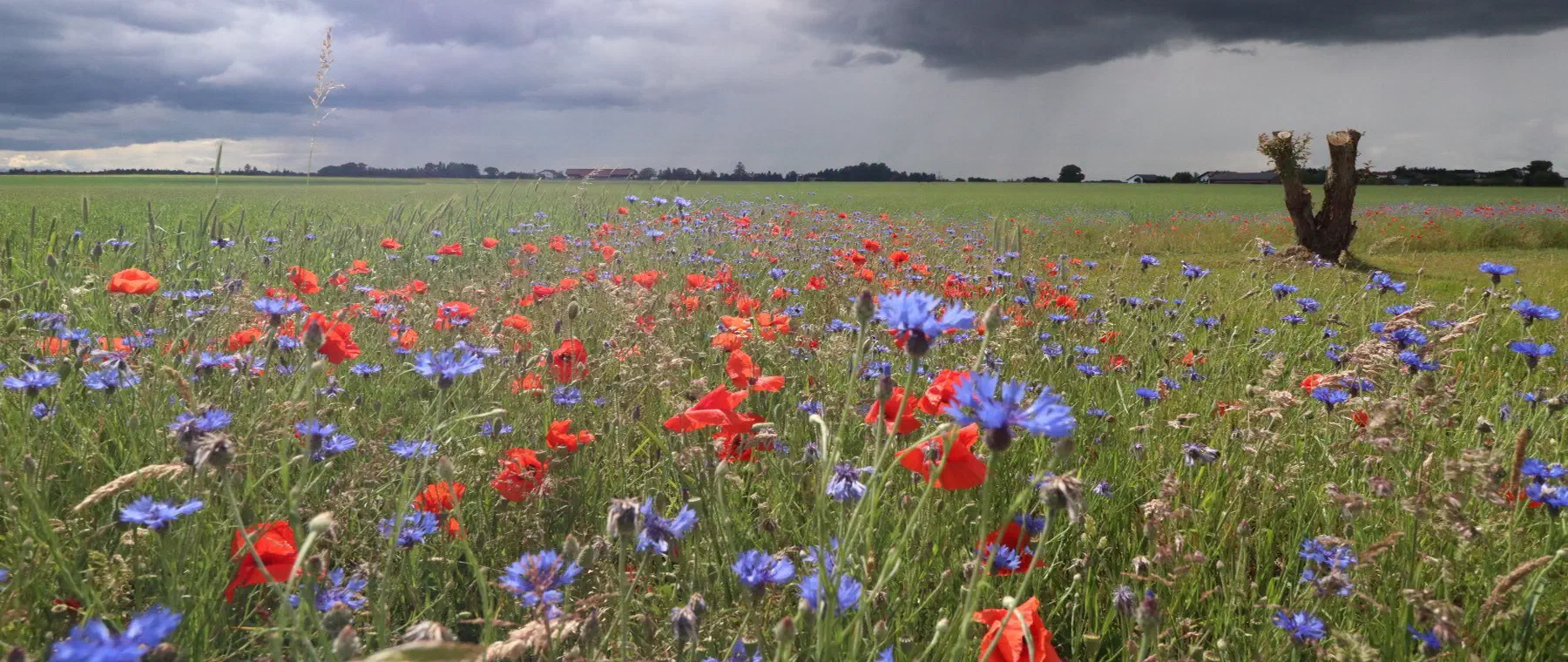
Eco-points in natural region D20
Mitteldeutsches Schwarzerdegebiet
Eco-points and compensation sites in natural region D20, listed in the BfN classification as the Mitteldeutsches Schwarzerdegebiet and characterised by the fertile loess and chernozem soils east of the Harz. greeNature works nationwide and implements compensation and replacement under the Saxony-Anhalt Eco-Account Ordinance and the NatSchG LSA.
Natural region D20 at a glance
Natural region D20 is listed in the natural region classification of the Federal Agency for Nature Conservation (BfN) as the Mitteldeutsches Schwarzerdegebiet and covers the fertile loess and chernozem landscapes east and south-east of the Harz. These include the Magdeburger Börde, the Köthener and Hallesche Ackerland, and the Mansfelder Land. The natural region lies almost entirely in Saxony-Anhalt and forms an extensive, largely woodland-free arable landscape.
Geologically, thick loess covers over Mesozoic substrate dominate, from which the extremely fertile chernozem soils have developed. The subcontinental, warm and dry climate in the rain shadow of the Harz, which leads to low rainfall and intensive arable farming, is a defining feature. The natural region is crossed by the valleys of the Saale, Bode and Wipper, which are of particular ecological significance as floodplains and linear features.
Because of its high soil quality, the natural region is among the most intensively used agricultural areas in Germany. The proportion of woodland is low, and near-natural habitats are often confined to river valleys, slope areas with dry and semi-dry grassland, field copses, small water bodies and post-mining landscapes of the Mansfeld copper shale mining district. This intensity of use gives rise to a particular responsibility for qualified compensation, for example for the benefit of the common hamster, skylark and red kite.
Compensation measures are governed by §§ 13 to 15 BNatSchG in conjunction with the Nature Conservation Act of the State of Saxony-Anhalt (NatSchG LSA). Advance measures can be stockpiled through an eco-account under the Saxony-Anhalt Eco-Account Ordinance and assessed in eco-points under the biotope value procedure. Compensation and replacement should preserve a functional link to the impact and, where possible, lie within the affected natural region.
📍 Districts covered
🌿 Ecological features
- One of the most fertile arable landscapes in Germany, with deep chernozem soils on loess
- Subcontinental dry climate in the rain shadow of the Harz, with low rainfall
- Significant populations of the common hamster and red kite, for which Saxony-Anhalt bears particular responsibility
- The river valleys of the Saale, Bode and Wipper as the backbone of the regional habitat network
- A low proportion of woodland and high pressure of use, resulting in a particular need for qualified compensation
- Dry and semi-dry grassland on warm, sheltered slopes with high botanical value
- Post-mining landscapes of the Mansfeld copper shale mining district as sites for restoration
✅ greeNature in this region
greeNature is active nationwide and knows the administrative structures in Saxony-Anhalt, from the lower nature conservation authorities of the districts to the State Administration Office. We work with the law of the main state, in particular the Saxony-Anhalt Eco-Account Ordinance and the NatSchG LSA, and agree the assessment and recognition of eco-points with the responsible authorities.
Typical measures in natural region D20
Arable and flowering strips
Creating perennial flowering and field margin strips to enhance the cleared farmland, benefiting the skylark, insects and common hamster.
Common hamster-friendly farming
Extensified management and adapted harvesting techniques on chernozem sites to support common hamster populations, as a species protection measure.
Small water bodies and kettle holes
Creating and restoring kettle holes and field-copse ponds as spawning waters for amphibians and as stepping stones in the habitat network.
Floodplains and watercourse buffer strips
Developing floodplain forest, buffer strips and bank features on the Saale, Bode and Wipper to improve watercourse ecology and habitat for the kingfisher.
Dry grassland on slopes
Managing and developing dry and semi-dry grassland on warm, sheltered embankments as habitat for the sand lizard and heat-loving species.
Hedgerows and traditional orchards
Creating hedgerows, field copses and traditional orchards to enrich the structure of the farmland landscape and connect isolated habitats.
Protected species in the Mitteldeutsches Schwarzerdegebiet
Common hamster
A characteristic species of the central German chernozem soils, strictly protected and in strong decline. Impacts often require CEF measures under § 44 BNatSchG.
Skylark
A widespread breeding bird of the open arable landscape, whose populations suffer from the intensity of use and which benefits from flowering strips.
About this species ›Red kite
Saxony-Anhalt is home to a substantial share of the world population. The open farmland of the natural region is a preferred hunting ground.
Northern lapwing
A ground-nesting bird of damp arable and grassland areas with sharply declining populations, for which wetland habitats and extensive management are important.
About this species ›Sand lizard
Inhabits embankments, dry grassland and railway embankments. For impacts, advance replacement habitats and relocations must be considered.
About this species ›Bats
Several strictly protected species use traditional orchards, avenues and buildings as roosts and hunting habitats in the open land and the river valleys.
About this species ›Your route to eco-points in D20
Contact and enquiry
Tell us your compensation requirement and the natural region. We check availability.
Offer and advice
A transparent offer covering measure types, scope and availability.
Coordination with authorities
Full coordination with the lower nature conservation authority. We handle everything.
Long-term monitoring
Permanent securing of the land, management and documentation across the contract term.
Eco-points in neighbouring natural regions
All about natural region D20
Request eco-points in natural region D20
We will promptly prepare a transparent offer with matching eco-points held in stock in the Mitteldeutsches Schwarzerdegebiet.