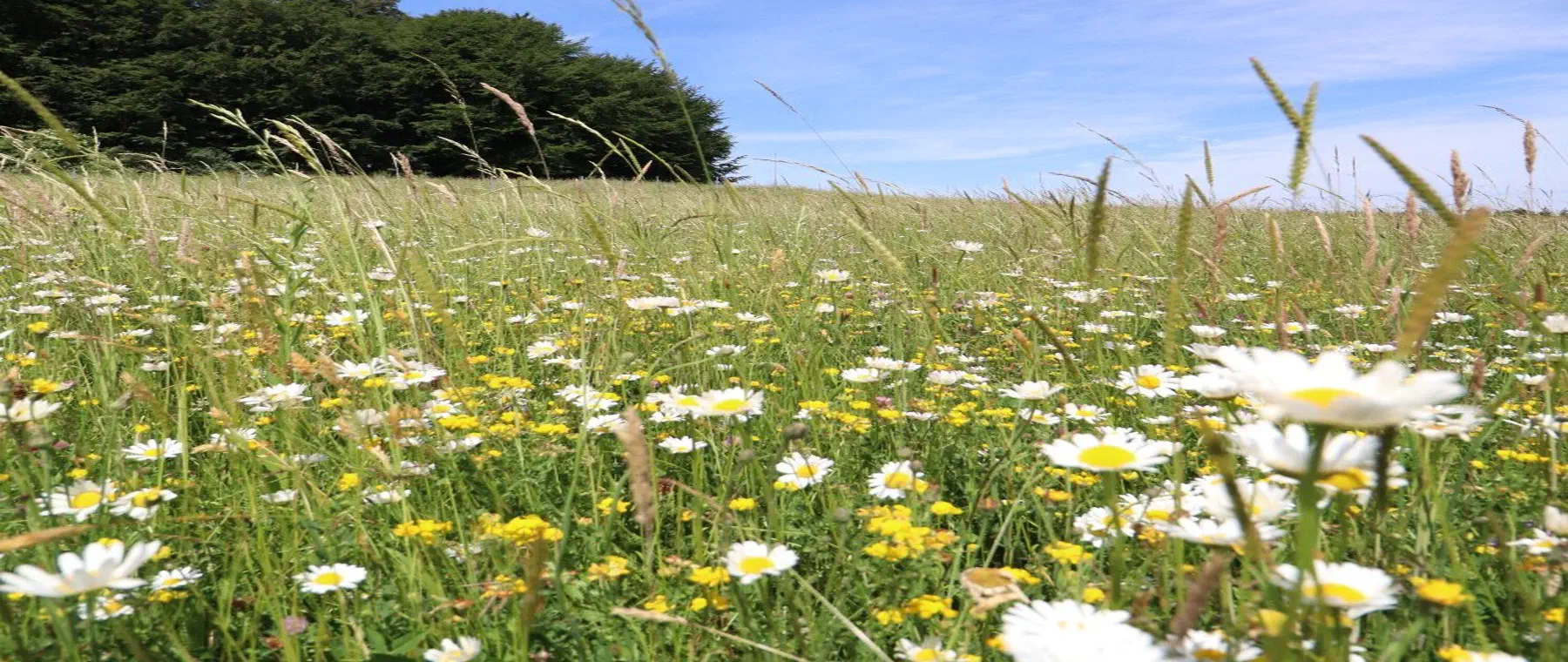
Eco-points in natural region D19
Erzgebirgsvorland und Sächsisches Hügelland
Natural region D19, Erzgebirgsvorland und Sächsisches Hügelland, covers the fertile loess landscapes and the widening of the Elbe valley around Meißen, Dresden and Riesa. Here, greeNature develops and manages compensation sites and eco-accounts true to the natural region under the Saxon Eco-Account Ordinance, from securing land through to permanent management.
Natural region D19 at a glance
Natural region D19, the Erzgebirgsvorland und Sächsisches Hügelland, extends on both sides of the middle Elbe around Meißen, Dresden and Riesa. It links the broad loess hill landscapes of the Lommatzscher Pflege (west of the Elbe) and the Großenhainer Pflege (east of the Elbe) with the Dresden Elbe valley widening and the Elbe gorge valley near Meißen.
Over the substrate of Rotliegend, porphyry and gneiss lie thick loess covers deposited during the Ice Ages, from which deep, highly fertile soils have developed. The Lommatzscher Pflege is regarded as the granary of Saxony and ranks among the most productive arable landscapes in Germany.
The band of the Elbe, with its floodplain meadows, oxbows and steep, south-facing valley slopes, is a defining feature. On the warm porphyry hills and terraced slopes between Radebeul, Meißen and Diesbar-Seußlitz lies the Sächsisches Elbland wine-growing region, one of the northernmost wine regions in Germany, with dry stone walls and vineyard terraces.
This diversity, fertile open land, the Elbe floodplain and heat-loving dry sites, gives rise to a wide range of approaches for compensation. Under the impact mitigation regulation, compensation and replacement should, where possible, take effect within the affected natural region, which makes site selection true to the natural region especially important in the Elbe and loess hill country.
📍 Districts covered
🌿 Ecological features
- The Lommatzscher Pflege and Großenhainer Pflege, with the most fertile loess soils in Saxony, a historic area of early settlement and the state's traditional granary.
- The Sächsisches Elbland wine-growing region (Radebeul, Meißen, Diesbar-Seußlitz), one of the northernmost and smallest wine regions in Germany, with steep vineyards and dry stone walls.
- The EU bird protection area and FFH site Elbtal between Schöna and Mühlberg, one of the most important breeding areas for the corncrake in the Free State of Saxony.
- The Elbe floodplain, with floodplain meadows, oxbows and a significant population of the Elbe beaver.
- Warm, dry Elbe valley slopes and porphyry hills (including the Spaargebirge near Meißen) with dry grassland and heat-loving species.
- The Gohrischheide und Elbniederterrasse Zeithain nature reserve north of Riesa, with sandy heaths, inland dunes and sandy dry grassland.
- The Elbe as a supra-regional habitat network and migration corridor through Saxony.
✅ greeNature in this region
greeNature is active as a partner for nature-conservation compensation in the Saxon Elbe and loess hill country and develops eco-account and compensation sites together with landowners, farmers, winegrowers and municipalities. We secure suitable sites, plan measures typical of the natural region under the Saxon Eco-Account Ordinance (SächsÖKoVO), and take on implementation, permanent management and documentation for recognition by the responsible nature conservation authorities. Because the impact mitigation regulation calls for spatial proximity between impact and compensation, we ensure that compensation takes effect, wherever possible, within the affected natural region, for example through floodplain grassland, dry grassland on the Elbe valley slopes, or enhancing the loess arable landscape. Where a need arises under species protection law under § 44 BNatSchG, we also design advance CEF measures that continuously secure the ecological function for the affected species.
Typical measures in natural region D19
Field margins and flowering areas
Creating extensive field margins, perennial flowering areas and skylark plots in the intensively used loess arable landscape of the Lommatzscher and Großenhainer Pflege. These features support farmland birds, insects and the remaining populations of the common hamster.
Dry grassland and fallow vineyards
Scrub clearance, extensive grazing and preservation of dry grassland, fallow vineyards and dry stone walls on the warm, south-facing Elbe valley slopes and porphyry hills. These sites are among the most species-rich habitats in the natural region.
Floodplain grassland and meadow-breeding bird protection
Extensifying and rewetting floodplain meadows along the Elbe with an adapted, late mowing regime. Such sites secure meadow-breeding birds such as the corncrake and northern lapwing and can be implemented as production-integrated compensation.
Watercourse restoration
Removing bank reinforcement, creating buffer strips along watercourses and developing steep banks and riparian woodland on Elbe tributary streams such as the Ketzerbach, Jahna and Döllnitz. Near-natural waters improve habitats for the kingfisher and beaver.
Small water bodies and amphibian spawning waters
Creating new sunlit, fish-free ponds and small water bodies in the Elbe floodplain and the farmland. As CEF measures, they secure breeding sites for the great crested newt and fire-bellied toad and enhance the habitat network.
Hedgerows, field copses and traditional orchards
Creating hedgerows, field copses, fringes and traditional orchards with standard fruit trees to connect habitats in the cleared loess landscape. These stepping-stone habitats support cavity-nesting birds, insects and small mammals.
Protected species in the Erzgebirgsvorland und Sächsisches Hügelland
Skylark
A characteristic species of the open loess arable landscape. It nests on the ground and suffers from dense, uniform crop stands. Field margins, flowering areas and skylark plots improve its breeding success and can be credited as compensation.
About this species ›Sand lizard
It inhabits vineyard walls, sunlit embankments and fringes of the Elbe valley slopes, as well as the sandy heaths of the Gohrischheide. For this strictly protected species, dry stone walls, stone piles and open sandy patches are essential as habitat and breeding sites.
About this species ›Kingfisher
The kingfisher inhabits the Elbe and its tributary streams. It needs near-natural banks with steep faces for breeding, as well as clear, fish-rich waters. Watercourse restoration and the development of bank features create suitable habitats.
About this species ›Bats
Old vineyard cellars, Elbe castles, adits and tree cavities are roosts for numerous species, including the Barbastelle bat in the Gohrischheide. Securing roosts and preserving hunting habitats along the Elbe valley slopes are effective measures.
About this species ›Northern lapwing and meadow-breeding birds
The northern lapwing breeds in damp hollows and floodplain meadows of the Elbe floodplain, where the corncrake also has one of its most important Saxon breeding areas. Extensive grassland, wet patches and late mowing secure these populations.
About this species ›Great crested newt
The great crested newt spawns in fish-free small water bodies and ponds in the Elbe floodplain and the farmland. This species, listed under Annexes II and IV of the FFH Directive, benefits from the creation and connection of sunlit spawning waters, which are well suited as a compensation measure.
About this species ›Your route to eco-points in D19
Contact and enquiry
Tell us your compensation requirement and the natural region. We check availability.
Offer and advice
A transparent offer covering measure types, scope and availability.
Coordination with authorities
Full coordination with the lower nature conservation authority. We handle everything.
Long-term monitoring
Permanent securing of the land, management and documentation across the contract term.
Eco-points in neighbouring natural regions
All about natural region D19
Request eco-points in natural region D19
We will promptly prepare a transparent offer with matching eco-points held in stock in the Erzgebirgsvorland und Sächsisches Hügelland.