Eco-points in natural region D18
Thüringer Becken und Randplatten
Natural region D18 Thüringer Becken is a fertile, largely woodland-free arable landscape at the heart of Thuringia. Here, greeNature develops compensation and eco-points under the Thuringian eco-account and biotope value procedure (ThürNatG) and supports project developers nationwide from assessment through to implementation.
Natural region D18 at a glance
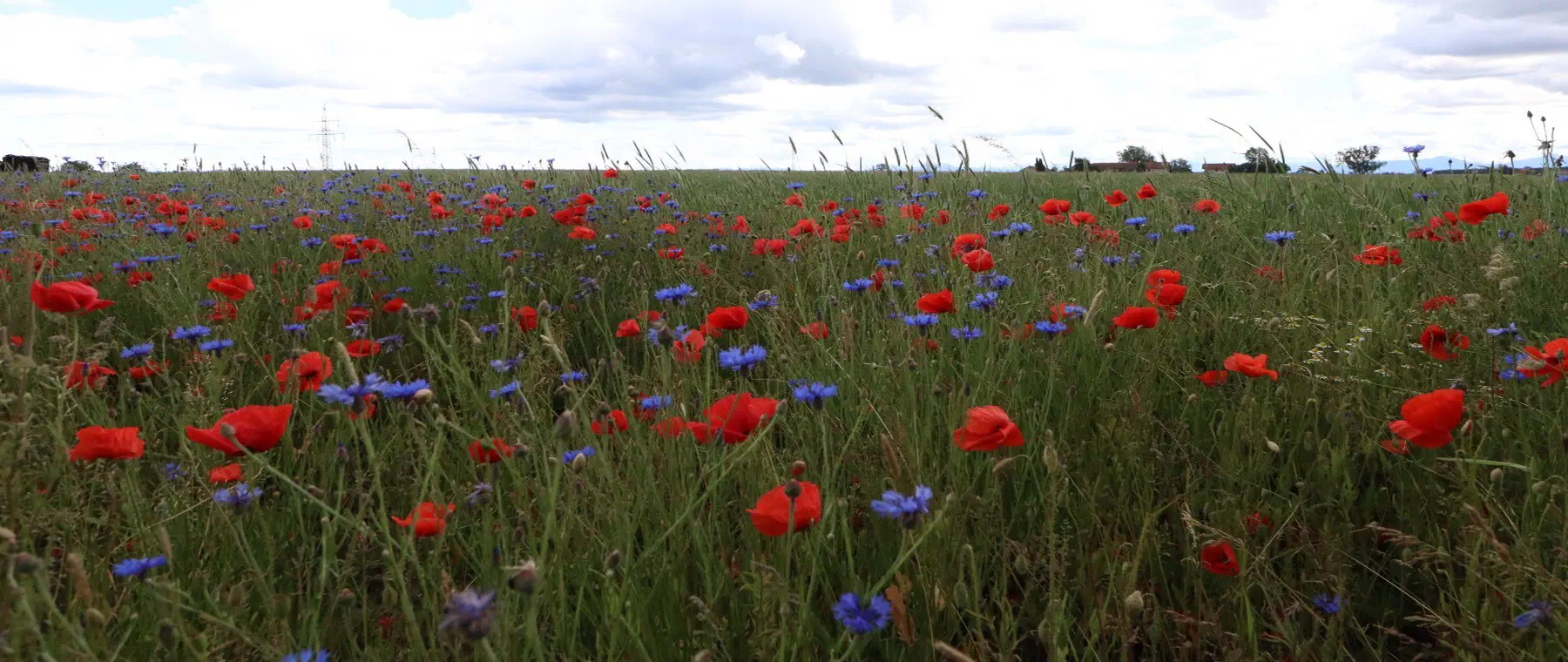
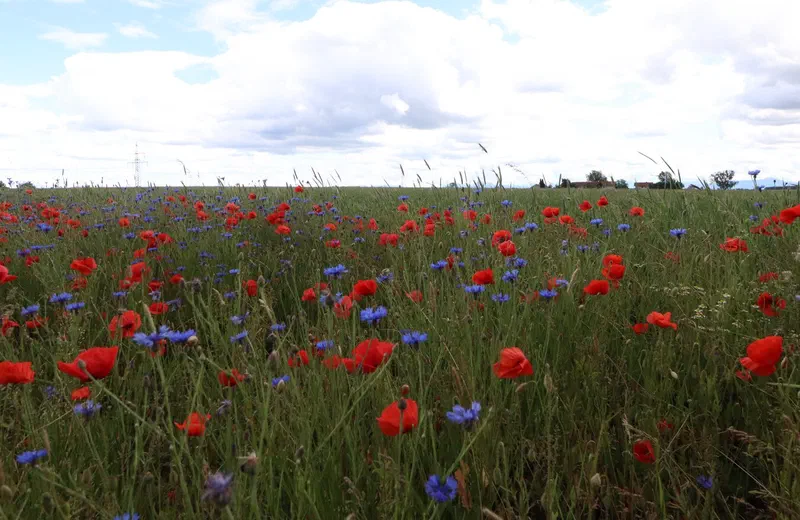
Natural region D18, the Thüringer Becken und Randplatten, is an extensive, gently undulating Keuper landscape at the centre of Thuringia and ranks among the most fertile arable regions in Germany. Elevations lie mainly between 150 and 300 metres, rising to around 450 metres above sea level at the margins. It is characterised by deep loess and chernozem soils, which support intensive arable farming and leave the landscape largely without woodland.
Geologically, the basin forms a concentrically arranged cuesta landscape of the Triassic. At its core lies flat-lying Keuper, framed by shell limestone (Muschelkalk) fringe plateaus (such as the Fahner Höhe and the edge of the Hainich) and by Buntsandstein and Zechstein zones towards the neighbouring low mountain ranges. The rivers Unstrut, Gera, Helbe and Wipper cross the area, creating broad, shallow trough valleys. Pronounced soil and wind erosion occur in the open farmland.
Of ecological value are the remaining small-scale features amid the farmland. These include remnant oak-mixed woodland, continental dry and semi-dry grassland on the shell-limestone slopes, and traditional orchards. The basin is home to one of the most significant common hamster populations in Germany, including the black common hamster, found only in Thuringia. Larger parts of the arable hill country are designated as EU bird protection areas, while the proportion of FFH sites and nature reserves is comparatively low.
For impacts on nature and landscape, the statutory impact mitigation regulation applies under §§ 13 to 15 BNatSchG. In Thuringia, compensation takes place through the eco-account and the biotope value procedure on the basis of the Thuringian Act for Nature and Landscape (ThürNatG); the ecological gain in value is expressed in eco-points. In addition, special species protection under § 44 BNatSchG often requires advance CEF measures for the common hamster, farmland birds or bats.
📍 Districts covered
🌿 Ecological features
- One of the most significant common hamster populations in Germany; Thuringia is also home to the endemic black common hamster.
- A high proportion of EU bird protection areas, with a comparatively low proportion of FFH sites and nature reserves.
- Continental dry and semi-dry grassland on the shell-limestone slopes of the fringe plateaus (including the Fahner Höhe and the edge of the Hainich).
- Very fertile loess and chernozem soils, with pronounced wind and soil erosion in the open farmland.
- The river floodplains of the Unstrut, Gera and Helbe as grassland and wetland habitats in an otherwise dry arable landscape.
- A largely woodland-free, arable-dominated open cultural landscape, with traditional orchards and field copses as valuable small-scale features.
✅ greeNature in this region
greeNature works nationwide and knows the administrative practice in Thuringia. We agree compensation concepts with the lower nature conservation authorities of the districts and independent cities, as well as with the Thuringian State Office for the Environment, Mining and Nature Conservation (TLUBN), and take account of the assessment under the state's eco-account and biotope value procedure. For issues particularly relevant in the Thüringer Becken, such as protecting the common hamster and farmland birds, we develop measures that are technically sound and capable of being recognised by the authorities.
Typical measures in natural region D18
Common hamster-friendly farming
Production-integrated compensation with hamster-friendly farming, such as strip harvesting, lucerne and cereal strips, and late stubble cultivation, to secure cover and food.
Developing dry grassland
Scrub clearance and management of continental dry and semi-dry grassland on the shell-limestone slopes, secured through extensive sheep and goat grazing to preserve species-rich nutrient-poor sites.
Securing traditional orchards
Creating and managing traditional orchards with standard fruit varieties as habitat for bats, birds and insects, and as a landscape-defining small-scale feature of the open farmland.
Flowering areas and skylark plots
Creating flowering strips and field margins, skylark plots and fallow strips to enhance the farmland landscape for farmland birds, often as an advance CEF measure under § 44 BNatSchG.
Floodplains and small water bodies
Restoring stretches of watercourse on the Unstrut, Gera and Helbe, developing floodplain grassland, and creating small water bodies as spawning habitats for amphibians such as the great crested newt.
Hedgerows and field copses
Planting hedgerows and field copses and developing remnant oak-hornbeam woodland to connect habitats and add structure to the cleared arable landscape.
Protected species in the Thüringer Becken und Randplatten
Common hamster
A characteristic species of the fertile arable soils of the Thüringer Becken and strictly protected. Grass and cereal strips, along with late harvesting, secure cover and food stores.
Skylark
A widespread but declining breeding bird of the open farmland. Skylark plots and flowering strips improve breeding habitats in the intensively used farmland landscape.
About this species ›Northern lapwing
A ground-nesting bird of damp hollows and extensively used grassland in the river valleys. Rewetting and adapted management support its populations.
About this species ›Sand lizard
Inhabits dry grassland, embankments and fringe structures. Sand, stone and deadwood structures serve as replacement habitat in the event of impacts.
About this species ›Bats
Species such as the greater mouse-eared bat use traditional orchards, woodland and shell-limestone features as hunting grounds and roosts. Replacement roosts secure the function of affected roosts.
About this species ›Great crested newt
An Annex II species under the FFH Directive, depending on sunlit, fish-free small water bodies. Creating new spawning waters with structurally rich terrestrial habitat supports its populations.
About this species ›Your route to eco-points in D18
Contact and enquiry
Tell us your compensation requirement and the natural region. We check availability.
Offer and advice
A transparent offer covering measure types, scope and availability.
Coordination with authorities
Full coordination with the lower nature conservation authority. We handle everything.
Long-term monitoring
Permanent securing of the land, management and documentation across the contract term.
Eco-points in neighbouring natural regions
All about natural region D18
Request eco-points in natural region D18
We will promptly prepare a transparent offer with matching eco-points held in stock in the Thüringer Becken und Randplatten.