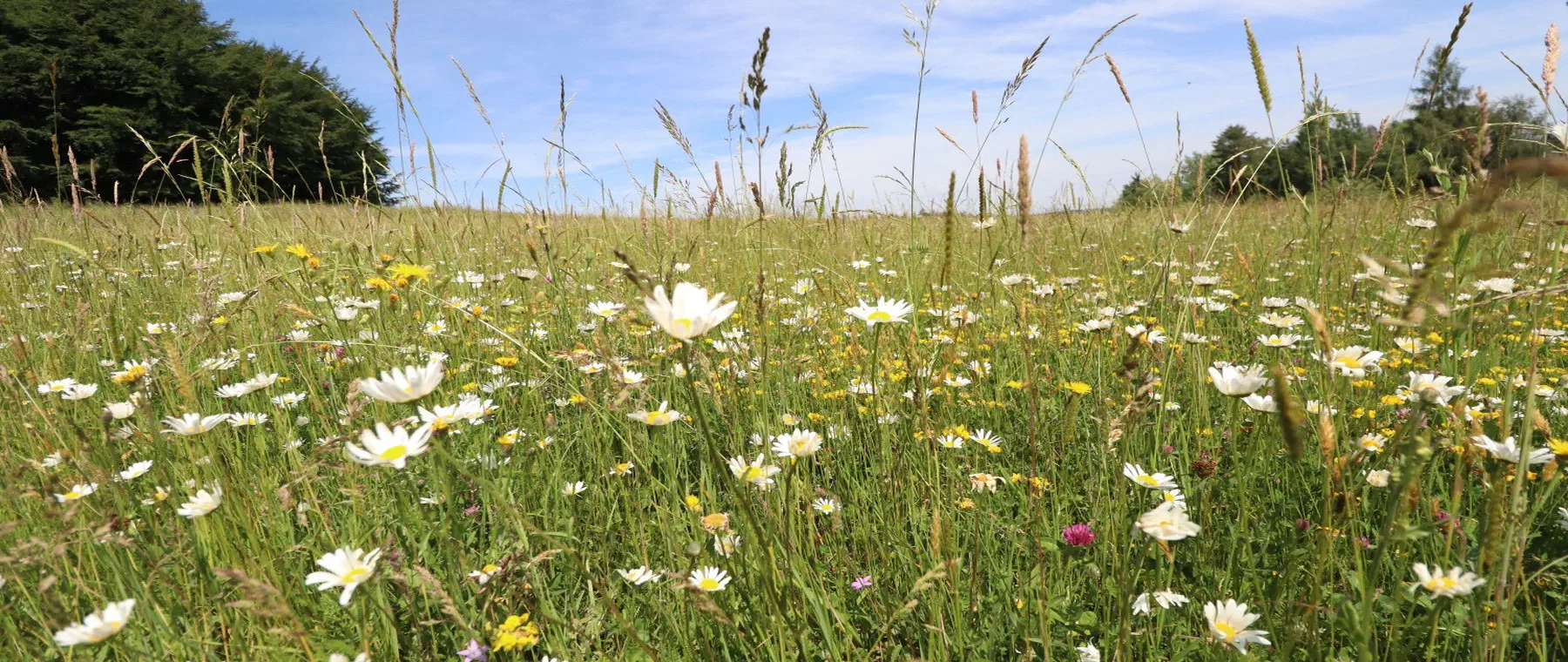
Eco-points in natural region D12
Mittelbrandenburgische Platten und Niederungen sowie Ostbrandenburgisches Heide- und Seengebiet
Eco-points immediately available from officially recognised eco-accounts in natural region D12. greeNature supports your compensation under the Brandenburg impact mitigation regulation (HVE), nationwide and with precise knowledge of the responsible nature conservation authorities.
Natural region D12 at a glance
Natural region D12, the Mittelbrandenburgische Platten und Niederungen sowie Ostbrandenburgisches Heide- und Seengebiet, shapes large parts of the state of Brandenburg and extends into the south-west of Berlin. It is a young moraine landscape of the Weichselian glaciation, in which flat ground moraine plateaus such as the Nauener Platte and the Teltower Platte alternate with broad lowlands along the Havel, Nuthe and Notte. Numerous lakes, including the Scharmützelsee and the Schwielochsee, give the region its character.
Geologically, nutrient-poor sands dominate on outwash plains and valley sand flats. Extensive pine plantations stand on these poor sites, interspersed with open heathland and sandy dry grassland. In the lowlands close to the water table, fen mires have developed which have been drained in many places and today offer high potential for rewetting and compensation.
Ecologically, the natural region is valuable for its close juxtaposition of waters, woodlands and wetlands. The lake-rich landscape is a stronghold for the osprey and white-tailed eagle, clear watercourses such as the Schlaubetal are home to the kingfisher, and the numerous small water bodies are habitat for the fire-bellied toad and great crested newt. Wetlands such as the Nuthe-Nieplitz lowland are important breeding and resting areas.
For compensation, Brandenburg applies the impact mitigation regulation under §§ 13 to 15 BNatSchG. Impact and compensation are assessed mainly verbally and by argument under the Guidelines for the Implementation of the Impact Mitigation Regulation (HVE). Eco-accounts are established under the Brandenburg Nature Conservation Implementation Act. The spatial link to the natural region under the Landscape Programme (LaPro) is decisive and must be carefully observed when selecting suitable sites.
📍 Districts covered
🌿 Ecological features
- Lake-rich young moraine landscape of the Weichselian glaciation, with the Scharmützelsee and Schwielochsee
- Extensive pine plantations on nutrient-poor outwash sands, with high potential for near-natural forest conversion
- Ground moraine plateaus (Nauener Platte and Teltower Platte) alternating with broad lowlands
- Fen mires in the valleys of the Havel, Nuthe and Notte, suitable for rewetting in many places
- The Schlaubetal, a near-natural watercourse of high importance for the kingfisher and Eurasian otter
- South-western fringe areas of Berlin lie, in natural-region terms, within D12
✅ greeNature in this region
greeNature works nationwide and knows Brandenburg's administrative practice, the requirements of the lower nature conservation authorities, and the verbal-and-argumentative assessment under the HVE. We take into account that compensation in Brandenburg is tied to the natural region, with the finer classification of the Landscape Programme (LaPro) being decisive. This is how we ensure your measures in natural region D12 can be credited with legal certainty.
Typical measures in natural region D12
Mire rewetting
Raising water levels in drained fen mires of the Havel, Nuthe and Notte lowlands. High ecological enhancement value, carbon storage and habitat for wading and meadow birds.
Small water bodies and kettle holes
Creating and restoring small water bodies and kettle holes as spawning habitats for the fire-bellied toad and great crested newt, complemented by terrestrial habitats as a CEF measure under § 44 BNatSchG.
Heathland and sandy dry grassland
Developing and managing open heathland and sandy dry grassland on the nutrient-poor outwash sands, habitat for the sand lizard, European nightjar and heat-loving insects.
Near-natural forest conversion
Converting structurally poor pine plantations into site-appropriate mixed pine-broadleaf woodland with oak and beech, for greater structure, climate resilience and biodiversity.
Watercourse restoration
Restoring watercourses such as the Dahme, Spree and Schlaube through bank development, bed raising and floodplain forest, as habitat for the kingfisher and Eurasian otter.
Grassland extensification
Extensifying wet lowland meadows in the Nuthe-Nieplitz area and adjoining valley systems, with adapted mowing and grazing for meadow-breeding birds such as the northern lapwing.
Protected species in the Mittelbrandenburgische Platten und Niederungen sowie Ostbrandenburgisches Heide- und Seengebiet
Osprey and white-tailed eagle
The lake-rich landscape of D12 is a stronghold for the osprey and white-tailed eagle. Nest protection, undisturbed waters and low-disturbance old-growth stands are key factors here.
Kingfisher
On clear watercourses such as the Schlaubetal and the riparian zones of the Dahme, the kingfisher breeds in steep banks. Restoration and eroding banks secure suitable breeding habitats.
About this species ›Sand lizard
Sandy dry grassland, heathland and open pine woodland on the outwash plains provide habitat for the sand lizard. Creating sand patches, deadwood and stone piles serves as a CEF measure.
About this species ›Fire-bellied toad and great crested newt
The numerous small water bodies and kettle holes of the ground moraine plateaus are home to the fire-bellied toad and great crested newt. Creating new waters and connecting terrestrial habitats support these populations.
About this species ›Bats
Old broadleaf woodland, waters and cavity trees offer roosts and hunting grounds for species such as the greater mouse-eared bat and Barbastelle bat. Roost and habitat measures are creditable under the HVE.
About this species ›Northern lapwing and meadow-breeding birds
Wet lowland meadows in the Nuthe-Nieplitz area and the valley systems are breeding grounds for the northern lapwing and other meadow-breeding birds. Rewetting and extensive grassland management secure the habitats.
About this species ›Your route to eco-points in D12
Contact and enquiry
Tell us your compensation requirement and the natural region. We check availability.
Offer and advice
A transparent offer covering measure types, scope and availability.
Coordination with authorities
Full coordination with the lower nature conservation authority. We handle everything.
Long-term monitoring
Permanent securing of the land, management and documentation across the contract term.
Eco-points in neighbouring natural regions
All about natural region D12
Request eco-points in natural region D12
We will promptly prepare a transparent offer with matching eco-points held in stock in the Mittelbrandenburgische Platten und Niederungen sowie Ostbrandenburgisches Heide- und Seengebiet.