Eco-points in natural region D02
Nordostmecklenburgisches Tiefland mit Oderhaffgebiet
Eco-points and compensation areas in natural region D02, assessed according to the Hinweise zur Eingriffsregelung and the Ökokontoverordnung Mecklenburg-Vorpommern (ÖkoKtoVO M-V). greeNature operates nationwide and supports your compensation in eastern Vorpommern from assessment through to the recognised measure.
Natural region D02 at a glance
Natural region D02, the Nordostmecklenburgisches Tiefland mit Oderhaffgebiet, shapes large parts of eastern Mecklenburg-Western Pomerania between the Baltic coast in the north and the Rückland der Mecklenburg-Brandenburgischen Seenplatte in the south. It consists of flat to gently undulating ground moraine plateaus from the Weichselian glaciation with comparatively nutrient-rich loamy soils. These good soils make the landscape one of the state's most important arable farming areas, and the forest cover is correspondingly low.
Geologically, boulder clay and ground moraine dominate the picture, interspersed with numerous kettle holes (ice-age dead-ice hollows) and fens in the meltwater channels. The plateaus are divided by the valleys of the rivers Peene, Tollense, Trebel and Recknitz, in which extensive valley fens extend. The Peene valley is one of the largest near-natural fens in Central Europe.
Despite intensive agricultural use, the natural region has high ecological significance. The kettle holes are valuable small water bodies and spawning habitats for fire-bellied toad, great crested newt and European tree frog. Wet meadows and bogs serve meadow-breeding birds and the crane as breeding grounds, and the structurally rich field copses and forests of Vorpommern are among the last nationally important refuges of the lesser spotted eagle and white-tailed eagle.
In Mecklenburg-Western Pomerania, impacts are assessed according to the Hinweise zur Eingriffsregelung (HzE), while the banking and trading of eco-points is governed by the Ökokontoverordnung M-V (ÖkoKtoVO M-V). The basis is formed by §§ 13 to 15 BNatSchG together with species protection under § 44 BNatSchG, including CEF and FCS measures. greeNature coordinates measures and sites with the relevant lower nature conservation authorities and ensures a legally sound allocation.
📍 Districts covered
🌿 Ecological features
- Ground moraine plateaus with nutrient-rich loamy soils, one of the most important arable farming areas in Mecklenburg-Western Pomerania
- Numerous kettle holes (ice-age small water bodies) as habitat for fire-bellied toad, great crested newt and European tree frog
- Extensive fens in the valleys of the Peene, Tollense, Trebel and Recknitz
- The Peene valley, one of the largest near-natural valley fens in Central Europe
- Vorpommern as a nationally important breeding area for lesser spotted eagle, white-tailed eagle and crane
- Low forest cover and cleared agricultural land with high enhancement potential for forest, water body and bog measures
✅ greeNature in this region
greeNature operates nationwide and is familiar with the authorities and regulations in Mecklenburg-Western Pomerania. We know the requirements of the Hinweise zur Eingriffsregelung and the Ökokontoverordnung M-V, and coordinate measures with the relevant lower nature conservation authorities in eastern Vorpommern. This allows compensation areas and eco-points to be legally allocated to projects in Greifswald, Demmin, Anklam or the surrounding rural area.
Typical measures in natural region D02
Kettle hole and small water body restoration
Desilting, restoring and creating ice-age kettle holes as spawning waters for fire-bellied toad, great crested newt and European tree frog, a typical CEF measure in the loam plateau landscape.
Bog rewetting
Rewetting drained fens in the Peene and Tollense valleys, effective for climate protection, water balance and biodiversity alike, with a high enhancement value under HzE.
Grassland extensification
Converting intensively used lowlands and valley-edge sites into species-rich wet grassland as breeding and feeding ground for meadow-breeding birds and crane.
New afforestation & woodland edge
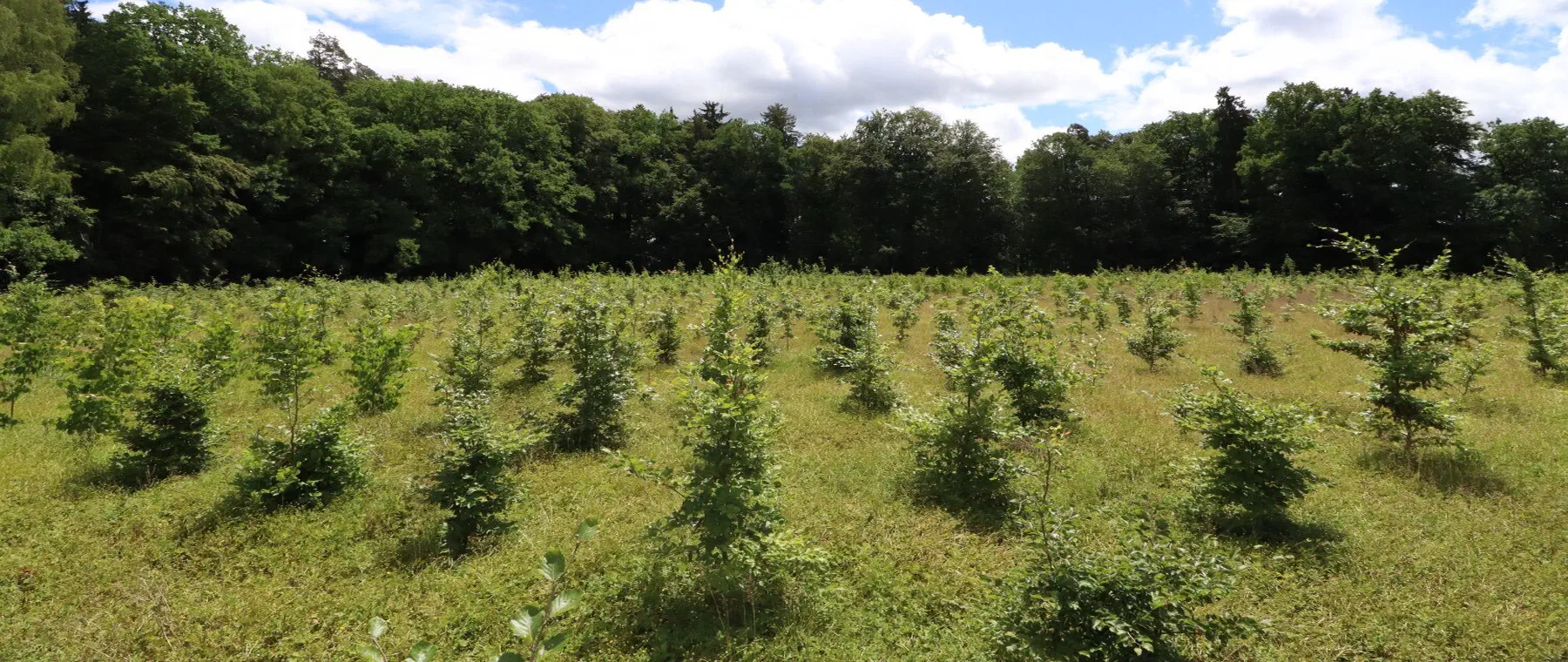
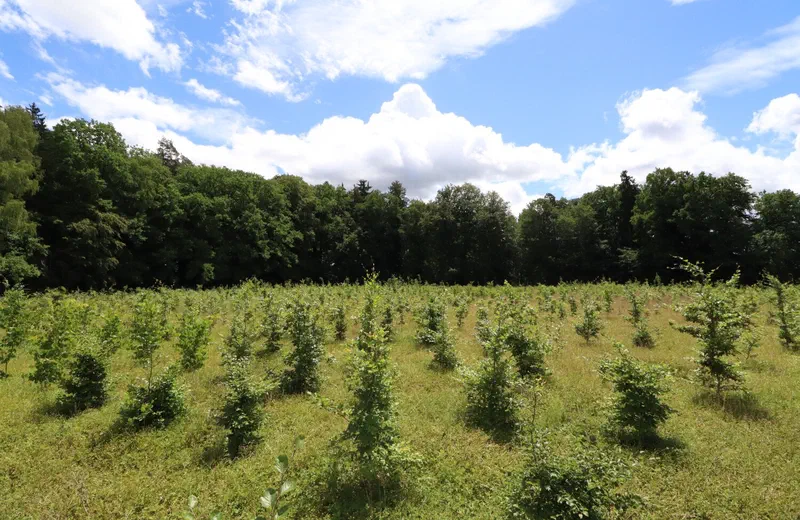
Site-appropriate broadleaf woodland of pedunculate oak, hornbeam and alder on cleared arable sites with low forest cover, secured long-term and structurally rich in design.
Hedgerows & field copses
Habitat network connectivity in the open agricultural landscape through hedgerows, field copses and fringes as stepping stones and guiding structures for red-backed shrike, hazel dormouse and farmland birds.
Species protection CEF/FCS
Skylark plots, nest and feeding-ground protection for lesser spotted eagle and white-tailed eagle, as well as bat roosts, coordinated with the lower nature conservation authorities under § 44 BNatSchG.
Protected species in the Nordostmecklenburgisches Tiefland mit Oderhaffgebiet
Amphibians of the kettle holes
Fire-bellied toad and European tree frog are characteristic species of the ice-age kettle holes. Typical measures are the restoration and creation of small water bodies as an advance CEF measure.
About this species ›Great crested newt
The great crested newt (Annexes II and IV of the FFH Directive) inhabits fish-free kettle holes and small water bodies of the loam plateaus. Retaining and creating sunlit spawning waters secures its populations.
About this species ›Meadow-breeding birds of the lowlands
Northern lapwing and snipe use wet lowlands and valley fens as breeding grounds. Grassland extensification, flood hollows and rewetting create suitable habitats.
About this species ›Skylark in the agricultural landscape
In the expansive arable landscape of D02, skylark plots, flower strips and extensively managed fringes are typical CEF measures for construction and infrastructure projects.
About this species ›Kingfisher on the river valleys
On the Peene, Tollense and Trebel, the kingfisher breeds in steep banks. Watercourse restoration, near-natural eroding banks and woody fringes support its population.
About this species ›Lesser spotted eagle, white-tailed eagle & crane
Vorpommern is one of the last nationwide refuges of the lesser spotted eagle. Preserving wet meadows, bogs and old woodland stands also benefits white-tailed eagle and crane.
Your route to eco-points in D02
Contact and enquiry
Tell us your compensation requirement and the natural region. We check availability.
Offer and advice
A transparent offer covering measure types, scope and availability.
Coordination with authorities
Full coordination with the lower nature conservation authority. We handle everything.
Long-term monitoring
Permanent securing of the land, management and documentation across the contract term.
Eco-points in neighbouring natural regions
All about natural region D02
Request eco-points in natural region D02
We will promptly prepare a transparent offer with matching eco-points held in stock in the Nordostmecklenburgisches Tiefland mit Oderhaffgebiet.