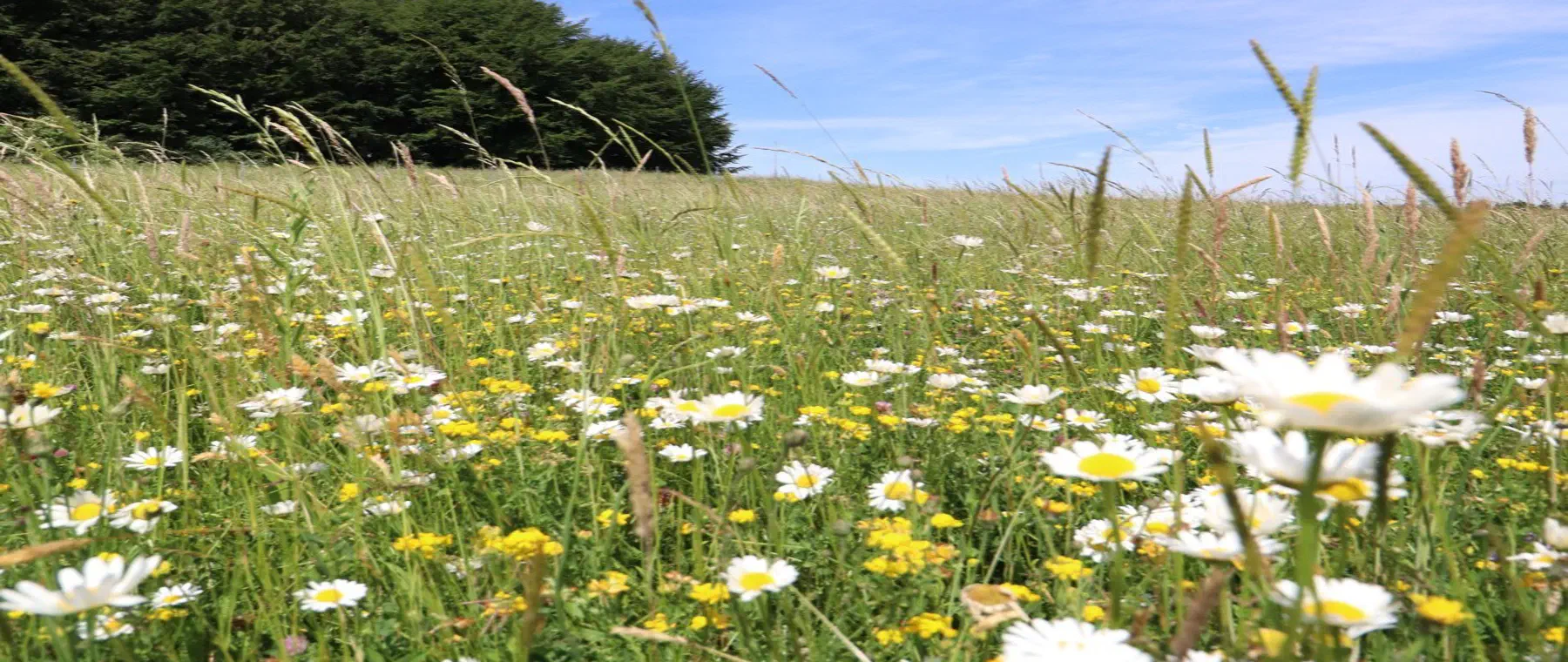
Eco-points in natural region D01
Mecklenburgisch-Vorpommersches Küstengebiet
Eco-points and compensation areas on the Baltic coast of Mecklenburg-Western Pomerania, from recognised eco-account measures under the Ökokontoverordnung M-V (ÖkoKtoVO M-V). greeNature develops and manages compensation areas suited to the natural region between Wismarer Bucht, Fischland-Darß-Zingst and the islands of Rügen and Usedom, from conception through to permanent management.
Natural region D01 at a glance
Natural region D01, the Mecklenburgisch-Vorpommersche Küstengebiet, comprises the narrow coastal fringe of the state between Lübecker Bucht in the west and Stettiner Haff in the east. It is characterised by the Bodden lagoons and haffs, the offshore islands of Rügen, Usedom and Hiddensee, the Fischland-Darß-Zingst peninsula and extensive coastal flooding bogs and salt grasslands. This refers specifically to the coastal zone, not the Mecklenburgische Seenplatte to the south.
The landscape was shaped by the deposits of the last ice age. From the undulating ground moraine, the Baltic Sea formed a graded coastline, where boulder clay cliffs, flat sandy beaches, dunes and spit hooks alternate. The coast is in constant motion, as the sea erodes material at the steep shores and redeposits it at the flat coasts as hooks and spits. Behind the spits, the shallow, brackish Bodden lagoons and wind-shaped flooding bogs formed.
The natural region includes several large Bodden systems, among them the Darß-Zingster Boddenkette, the Greifswalder Bodden and the Strelasund, as well as the Salzhaff, Achterwasser and Kleines Haff. Two national parks protect the most valuable areas, the Nationalpark Vorpommersche Boddenlandschaft with Darß, Zingst and Hiddensee (one of the most important crane resting sites in Central Europe), and the Nationalpark Jasmund on Rügen with its chalk cliffs and ancient beech forests, which form part of the UNESCO World Natural Heritage. In addition, there is the Biosphärenreservat Südost-Rügen and the Naturpark Insel Usedom.
For compensation under the Ökokontoverordnung M-V (ÖkoKtoVO M-V) and the Hinweise zur Eingriffsregelung (HzE), the coastal zone offers particular opportunities. Rewetting coastal flooding bogs, extensifying salt grassland and restoring watercourses and small water bodies generate substantial ecological uplift that can be credited and banked as eco-points. greeNature takes care to select sites true to the natural region, so that compensation takes effect where the impact occurs.
📍 Districts covered
🌿 Ecological features
- Fischland-Darß-Zingst and the Nationalpark Vorpommersche Boddenlandschaft, a resting site for around 60,000 cranes in autumn and one of the largest crane resting sites in Central Europe.
- Nationalpark Jasmund on Rügen, with the chalk cliffs at Königsstuhl and the beech forests of the UNESCO World Natural Heritage.
- Rügen as Germany's largest island and Usedom as the second largest, along with Hiddensee, Poel and Ummanz.
- Extensive coastal flooding bogs and salt grasslands as habitats typical of the natural region and relevant to climate protection.
- Bodden systems and haffs (Darß-Zingster Boddenkette, Greifswalder Bodden, Salzhaff, Kleines Haff) as shallow brackish-water habitats of international importance for resting and water birds.
- Mecklenburg-Western Pomerania has one of the highest densities of white-tailed eagles in Germany.
- The return of the grey seal to the Vorpommern coast.
✅ greeNature in this region
greeNature acts as a partner for nature conservation compensation on the Mecklenburg-Western Pomerania Baltic coast. We secure suitable sites between Wismarer Bucht, Fischland-Darß-Zingst and the islands of Rügen and Usedom, plan the enhancement according to the Hinweise zur Eingriffsregelung (HzE) and coordinate eco-account measures with the lower nature conservation authorities (Untere Naturschutzbehörden), the LUNG and the landowners. From rewetting coastal flooding bogs to managing salt grassland and restoring water bodies, we take on implementation, permanent management and documentation. This creates recognised eco-points under the ÖkoKtoVO M-V, which project developers and municipalities can use for impacts within the natural region.
Typical measures in natural region D01
Rewetting coastal flooding bogs
Rewetting drained salt and coastal flooding bogs by removing dykes, pumping stations and ditches. The measure halts peat loss, sequesters carbon and creates large-scale brackish grassland for coastal birds, with a high enhancement value under HzE.
Extensive grazing of salt grassland
Extensive grazing and adapted mowing of salt meadows and coastal flooding grasslands. Keeping the land open secures breeding and resting areas for redshank, northern lapwing and dunlin and preserves salt-plant communities typical of the natural region.
Restoring watercourses and coastal waters
Removing bank reinforcement, establishing riparian buffer strips and restoring connectivity on coastal tributaries such as Recknitz, Warnow and Peene. Near-natural banks improve the water quality of the Bodden lagoons and connect habitats.
Coastal forests and forest conversion
Converting non-native coniferous plantations to site-appropriate beech and oak woodland near the coast, for example in the Rostocker Heide or the Darßwald, retaining old and dead wood as habitat for cavity-nesting birds and bats.
Creating small water bodies and kettle holes
Creating and desilting sunlit, fish-free small water bodies and kettle holes in the ground moraine landscape. As CEF measures, they secure spawning waters for fire-bellied toad, natterjack toad and great crested newt.
Managing coastal dunes and dry habitats
Managing and developing grey and white dunes, coastal heaths and sun-exposed fringes. Open sandy sites benefit sand lizard, wild bees and specialised insects.
Protected species in the Mecklenburgisch-Vorpommersches Küstengebiet
Fire-bellied toad and natterjack toad
The coastal lowlands of Mecklenburg-Western Pomerania are a national stronghold of the fire-bellied toad. It and the natterjack toad spawn in sunlit small water bodies, kettle holes and flood hollows. Newly created, fish-free water bodies are well suited as a CEF measure.
About this species ›Coastal birds in salt grassland
Salt meadows and flooding grasslands are breeding and resting sites for northern lapwing, redshank, snipe and dunlin. Extensive grazing, rewetting and the creation of shallow pools improve their habitat.
About this species ›Bats
Ancient coastal beech forests on Rügen and in the Rostocker Heide, along with roosts in buildings, provide habitat for greater mouse-eared bat, serotine bat and Daubenton's bat. Securing roosts and connecting foraging habitats are typical measures.
About this species ›Sand lizard
Coastal dunes, cliff edges, railway embankments and dry fringes are habitat for the heat-loving sand lizard. As a strictly protected species under § 44 BNatSchG, it often requires advance CEF measures for impacts, such as stone piles and sunlit sand structures.
About this species ›Crane and white-tailed eagle
The Bodden landscape is one of the largest crane resting sites in Central Europe, with up to 60,000 birds in autumn. Mecklenburg-Western Pomerania also has one of the highest densities of white-tailed eagles in Germany. Undisturbed wetlands and shallow-water zones secure both species.
Great crested newt
The great crested newt inhabits structurally rich, fish-free small water bodies in the ground moraine landscape. This species listed in FFH Annexes II and IV benefits from the creation and connection of sunlit spawning waters as a compensation measure.
About this species ›Your route to eco-points in D01
Contact and enquiry
Tell us your compensation requirement and the natural region. We check availability.
Offer and advice
A transparent offer covering measure types, scope and availability.
Coordination with authorities
Full coordination with the lower nature conservation authority. We handle everything.
Long-term monitoring
Permanent securing of the land, management and documentation across the contract term.
Eco-points in neighbouring natural regions
All about natural region D01
Request eco-points in natural region D01
We will promptly prepare a transparent offer with matching eco-points held in stock in the Mecklenburgisch-Vorpommersches Küstengebiet.