Species protection under CEF and FCS
✓ Advance CEF measures ✓ FCS measures under § 45 BNatSchG ✓ Skylark, sand lizard, bat, amphibians. Planned, implemented and documented.
Special species protection determines whether a project can be approved
Alongside the impact mitigation regulation, special species protection is a separate hurdle in the permitting procedure. § 44 of the Bundesnaturschutzgesetz prohibits catching, injuring or killing animals of specially protected species, significantly disturbing them during breeding, rearing, moulting, overwintering and migration periods, and removing, damaging or destroying their breeding sites or resting places from the wild. Corresponding prohibitions apply to strictly protected plant species.
Unlike the impact mitigation regulation, there is no balance here that can be offset with points. A prohibition is either met or it is not. If it is met, the project is initially inadmissible, and either a measure that avoids the offence or an exemption is required.
This is precisely why, in practice, species protection more often determines timelines than compensation does. greeNature plans and implements the necessary measures from a single source, from the potential assessment through implementation to monitoring.
CEF: maintaining the function before the impact occurs
CEF stands for continuous ecological functionality. The idea behind it is simple: if a breeding site or resting place is lost but the ecological function is maintained without interruption within the spatial context, the prohibition under § 44 Abs. 5 BNatSchG does not apply.
Three conditions must be met for this. The measure must be located so that the affected local population can actually reach and use it. It must be technically tailored to the requirements of the species, not to nature conservation in general. And it must be effective before the impact takes place.
The third condition is the most demanding. For many measures, a considerable development period lies between construction and effectiveness. Anyone who only completes the species protection assessment shortly before construction begins no longer has this time. We therefore recommend starting the potential assessment early and including the lead time as a fixed factor in the project schedule.
FCS: securing the exemption
If a prohibition cannot be avoided, the exemption under § 45 Abs. 7 BNatSchG remains. It requires that compelling reasons of overriding public interest exist, that no reasonable alternative is available, and that the conservation status of the populations does not deteriorate. For species listed in Annex IV of the FFH Directive, the requirements of Article 16 of the Directive also apply.
Measures that secure the conservation status are called FCS measures, after favourable conservation status. They may lie further from the site of impact than CEF measures, but must in return be effective at the population level. Typical fields of application are wind energy projects with conflicts involving red kite or bats, high-voltage power lines with collision risks for large birds, and road projects with fragmentation effects.
Our services in species protection
- Potential assessment and mapping. Evaluation of existing data, site visits, species-specific surveys within the respective survey window.
- Measure concept. Deriving avoidance, CEF and FCS measures from the specific conflict, tailored to the target species.
- Sites. Providing suitable sites from our own portfolio within the required spatial context.
- Implementation. Constructing habitat structures, relocations with professional supervision, construction-phase protective measures.
- Ecological site supervision. Monitoring avoidance measures during construction, documentation for the authority.
- Monitoring. Implementation and functional monitoring over the specified commitment period, with adjustments where targets are not met.
Typical measures by species group
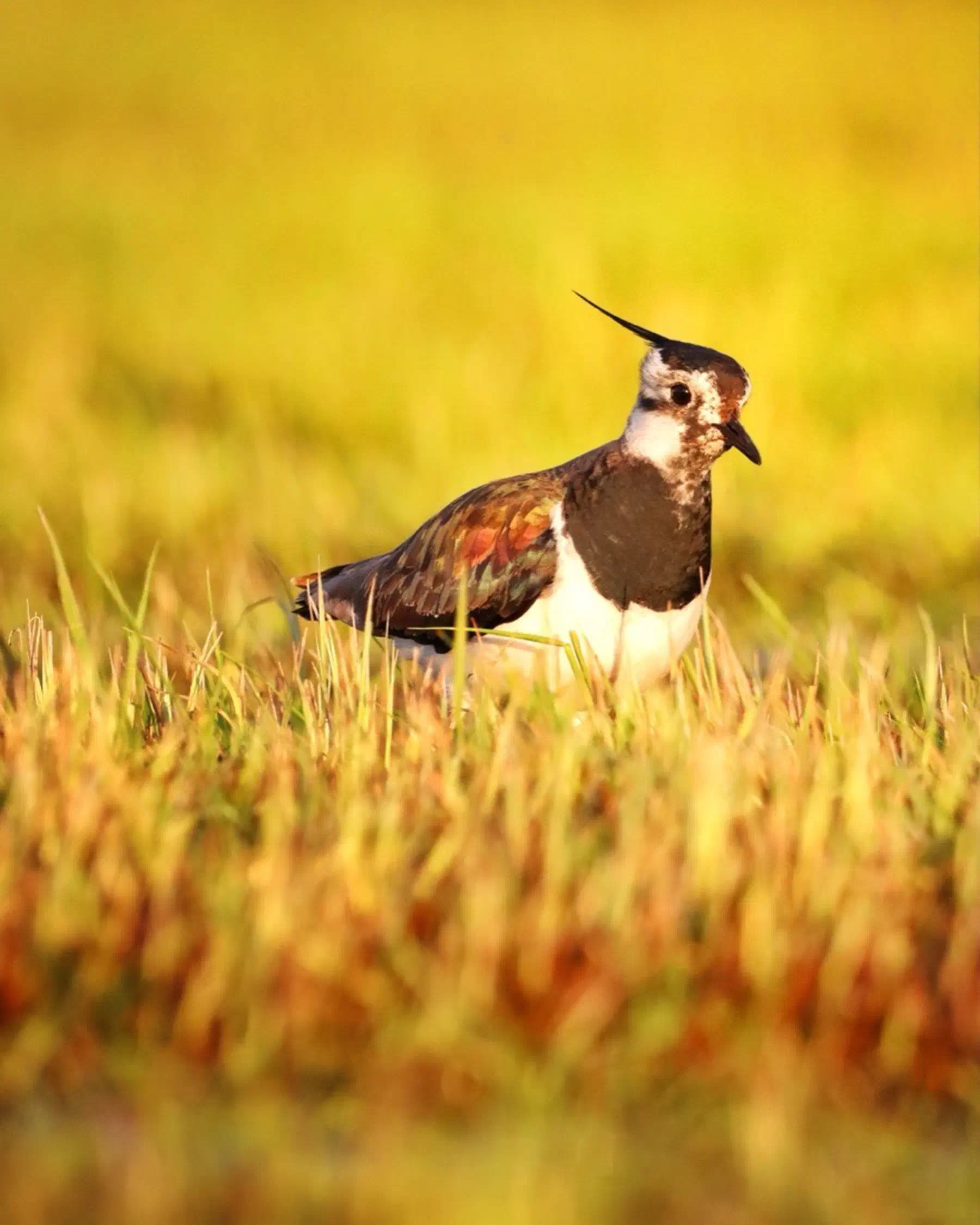
Open-land birds. Skylark plots and flower strips for the skylark, extensively managed wet grassland with a late mowing date for northern lapwing and black-tailed godwit, structurally rich fringes and fallow land for the grey partridge.
Reptiles. Sand lenses as egg-laying sites, stone piles and dead wood as shelter and basking spots, sunlit fringe structures for connectivity, supplemented by a professionally supervised relocation from the construction area.
Bats. Replacement and winter roosts on buildings, bridges and trees, preservation and creation of guiding structures, avoidance of lighting in flight corridors, clearance time windows outside roost use.
Amphibians. Creating spawning waters of the correct size and sun exposure, terrestrial habitats with shelter structures nearby, guiding installations and culverts at transport routes.
Small mammals and large birds. Hedgerow networks and woody structures for the hazel dormouse, foraging areas and diversionary areas for raptors, crossing aids and wildlife corridors for the European wildcat.
For an in-depth presentation by species, with protection status, typical conflicts and measure components, see protected species.
CEF and FCS at a glance
CEF under § 44 BNatSchG
Advance compensation measures that take effect before the impact occurs. For example skylark plots, reptile protection, bat roosts and amphibian protection facilities.
FCS under § 45 BNatSchG
Measures to secure the favourable conservation status of protected species, often for wind energy, power lines and road construction.
From planning to management
We survey, plan, implement and document. On request, for the entire commitment period.
Good to know
Enquire about species protection measures
Tell us about your project and the affected target species. We will plan the appropriate CEF or FCS measure.