Eco-points and compensation areas
District of Saale-Holzland-Kreis
Eco-points from recognised eco-accounts and full-service compensation according to the Thuringian compensation model. greeNature accompanies project developers in the middle Saale valley and Thuringian forest land from assessment to implementation.
The District of Saale-Holzland-Kreis at a glance
Saale-Holzland district is located in eastern Thuringia on the south-eastern edge of the Thuringian basin and almost completely surrounds the independent city of Jena. The administrative seat is Eisenberg. Thuringia is not divided into administrative regions, so the district is directly assigned to the federal state. Characteristic are the valleys of Saale and White Elster and the forested heights of the forest land.
Geologically, the Muschelkalk of the Ilm-Saale plateau meets the Buntsandstein of the Thuringian forest land in the district. At the steep slopes of the Saale valley, limestone formations are exposed, while east of the Saale extensive pine and mixed forests on sandstone stretch over large areas. In terms of natural regions, the district belongs to the BfN major region Thuringian basin with edge plateaus (D18).
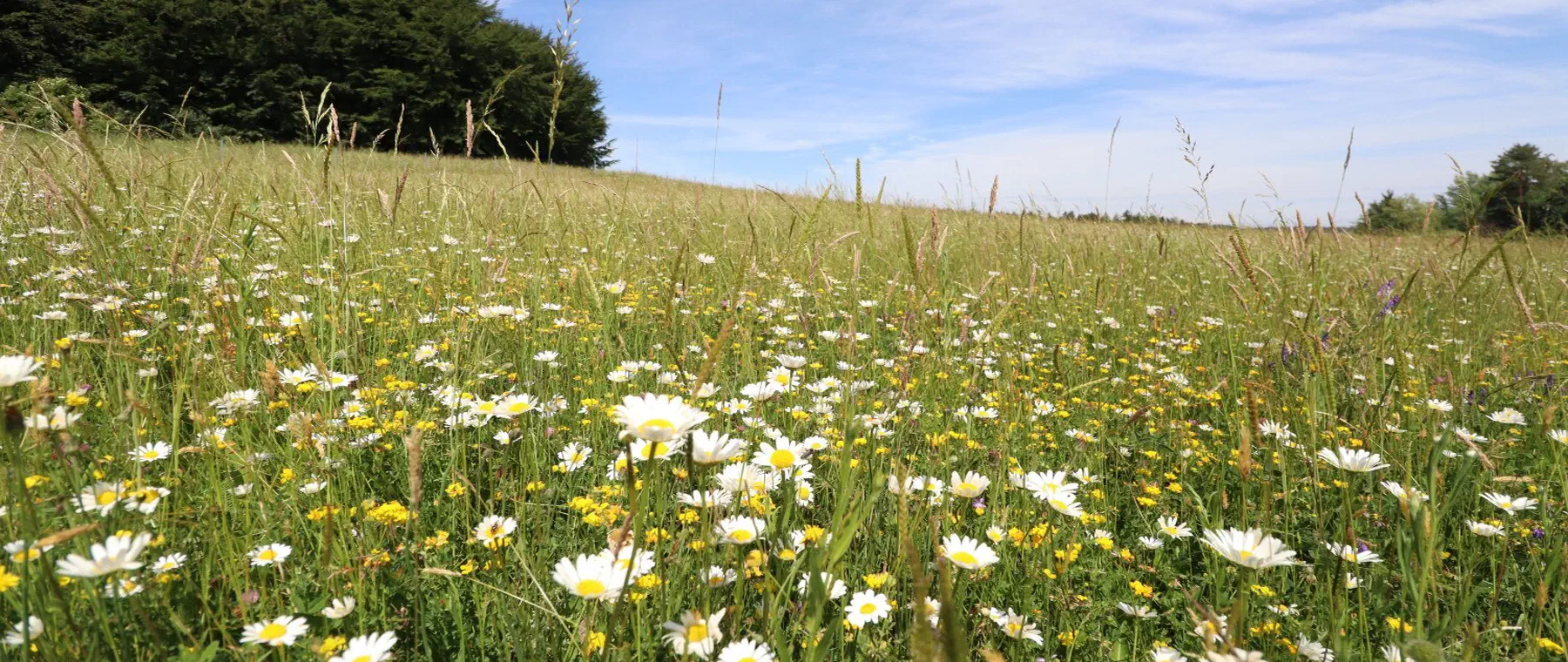
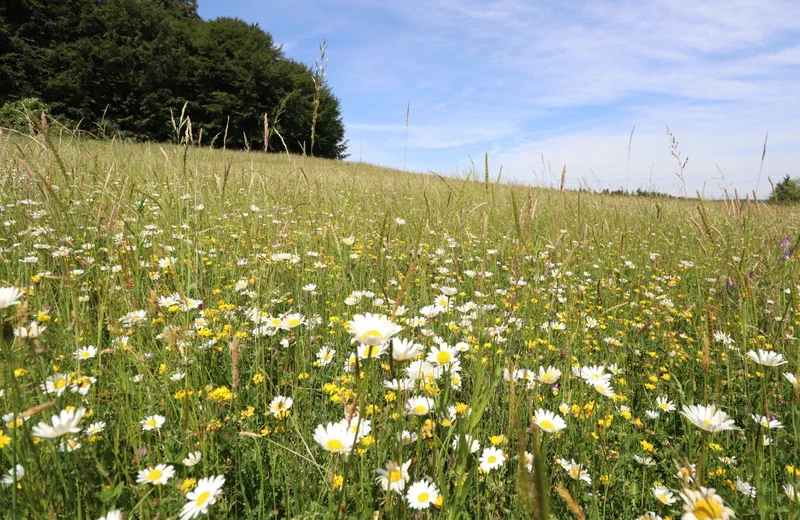
Ecologically significant are the orchid-rich chalk grasslands on the Saale slopes, for instance at Dohlenstein near Kahla. The Middle Saale Natura 2000 station cares for numerous FFH sites and an EU bird protection site in the Jena and Saale-Holzland area. Dry grasslands, near-natural still waters and lime tufa springs form a diverse habitat mosaic.
Economically, the Hermsdorf junction acts as a node of motorways A4 and A9. Around Hermsdorf, technical ceramics and further commerce concentrate, in addition to close linkage with Jena. Traffic, commercial and energy projects regularly trigger compensation requirements according to the Thuringian compensation model and the impact mitigation regulation of §§ 13 to 15 BNatSchG.
🗺️ Associated natural regions
Go to natural region D18 ›
Go to natural region D19 ›
📍 Selected municipalities
🌿 Ecological features
- Middle Saale Natura 2000 station, care of numerous FFH sites and an EU bird protection site in the district and surrounding area
- NSG and FFH site Dohlenstein and Pfaffenberg (EU no. 5135-301), Muschelkalk steep slope with chalk dry grassland near Kahla
- Orchid-rich chalk grasslands on the slopes of the middle Saale valley
- Thuringian forest land, extensive Buntsandstein pine forests between Saale and White Elster
- Ilm-Saale plateau, Muschelkalk edge plateau with orchard stands and semi-arid grasslands
- Gleistal slopes and further dry and semi-arid grasslands as nature reserves
✅ greeNature on the ground
greeNature operates nationwide and is project-based in Saale-Holzland district. We work with the Thuringian assessment model, are familiar with the requirements of the lower nature conservation authority in Eisenberg as well as the regional eco-accounts and land pools and take on coordination with the authorities entirely for you.
Typical measures in the district of Saale-Holzland-Kreis
Develop chalk dry grasslands
Clearing, mowing and grazing on the Muschelkalk slopes of the Saale valley secure orchid-rich grasslands and their species-rich insect world.
Traditional orchards
Creation and management of orchard stands on the edge plateaus of the Ilm-Saale plateau, habitat for little owl, hoopoe and wild bees.
Flowing waters and floodplains
Restoration of banks and floodplains on Saale and White Elster, creation of watercourse buffer strips and spawning habitats.
Forest conversion in forest land
Conversion of structurally poor pine forests into near-natural broadleaf and mixed forests with oak, beech and hornbeam on Buntsandstein.
Species protection CEF and FCS
Tailored measures for sand lizards, bats and amphibians, such as stone rows, shelter trees and small waters under § 44 BNatSchG.
Hedgerows and habitat networking
New hedgerows and margins in the impoverished arable land of the Ilm-Saale plateau create stepping stones for field birds and small game.
Protected species in the Middle Saale valley and Thuringian forest land
sand lizard
Inhabits dry grasslands, quarries and railway and road slopes. When impacts occur, frequently to be secured via CEF measures under § 44 BNatSchG.
About this species ›bats
Muschelkalk slopes, old tunnels and structurally rich forests provide shelter for greater mouse-eared bat and other species with extensive hunting areas.
About this species ›amphibians
Yellow-bellied toad and great crested newt use small waters and forest ponds in the forest land, typical target species in infrastructure and extraction projects.
About this species ›kingfisher
Breeds on near-natural steep banks of Saale and White Elster and benefits from bank restoration and maintained river dynamics.
About this species ›black stork
Uses the closed forests of the forest land with their stream valleys as breeding and feeding space and is sensitive to disturbance.
About this species ›skylark
Characteristic species of the open arable rolling hills of the Ilm-Saale plateau, whose populations suffer from structurally poor land.
About this species ›Which projects trigger a compensation obligation?
Traffic at Hermsdorf junction
The junction of motorways A4 and A9 and expansions and rebuilding of federal roads B7 and B88 lead to significant impacts with compensation obligations.
commerce and industry
Industrial and commercial areas around Hermsdorf and the motorway junction, including in the field of technical ceramics, claim free space and trigger compensation.
renewable energies
Ground-mounted photovoltaic systems on arable rolling hills and wind energy in edge areas of the forest land require nature conservation support and compensation.
settlement development in Jena's hinterland
Residential and commercial land in the linkage area with Jena, such as in Stadtroda, Kahla and Bürgel, generate compensation and replacement requirements.
From enquiry to monitoring
Contact and enquiry
Tell us your compensation requirement and the natural region. We check availability.
Offer and advice
A transparent offer covering measure types, scope and availability.
Coordination with authorities
Full coordination with the lower nature conservation authority. We handle everything.
Long-term monitoring
Permanent securing of the land, management and documentation across the contract term.
Eco-points in adjoining districts
All about eco-points
in the district of Saale-Holzland-Kreis
Request eco-points in the district of Saale-Holzland-Kreis
We will promptly prepare a transparent offer with matching eco-points held in stock in the district of Saale-Holzland-Kreis.