Eco-points and compensation areas
District of Eichsfeld
Immediately available eco-points from authority-approved eco-accounts, assessed according to the Thuringian compensation model. greeNature is your full-service partner for compensation in the district of Eichsfeld, as a partner for assessing impacts under ThürNatG through to permanent management and documentation.
The District of Eichsfeld at a glance
The district of Eichsfeld is located in the far north-west of Thuringia, nestled between the Harz to the north, the Werra and East Hessian highlands to the south-west and the Thuringian basin to the south-east. Thuringia is not divided into administrative regions, so the district is directly subordinate to the highest state authorities.
Geologically, Muschelkalk plateaus characterise the district, such as the Dün, the Ohmgebirge and the Bleicheröder mountains. Between them lies the Eichsfeld basin with fertile loess soils, forming an open arable landscape. The alternation of chalk peaks, beech forests and arable land creates a diverse habitat mosaic.
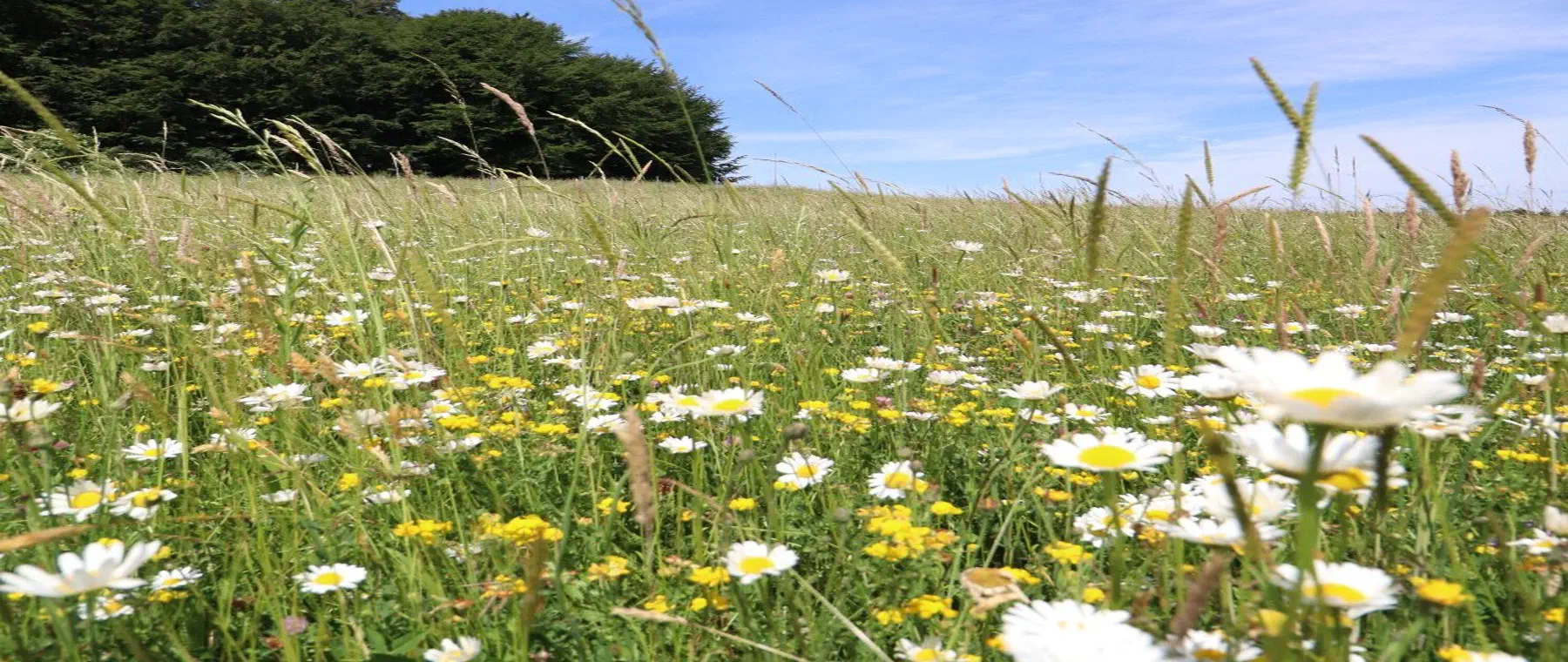
Ecologically significant is the section of the Eichsfeld-Hainich-Werratal Nature Park with extensive chalk beech forests and orchid-rich chalk grasslands. Along the former inner-German border runs the Green Band as a habitat network and migration corridor, among other things for the European wildcat, which has established populations in the Eichsfeld forests.
The economy is characterised by small and medium enterprises, with focal points in metal processing, mechanical engineering and paper and textile processing, concentrated in Leinefelde-Worbis and Heilbad Heiligenstadt. Road projects along the A38, wind energy and photovoltaic projects on the heights of the Upper Eichsfeld and industrial settlements regularly trigger compensation requirements under the Thuringian assessment model.
🗺️ Associated natural regions
Go to natural region D36 ›
Go to natural region D18 ›
Go to natural region D47 ›
📍 Selected municipalities
🌿 Ecological features
- Eichsfeld-Hainich-Werratal Nature Park with extensive chalk beech forests and Muschelkalk landscape
- Green Band along the former inner-German border as a habitat network and migration corridor
- Orchid-rich chalk grasslands and juniper heathlands on Muschelkalk (for instance at Dieteröder Cliffs)
- Chalk beech forests of Dün and Rusteberg as habitat for the European wildcat
- Eichsfeld basin with loess soils as open arable landscape for field birds
- Karst and cave structures in Muschelkalk as bat shelter sites
✅ greeNature on the ground
greeNature operates nationwide and accompanies projects in Thuringia according to the Thuringian compensation model, that is, assessment based on ThürNatG. We are familiar with the nature conservation features of the Eichsfeld from project work, including Muschelkalk grasslands, chalk beech forests and the Green Band, as well as coordination with the environmental department of the district. From impact assessment through land provision to implementation, management and monitoring, we take on the entire process.
Typical measures in the district of Eichsfeld
Restore chalk grasslands
Clearing of overgrown Muschelkalk slopes, resumption of sheep grazing and management of orchid-rich semi-arid grasslands, a characteristic and high-value habitat type in the Eichsfeld.
Near-natural forest conversion
Development of site-appropriate chalk beech forests with high proportions of mature and deadwood, promoting habitat trees for bats, woodpeckers and the European wildcat.
Traditional orchards
Creation and reactivation of traditional orchard stands at the edges of Eichsfeld settlements, habitat for little owl, hoopoe and rare wild bees.
Flowing water restoration
Dismantling of bank structures and creation of bank buffer strips along Leine, Unstrut, Wipper and Hahle, improving continuity and creating floodplain habitats.
Arable extensification and PIK
Lark windows, flowering strips and field edge strips in the Eichsfeld basin, also as production-integrated compensation (PIK) with continued management by the farmer.
Species protection CEF and FCS
Networking of wildcat corridors at the Green Band, bat shelter sites in forest and karst, sand lizard habitats on railway embankments, tailored to § 44 BNatSchG.
Protected species in the Eichsfeld between Dün, Ohmgebirge and Leinetal
European wildcat
The chalk beech forests of Dün, Rusteberg and Ohmgebirge are among the established distribution areas of the European wildcat. The Green Band connects the forest complexes and serves as a migration corridor, a central theme in impacts on forest edge areas.
About this species ›bats
Bechstein's bat and greater mouse-eared bat use the old chalk beech forests as hunting and shelter space, caves and tunnels in Muschelkalk serve as winter quarters. Shelter losses often trigger CEF measures.
About this species ›black stork
The large, minimally disturbed forest areas of the Upper Eichsfeld offer the black stork breeding opportunities, the near-natural streams provide food habitats. Projects in the forest surroundings require careful species protection assessment.
About this species ›sand lizard
South-facing Muschelkalk slopes, wayside verges and railway embankments are typical habitats for sand lizards. In infrastructure and commercial projects, it is a common target species for advance compensation measures.
About this species ›skylark
The open, loess-characterised arable landscape of the Eichsfeld basin is habitat for the skylark and other field birds. Lark windows and flowering strips are proven measures in open land.
About this species ›amphibians
Yellow-bellied toad and great crested newt inhabit small waters, forest ponds and gravel workings. Newly created spawning waters and chains of ponds are typical compensation measures in the forest-rich Eichsfeld.
About this species ›Which projects trigger a compensation obligation?
transport infrastructure
The A38 (South Harz motorway) crosses the northern district, with the addition of A247 expansions, town bypasses and bridge works. Such projects regularly trigger compensation and replacement obligations under the impact mitigation regulation.
wind energy and photovoltaics
Wind turbines are being erected on the open heights of the Upper Eichsfeld, along with ground-mounted photovoltaic systems at traffic and conversion sites. Both require compensation and frequently species protection measures for raptors and bats.
commercial and industrial
Small and medium enterprises in metal processing, mechanical engineering and paper processing, concentrated in Leinefelde-Worbis and Heilbad Heiligenstadt, lead to facility extensions and commercial area designations with compensation requirements.
raw material extraction
The extraction of Muschelkalk and gravel creates impacts on nature and landscape. Restoration and subsequent use of extraction sites also provide areas for high-value compensation measures.
From enquiry to monitoring
Contact and enquiry
Tell us your compensation requirement and the natural region. We check availability.
Offer and advice
A transparent offer covering measure types, scope and availability.
Coordination with authorities
Full coordination with the lower nature conservation authority. We handle everything.
Long-term monitoring
Permanent securing of the land, management and documentation across the contract term.
Eco-points in adjoining districts
All about eco-points
in the district of Eichsfeld
Request eco-points in the district of Eichsfeld
We will promptly prepare a transparent offer with matching eco-points held in stock in the district of Eichsfeld.