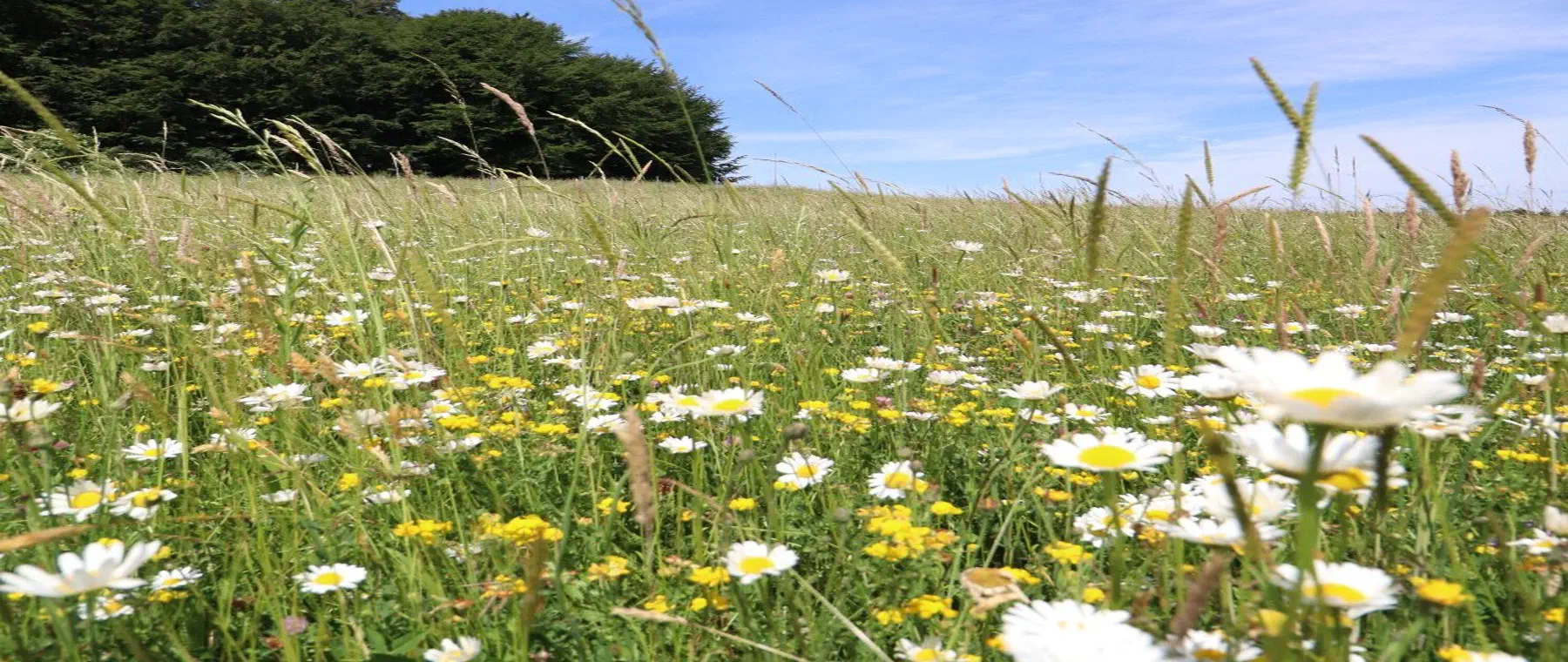
Eco-points and compensation areas
District of Altenburger Land
Eco-points and compensation areas in the district of Altenburger Land, assessed under the Thuringian compensation model. greeNature accompanies projects from assessment to permanent securing of measures, nationwide with regional expertise.
The District of Altenburger Land at a glance
The district of Altenburger Land is located in the far east of Thuringia on the border with Saxony and Saxony-Anhalt and is characterised by gently rolling loess hillland.
Approximately three-quarters of the district area is used for agriculture, with a low proportion of woodland. Compensation focuses here primarily on arable habitats, river floodplains and mining-affected areas.
The assessment of impacts and compensation measures is carried out according to the Thuringian compensation model on the basis of the Thuringian Nature Conservation Act (ThürNatG) and the Thuringian Compensation Ordinance.
The river valleys of Pleiße and Sprotte as well as the pond areas and mining-affected landscapes of the former brown coal mining region are characteristic of the area.
🗺️ Associated natural regions
Go to natural region D19 ›
📍 Selected municipalities
🌿 Ecological features
- In terms of natural regions, the district belongs to the Altenburg-Zeitzer loess hillland, an extension of the Leipzig lowland basin.
- Several Natura 2000 sites are located within the district, including the Haselbacher ponds, Leinawald and Pleißewiesen near Windischleuba.
- The European bird protection site North-eastern Altenburger Land is an important stopover and wintering area for waders and waterfowl.
- Between Schmölln and Altenburg there are FFH habitats of the hermit beetle (Osmoderma eremita), a strictly protected deadwood beetle.
- Former brown coal mining left behind mining-affected areas such as the Zechau pit lake and Phönix Nord, which today offer restoration and compensation potential.
- The traditional Bauernweiler landscape with its high density of small settlements is one of the rare cultural landscapes found nationwide.
✅ greeNature on the ground
greeNature develops and secures compensation measures in Altenburger Land that match the loess hillland and its floodplains. We assess impacts according to the Thuringian compensation model, coordinate measures with the lower nature conservation authority (Untere Naturschutzbehörde) and take on planning, implementation, monitoring and permanent legal securing. Our focus is on upgrading impoverished arable land, restoring the Pleiße and Sprotte rivers and the ecological development of mining-affected areas. As a nationwide company, we support both municipal and private project developers.
Typical measures in the district of Altenburger Land
Extensify arable land
Creation of field edge strips, flowering strips and lark windows in intensively used loess arable land to promote field birds and arable wildflowers.
Create and manage traditional orchards
New planting and subsequent planting of standard-form fruit stands as habitat for cavity-nesting birds, insects and bats, combined with extensive grassland use.
Restore river floodplains
Dismantling of bank structures, creation of watercourse buffer strips and promoting the river's natural development along Pleiße and Sprotte to improve aquatic and floodplain habitats.
Restore damp and wet meadows
Re-wetting and extensive mowing in the area of pond areas and Pleißewiesen meadows to safeguard meadow-breeding birds, amphibians and damp habitats.
Develop broadleaf forest and forest edges
Conversion of structurally poor stands to site-appropriate broadleaf mixed forest, promotion of mature and deadwood and steeply structured forest edges, for instance around Leinawald.
Restore mining-affected areas
Ecological development of open-cast mining voids and spoil tips from the former brown coal mining region into aquatic, open-land and succession habitats.
Protected species in the Altenburg-Zeitzer loess hillland
skylark
Characteristic species of open loess arable land, whose populations suffer under intensive agriculture. Lark windows and field edge strips are among the most effective promotional measures.
About this species ›northern lapwing
Meadow-breeding bird of damp grasslands and arable depressions, including the Pleißewiesen near Windischleuba. It benefits from re-wetting and late mowing.
About this species ›great crested newt
An amphibian species protected under Annex II of the FFH Directive found in pond and small waterbody landscapes, for instance around Haselbacher ponds.
About this species ›sand lizard
Strictly protected reptile species under § 44 BNatSchG found on slopes, railway embankments and mining-affected areas. When impacts occur, advance compensation measures (CEF) are often necessary.
About this species ›bats
Several strictly protected species use forests, orchards and waterbodies as hunting and shelter habitats. Shelter trees and linking structures must be considered in projects.
About this species ›kingfisher
Breeding bird of near-natural flowing waters with steep banks along Pleiße and Sprotte. Bank restoration and the securing of erosion banks improve its living conditions.
About this species ›Which projects trigger a compensation obligation?
transport infrastructure
Construction and upgrading of motorway A4, federal roads and the Leipzig-Hof railway line create impacts that must be compensated for under the impact mitigation regulation.
commercial and industrial settlement
The designation and expansion of commercial and industrial areas around Altenburg, Meuselwitz and Schmölln lead to land sealing and compensation requirements.
renewable energy
Ground-mounted photovoltaic systems and wind turbines on arable and conversion sites trigger compensation and species protection requirements.
mining restoration
Restoration and redesign of the brown coal mining-affected landscape combines reclamation with nature conservation enhancement and compensation.
From enquiry to monitoring
Contact and enquiry
Tell us your compensation requirement and the natural region. We check availability.
Offer and advice
A transparent offer covering measure types, scope and availability.
Coordination with authorities
Full coordination with the lower nature conservation authority. We handle everything.
Long-term monitoring
Permanent securing of the land, management and documentation across the contract term.
Eco-points in adjoining districts
All about eco-points
in the district of Altenburger Land
Request eco-points in the district of Altenburger Land
We will promptly prepare a transparent offer with matching eco-points held in stock in the district of Altenburger Land.