Eco-points and compensation areas
District of Schleswig-Flensburg
Immediately available eco-points from authority-recognised eco-accounts for Schleswig-Flensburg District, assessed according to the Eco-Account Ordinance of Schleswig-Holstein. greeNature is your nationwide full-service partner for the compensation of impacts in Angeln, on the Schlei and in the Eider-Treene lowland.
The District of Schleswig-Flensburg at a glance
Schleswig-Flensburg District is located in the far north of Germany on the border with Denmark and encloses the independent city of Flensburg. With around 2,071 km², it is the second-largest district of Schleswig-Holstein after Rendsburg-Eckernförde District. District seat and administrative centre is Schleswig on the Schlei. As Schleswig-Holstein has no administrative regions, there is no further administrative level between district and state.
The district divides naturally into two major landscapes. The east with the Angeln peninsula between Flensburg Fjord and Schlei belongs to the Schleswig-Holsteinisches Hügelland (BfN natural region D23), a young glacial moraine landscape with hedgerows, lakes and steep coasts. The west and the lowland of Eider, Treene and Sorge belong to the gently undulating Schleswig-Holsteinische Geest (BfN natural region D22) with sandy soils, moors and heathland remnants.
Ecologically significant are the extensive coastal and waterbody habitats. The Schlei as Germany's longest Baltic fjord, the steep coasts of Flensburg Fjord with the nature reserve Geltinger Birk (around 773 hectares) and the wetlands of the Eider-Treene-Sorge lowland are part of the European Natura 2000 protection network. The district includes over 20 nature reserves as well as numerous Habitats Directive sites and several bird protection areas, together with the hedgerow landscapes typical of Angeln with their wall hedges.
The economy is characterised by agriculture and grassland farming, tourism on the Baltic coast and Schlei, and the hinterland of the city of Flensburg. Transport projects along the A7 motorway, the expansion of wind energy in the wind-rich north and residential and business areas regularly trigger impacts. Their compensation is governed in Schleswig-Holstein by the impact mitigation regulation of sections 13 to 15 BNatSchG, the State Nature Conservation Act (LNatSchG) and the Eco-Account Ordinance, according to which compensation is assessed in eco-points (one eco-point corresponding to the improvement of one square metre).
🗺️ Associated natural regions
Go to natural region D22 ›
Go to natural region D23 ›
📍 Selected municipalities
🌿 Ecological features
- Schlei, at around 40 km Germany's longest Baltic fjord, with the bird protection area Schlei and the UNESCO World Heritage site Haithabu and Danewerk
- Nature reserve Geltinger Birk (around 773 hectares), the largest nature reserve of the district at the mouth of Flensburg Fjord
- Holnis peninsula, northernmost point of mainland Germany, with steep coast and salt marshes at Flensburg Fjord
- Eider-Treene-Sorge lowland (Stapelholm landscape), one of the largest continuous wetland areas of Schleswig-Holstein
- Angeln hedgerow landscape with statutory protected wall hedges as a distinctive landscape element
- Numerous Habitats Directive sites, including the coastal areas of Flensburg Fjord from Flensburg to Geltinger Birk, and moors such as Tetenhusener Moor and Esprehmer Moor
- Terminal moraines of the Fröruper Mountains and Winderatt Lake as glacially shaped landscape features in Angeln
✅ greeNature on the ground
greeNature operates nationwide and is familiar with the compensation system of Schleswig-Holstein. We know the Eco-Account Ordinance, the State Nature Conservation Act and the assessment in eco-points and coordinate with the lower nature conservation authority of Schleswig-Flensburg District and the responsible state authorities. From needs assessment through to land securing and implementation, management and monitoring, we accompany your project in the Angeln hedgerow landscape and the Schleswig geest throughout.
Typical measures in the district of Schleswig-Flensburg
Moor restoration and rewetting
Raising water levels and removal of drainage ditches in the degraded moors of the district, for example in Tetenhusener Moor and the Eider-Treene-Sorge lowland. According to the Eco-Account Ordinance, such measures achieve high enhancements in eco-points, secure moor-type habitats and sequester carbon.
Hedgerow creation and rehabilitation
Creation and proper maintenance of the hedgerows typical of Angeln, that is, wall hedges on earth banks. These statutory protected habitats network habitats and improve the agricultural landscape. The Eco-Account Ordinance provides for a habitat supplement for their creation.
Watercourse restoration
Removal of bank structures, establishment of waterbody margin strips and near-natural redesign of Treene, Sorge and Langballigau. Newly created ponds and structured banks serve otter, kingfisher and amphibians as habitat.
Grassland extensification for meadow-breeding birds
Conversion of intensively used areas into species-rich wet and damp grassland in the lowlands of the Eider and Treene. Adapted mowing dates, avoidance of fertiliser and the creation of shallow areas create breeding and feeding habitats for northern lapwing, black-tailed godwit and great curlew.
New afforestation and replacement afforestation and forest conversion
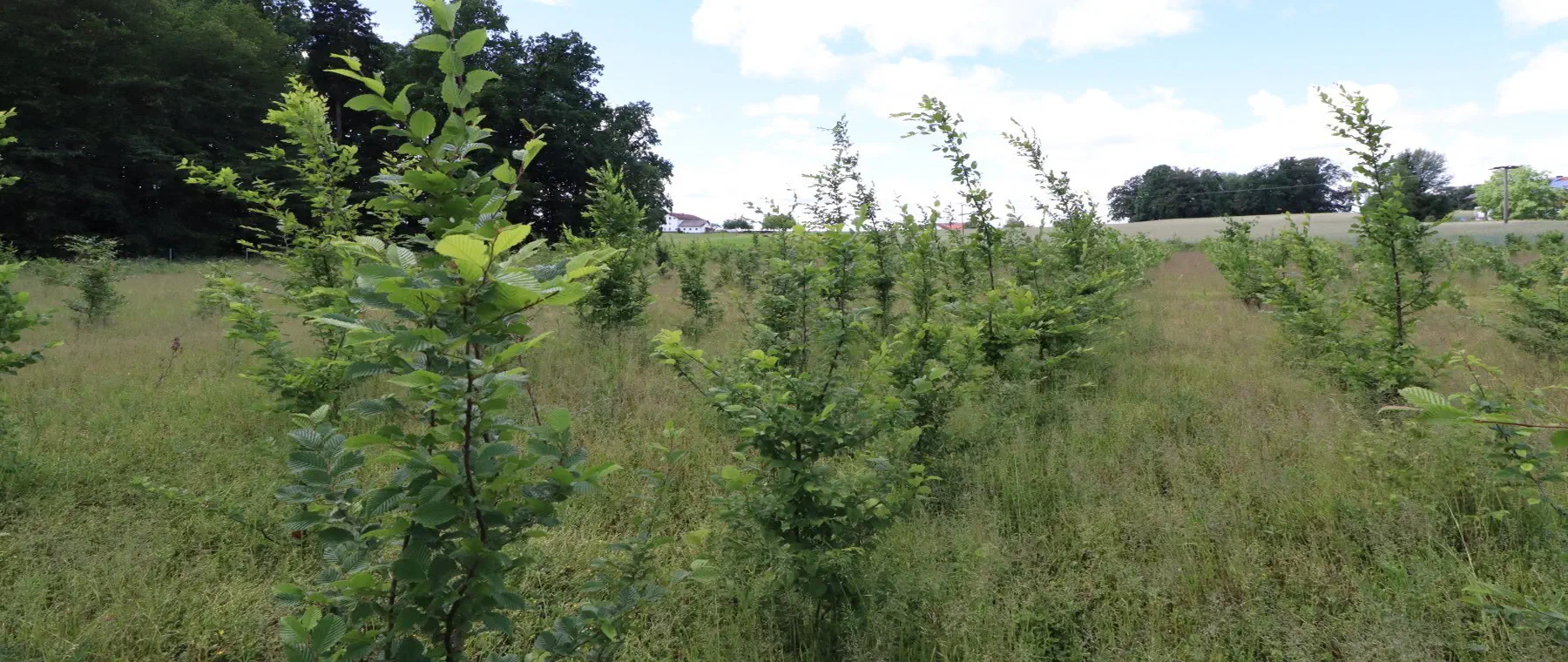
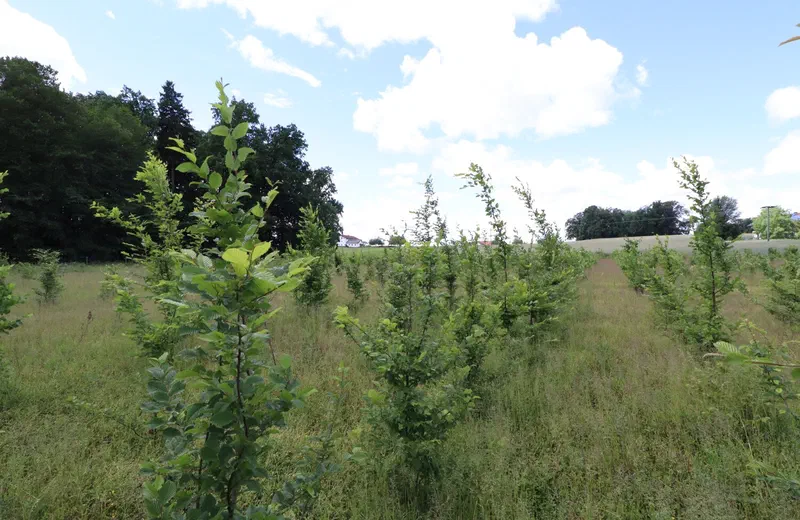
Establishment of site-appropriate deciduous and fen forests with common oak, European beech, black alder and downy birch on suitable geest and lowland sites. They serve as replacement for felled trees and as permanently secured compensation areas.
Species protection CEF and FCS
Advance compensation measures under section 44 BNatSchG, such as replacement roosts for bats in tree stands and buildings, habitat structures for the sand lizard and replacement breeding sites for amphibians, coordinated with the respective project.
Protected species in the Angeln, Schlei and Eider-Treene lowland
Meadow-breeding birds in the lowlands
Northern lapwing, black-tailed godwit and great curlew breed in open wet grassland of the Eider-Treene-Sorge lowland. Typical measures are rewetting, creation of shallow areas and grassland extensification as advance CEF measures.
About this species ›Skylark and open-land species
The extensive agricultural landscape of the geest and Angeln is habitat for the skylark. In construction and infrastructure procedures, skylark plots, flower strips and extensive arable margin strips are proven species protection measures under section 44 BNatSchG.
About this species ›Bats in hedgerows and forests
Old tree stands, hedgerows and buildings provide roosts for the strictly protected bat species of Annex IV of the Habitats Directive. Demolition or tree felling require replacement roosts as a CEF measure.
About this species ›Amphibians and great crested newt
The strictly protected great crested newt as well as moor and grass frog inhabit small waterbodies, hedgerow ditches and fluctuating damp depressions. New or restored breeding sites in spatial proximity secure the breeding sites during impacts.
About this species ›Kingfisher on Treene and Schlei
Near-natural bank sections of Treene, Langballigau and Schlei tributaries provide the kingfisher with steep banks for breeding. Steep bank modelling and bank restoration are typical CEF measures for waterbody interventions.
About this species ›Sand lizard on geest and dunes
Sandy geest sites, inland dunes such as at Treßsee and railway or path slopes are habitat for the sand lizard (Annex IV Habitats Directive). During impacts, sunny replacement habitats with shelter and egg-laying areas must be created as a CEF measure.
About this species ›Which projects trigger a compensation obligation?
Roads and transport infrastructure
The A7 motorway (Hamburg-Flensburg) crosses the district near Schleswig and Tarp, together with federal and state roads, local bypasses and bridge structures. Such projects regularly trigger compensation and replacement obligations, which can be covered via eco-points.
Wind energy and grid expansion
In the wind-rich north of Schleswig-Holstein, wind farms and associated transmission lines are being expanded. These projects generate compensation requirements and often require species protection assessments and FCS measures for wind-sensitive species.
Settlement and business development
Residential and business areas are emerging in the hinterland of the city of Flensburg, for example in Handewitt, Harrislee and Schleswig. Nature conservation compensation can be efficiently covered through provisioned eco-points from recognised eco-accounts.
Agriculture and coastal tourism
Intensive agricultural and grassland use and tourism projects on the Baltic coast and Schlei result in land-use changes with an impact character. At the same time, marginal yield sites and lowland areas are well suited as provider areas for compensation measures.
From enquiry to monitoring
Contact and enquiry
Tell us your compensation requirement and the natural region. We check availability.
Offer and advice
A transparent offer covering measure types, scope and availability.
Coordination with authorities
Full coordination with the lower nature conservation authority. We handle everything.
Long-term monitoring
Permanent securing of the land, management and documentation across the contract term.
Eco-points in adjoining districts
All about eco-points
in the district of Schleswig-Flensburg
Request eco-points in the district of Schleswig-Flensburg
We will promptly prepare a transparent offer with matching eco-points held in stock in the district of Schleswig-Flensburg.