Eco-points and compensation areas
District of Plön
Authority-recognised eco-points from eco-account measures for impacts in Plön District. greeNature supports municipalities, project developers and landowners with compensation according to the State Nature Conservation Act of Schleswig-Holstein and the Eco-Account Ordinance, from requirements assessment through to monitoring.
The District of Plön at a glance
Plön District is located in East Holstein between the state capital Kiel and the Baltic Sea and belongs to Holstein Switzerland. The landscape is characterised by a lake-rich young moraine landscape with the Great Plön Lake, Germany's tenth-largest lake. Schleswig-Holstein is not divided into administrative regions; the district's lower nature conservation authority is responsible.
Geologically, the landscape was shaped during the Weichselian glaciation. This left behind terminal moraines, water-filled tunnel valleys and a dense network of lakes, soils and small watercourses. The hedgerows (wall hedges) characteristic of Schleswig-Holstein divide the agricultural landscape and form an extensive habitat network.
Ecologically significant are the lakes of the middle Schwentine system, Lake Selent and the Upper Schwentine. The district has several Natura 2000 sites, including the Habitats Directive site Lake Selent (DE-1628-302) with the adjacent bird protection area Lake Selent area (DE-1628-491) and large parts of the Holstein Switzerland nature reserve.
Economically, the district is shaped by agriculture and forestry, tourism at lakes and the Baltic coast, and proximity to the Kiel conurbation. Settlement pressure in the Kiel hinterland, transport projects and the expansion of renewable energy regularly trigger compensation and replacement obligations under the LNatSchG Schleswig-Holstein.
🗺️ Associated natural regions
Go to natural region D23 ›
📍 Selected municipalities
🌿 Ecological features
- Holstein Switzerland nature reserve with the Great Plön Lake, Germany's tenth-largest lake
- Habitats Directive site Lake Selent (DE-1628-302) and bird protection area Lake Selent area (DE-1628-491)
- Habitats Directive site Lakes of the middle Schwentine system and surroundings with the bird protection area Great Plön Lake area
- Habitats Directive site Upper Schwentine (DE-1830-391) with near-natural watercourse sections
- Around 50 km of Baltic coastline with steep cliffs, coastal lakes and coastal meadows (Probstei, Hohwachter Bay)
- Hedgerow landscape and soils as land-typical small structures and habitat network
✅ greeNature on the ground
greeNature operates nationwide and in Schleswig-Holstein with the requirements of the State Nature Conservation Act and the Eco-Account Ordinance. We coordinate measures with the lower nature conservation authority of Plön District, know the natural region features of Holstein Switzerland and the Baltic coast and work closely with regional landowners and farmers.
Typical measures in the district of Plön
Lake shore and waterbody restoration
Development of natural bank zones at lakes and on the Schwentine, creation of vegetation zones and restoration of continuous watercourse sections as habitat for fish, dragonflies and waterfowl.
Hedgerow creation and maintenance
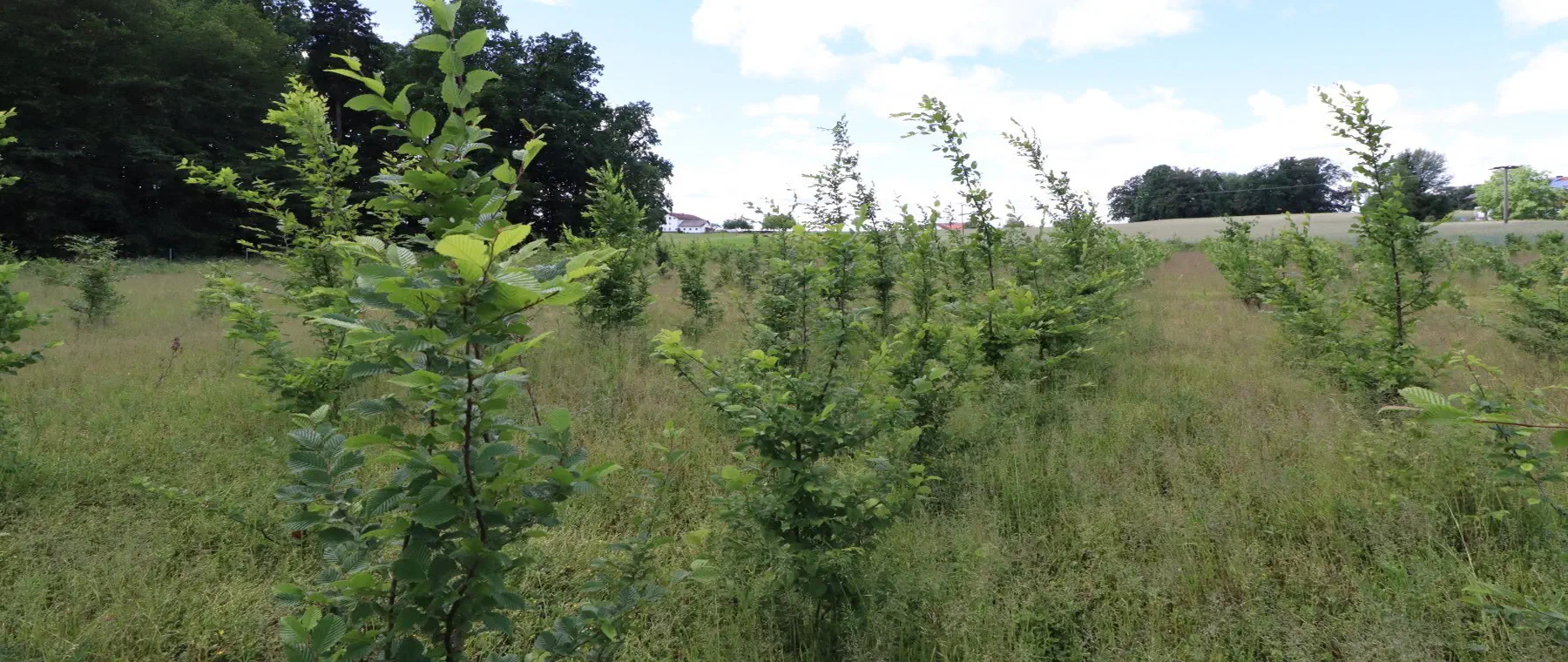
Creation and proper maintenance of the region's characteristic wall hedges (hedgerows) in the agricultural landscape, establishment of stepping-stone habitats and habitat network for grassland birds, insects and small mammals.
Grassland extensification
Conversion of intensively used areas into species-rich wet and damp grassland at lake depressions and coastal meadows, habitat for meadow-breeding birds such as northern lapwing and snipe.
Small waterbodies and amphibian habitats
Creation and rehabilitation of soils and small waterbodies for fire-bellied toad, great crested newt and other amphibians, often as a CEF measure for impacts on the small waterbody landscape of East Holstein.
Forest edge design and forest conversion
Development of structured forest edges and conversion of non-native stands to near-natural deciduous mixed forests with oak, beech and alder in damp lowland areas.
Species protection CEF and FCS
Measures for bat roosts in manor houses and old trees, sand lizard habitats on railway embankments and dry sites and replacement habitats under section 44 BNatSchG, coordinated with the Eco-Account Ordinance SH.
Protected species in the Holstein Switzerland and Baltic coast
Fire-bellied toad and amphibians
The fire-bellied toad is a regionally significant target species of the East Holstein small waterbody landscape. Together with tree frog and common toad, it benefits from newly created and sunny soils. Typical CEF measure for impacts on grassland and field depressions.
About this species ›Great crested newt
The great crested newt (Annexes II and IV Habitats Directive) inhabits fish-free small waterbodies with rich aquatic vegetation. Creation of breeding sites and networking of terrestrial habitats are common compensation and species protection measures in Plön District.
About this species ›Kingfisher on the Schwentine
Near-natural sections of the Schwentine and lake shore zones provide the kingfisher with breeding opportunities in steep banks. CEF measures include the modelling of bank erosion and the protection of low-disturbance waterbody sections.
About this species ›Northern lapwing and meadow-breeding birds
Wet grassland at lake depressions and coastal meadows is habitat for northern lapwing, snipe and other meadow-breeding birds. Extensification, rewetting and predation control are typical measures for maintaining populations.
About this species ›Bats
Old tree stands, manor houses and forests of Holstein Switzerland provide roosts for mouse-eared bat, serotine and water bat. Roost protection and replacement roosts are frequent species protection measures under section 44 BNatSchG.
About this species ›White-tailed eagle and waterfowl
The white-tailed eagle nests in the vicinity of large lakes, which are also significant breeding and staging areas for waterfowl. Impacts in the vicinity of the bird protection areas require careful species protection assessment.
Which projects trigger a compensation obligation?
Settlement and business development
New residential and business areas are being developed in the Kiel hinterland, in Schwentinental, Preetz and Heikendorf. The associated land sealing triggers compensation and replacement obligations under LNatSchG Schleswig-Holstein, which can be covered through eco-account measures.
Transport and infrastructure
Expansion and maintenance of federal and state roads, cycle paths and rail infrastructure in the Kiel hinterland create impacts on hedgerows, trees and waterbodies, which must be compensated for in nature conservation terms.
Renewable energy
Wind energy and utility-scale photovoltaic installations and grid expansion projects in East Holstein require compensation measures and species protection precautions, for example for bats and birds of prey.
Tourism and coastal infrastructure
Projects at lakes and on the Baltic coast, from port and path construction to recreational facilities in Probstei and Hohwachter Bay, intervene in sensitive coastal and waterbody habitats and generate compensation requirements.
From enquiry to monitoring
Contact and enquiry
Tell us your compensation requirement and the natural region. We check availability.
Offer and advice
A transparent offer covering measure types, scope and availability.
Coordination with authorities
Full coordination with the lower nature conservation authority. We handle everything.
Long-term monitoring
Permanent securing of the land, management and documentation across the contract term.
Eco-points in adjoining districts
All about eco-points
in the district of Plön
Request eco-points in the district of Plön
We will promptly prepare a transparent offer with matching eco-points held in stock in the district of Plön.