Eco-points and compensation areas
District of Meißen
Der district Meißen liegt im Norden Sachsens beiderseits der Elbe zwischen Dresden und dem Elbe-Elster-Tiefland. Für impacts in Natur und Landschaft gelten hier die impact mitigation regulation nach den §§ 13 bis 15 BNatSchG, das Sächsische Naturschutzgesetz und die Sächsische eco-account regulation. greeNature entwickelt und betreut Kompensationsmaßnahmen in dieser Region und begleitet project developer von der assessment bis zur langfristigen Sicherung.
The District of Meißen at a glance
Der district Meißen erstreckt sich über rund 1,455 Quadratkilometer im nördlichen Saxony. Prägend ist das Tal der Elbe, das die fruchtbaren Löss-Hügelländer der Lommatzscher und Großenhainer management von den Teich- und Waldlandschaften im Norden trennt.
Naturräumlich gehört der größte Teil des Kreises zum Sächsischen Hügelland und Erzgebirgsvorland (BfN-Großregion D19), während die nördlichen Elbeniederungen um Riesa und Zeithain dem Elbe-Mulde-Tiefland (D10) zuzuordnen sind. Diese Vielfalt bringt sehr unterschiedliche habitats und damit unterschiedliche Kompensationsanforderungen mit sich.
Die Wirtschaft ist etwa zu gleichen Teilen von produzierendem und verarbeitendem Gewerbe, von Land- und Weinbau sowie vom Tourismus geprägt. Der Siedlungsdruck aus dem angrenzenden Dresdner Ballungsraum sorgt zusätzlich für land take und entsprechenden Ausgleichsbedarf.
compensation richtet sich in Saxony nach der Handlungsempfehlung zur Bewertung und assessment von Eingriffen und wird über Ökokonten nach der Sächsischen eco-account regulation planbar. greeNature arbeitet bundesweit und kennt die regionalen Besonderheiten des Elblandes.
🗺️ Associated natural regions
Go to natural region D19 ›
Go to natural region D10 ›
Go to natural region D13 ›
📍 Selected municipalities
🌿 Ecological features
- Enge Verzahnung von Elbtal, Löss-Hügelland (Lommatzscher und Großenhainer management) und nördlicher Teichlandschaft
- Weinbau an den Elbhängen des Sächsischen Elblandes mit wärmeliebenden Trocken- und Saumbiotopen
- Natura-2000-Gebiete wie die Gohrischheide, das Seußlitzer Elbhügelland und Golk sowie das Untere Rödertal
- Teich- und floodplain der Röderaue als bedeutender Amphibien- und Wasservogellebensraum
- Hoher Siedlungsdruck im Dresdner Umland (Radebeul, Coswig, Weinböhla, Moritzburg)
- Industriestandorte wie der Chemiestandort Nünchritz und der Verkehrsknoten Riesa mit regelmäßigem compensation requirement
✅ greeNature on the ground
greeNature ist bundesweit tätig und begleitet project developer, Kommunen und Planungsbüros im district Meißen bei der naturschutzrechtlichen compensation. Wir bilanzieren impacts nach der sächsischen Handlungsempfehlung, entwickeln Ausgleichs- und replacement measures und stimmen sie mit der Unteren Naturschutzbehörde ab. Ein Schwerpunkt liegt auf measures, die zu den Naturräumen des Elblandes passen, etwa die Aufwertung von Auengrünland an Elbe und Röder, die Anlage von Streuobstwiesen und hedgerows in der management-Landschaft sowie die management der Trockenbiotope an den Elbhängen. Über Ökokonten nach der Sächsischen eco-account regulation lassen sich measures vorziehen und rechtssicher zuordnen, sodass permitting procedure planbarer werden.
Typical measures in the district of Meißen
Extensivierung von Ackerflächen
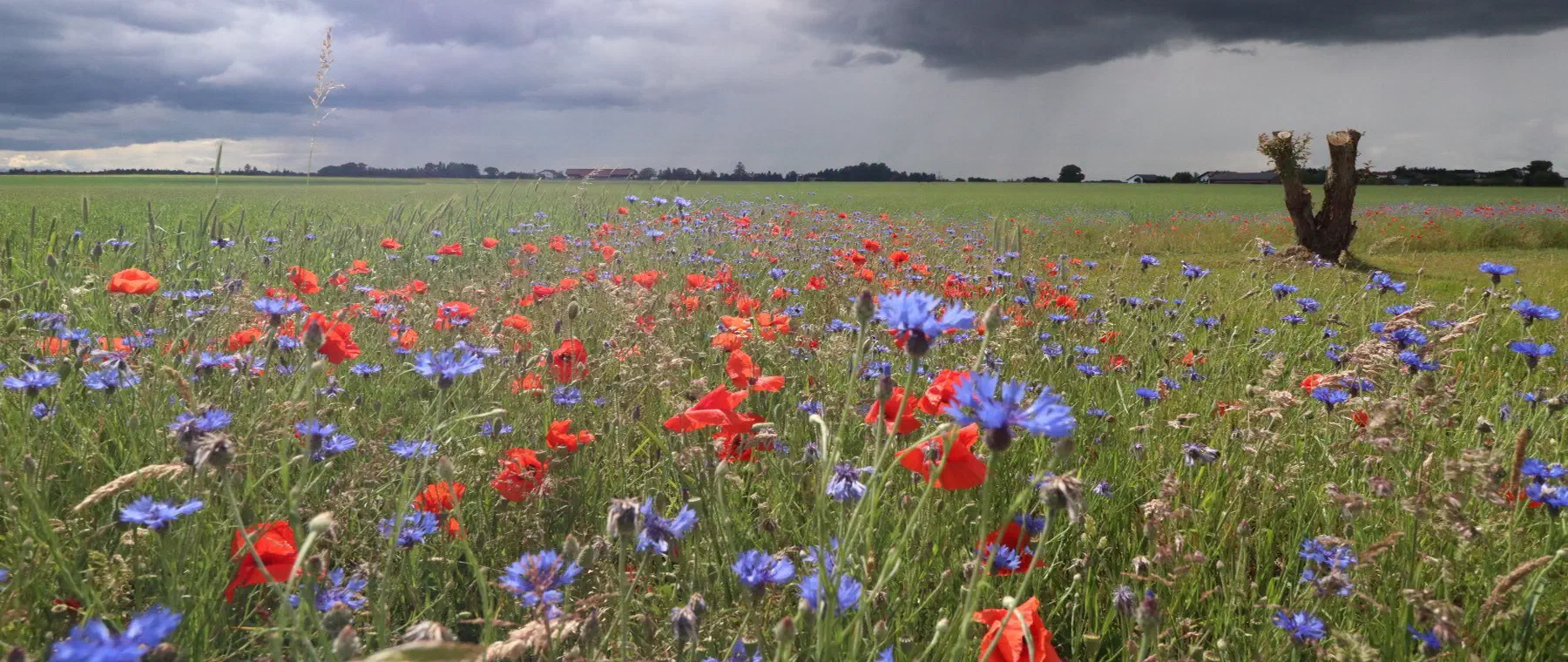
Anlage von Acker- und Blührandstreifen sowie Lerchenfenstern in der Großenhainer und Lommatzscher management, um Offenlandarten in der intensiv genutzten Agrarlandschaft zu fördern.
Streuobstwiesen und hedgerows
Neuanlage und management von Streuobstbeständen und Feldhecken als habitat network in der stellenweise ausgeräumten Feldflur der Löss-Hügelländer.
Ponds and small water bodies
Restoration and creation of small water bodies and wet biotopes in the Röder floodplain as breeding habitat for amphibians, including the great crested newt.
Dry biotopes on the Elbe slopes
Management of vineyard slopes, dry-stone walls and calcareous grassland in the Elbe valley to secure warmth-loving, light-demanding species.
Near-natural forest conversion
Development of site-appropriate deciduous mixed forests in Zellwald and Friedewald instead of structurally poor coniferous plantations to increase habitat diversity.
Riparian strips and floodplain grassland
Creation of riparian strips and extensively managed grassland along the Elbe and Röder to improve watercourse structure and floodplain dynamics.
Protected species in the Sächsisches Elbland und Großenhainer management
Skylark
Characteristic species of open arable landscapes in the Großenhainer and Lommatzscher areas. It benefits from lark windows and extensively managed field margins and is considered planning-relevant.
About this species ›Northern lapwing
Breeding bird of wet meadows and small depressions in arable fields, such as in the Röder floodplain. As a ground-nesting species, it is sensitive to habitat loss and drainage.
About this species ›Sand lizard
Species strictly protected under § 44 BNatSchG of the sunny Elbe slopes, vineyard slopes and railway embankments. Impacts often require precautionary compensation measures (CEF).
About this species ›Great crested newt
Species found in the ponds of the Röder floodplain and the northern pond landscape, listed in FFH Annexes II and IV, dependent on structurally rich, fish-free small water bodies.
About this species ›Kingfisher
Resident of near-natural steep banks along the Elbe and Röder. It requires clean flowing water with sufficient small fish populations and undisturbed breeding banks.
About this species ›Bats
Several species strictly protected under § 44 BNatSchG use the Elbe valley slopes, foundations and old timber stands as roosts and hunting grounds. Building and tree cavity roosts require particular examination in projects.
About this species ›Which projects trigger a compensation obligation?
Industry and commerce
Expansions of industrial sites such as the Nünchritz chemical plant and commercial areas in Riesa and Großenhain regularly trigger compensation and replacement requirements.
Residential and settlement construction
Demand in the Dresden hinterland (Radebeul, Coswig, Weinböhla, Moritzburg) leads to land use and corresponding compensation requirements.
Transport infrastructure
Expansion and conversion of roads and railway facilities, particularly at the Riesa transport junction, impact on open land and woodland stocks.
Renewable energy and raw materials
Ground-mounted photovoltaic systems, wind energy and gravel extraction in the Elbe valley claim land and require nature conservation accompaniment.
From enquiry to monitoring
Contact and enquiry
Tell us your compensation requirement and the natural region. We check availability.
Offer and advice
A transparent offer covering measure types, scope and availability.
Coordination with authorities
Full coordination with the lower nature conservation authority. We handle everything.
Long-term monitoring
Permanent securing of the land, management and documentation across the contract term.
Eco-points in adjoining districts
All about eco-points
in the district of Meißen
Request eco-points in the district of Meißen
We will promptly prepare a transparent offer with matching eco-points held in stock in the district of Meißen.