Eco-points and compensation areas
City of Leipzig
Eco-points and compensation areas for projects in the independent city of Leipzig, assessed according to the Saxon Eco-Account Ordinance (SächsÖKoVO). greeNature accompanies project developers, municipalities and planning offices in the growing metropolitan area as full-service partner for compensation, from accounting through land securing to permanent management. Operating nationwide and authority-experienced.
The City of Leipzig at a glance
Leipzig is Saxony's largest city and one of Germany's fastest-growing cities. As an independent city, it undertakes nature conservation administration itself, since Saxony abolished administrative regions following the 2008 district reform. The city area is divided into ten city districts with 63 districts and is encircled by Leipzig and Nordsachsen Districts.
In terms of natural regions, Leipzig is located in the flat Leipzig lowland basin, which belongs to the BfN natural region D10 (Elbe-Mulde Lowland). The river landscapes of White Elster, Pleiße and Parthe and the Leipzig riparian forest, one of the largest contiguous hardwood riparian forests in Central Europe, extending far into the city centre, are characteristic. For nature-region-appropriate accounting under SächsÖKoVO, the assignment of the impact location is decisive.
The legal basis of all compensation is §§ 13 to 15 BNatSchG, specified by the Saxon Nature Conservation Act. Assessment of impact and compensation is undertaken via a biotope valuation procedure according to the guidance recommendation for assessing and accounting for impacts in the Free State of Saxony. Via eco-accounts under the Saxon Eco-Account Ordinance (SächsÖKoVO), measures can be brought forward and legally securely assigned.
Compensation requirements arise in Leipzig continuously through housing construction and densification, through commercial and industrial settlement as well as through transport and infrastructure projects. greeNature assigns your impact to the appropriate basis and provides suitable land and eco-points in the city area and hinterland.
🗺️ Associated natural regions
Go to natural region D19 ›
📍 City districts
🌿 Ecological features
- Leipzig riparian forest, one of the largest contiguous hardwood riparian forests in Central Europe, partly protected as FFH site
- River landscapes of White Elster, Pleiße and Parthe with their floodplains and the city-centre water junction
- Numerous nature conservation and landscape protection areas and Natura 2000 areas in and around the city area
- Transition to Leipzig Neuseeland in the south with flooded post-mining lakes such as Cospudener and Markkleeberg lakes
- High settlement and land pressure from continued population growth and active construction
- Railway brownfields, industrial conversion and allotments as typical inner-city land potential for enhancement and de-sealing
✅ greeNature on the ground
greeNature operates nationwide and manages compensation projects in Leipzig. We know the Environmental Department as lower nature conservation authority, assessment according to SächsÖKoVO and Saxon guidance recommendation, and the characteristics of riparian forest, river floodplains and urban conversion land from practice. In the densely built city space, we develop measures such as de-sealing, water restoration and floodplain enhancement and supplement them with land in the urban hinterland if necessary. We accompany your project from land selection through authority coordination to recognition and permanent management.
Typical measures in the city of Leipzig
Floodplain revitalisation
Re-connection of oxbows and flood channels in Leipzig riparian forest, waterlogging of hardwood riparian forest and creation of floodplain water bodies as habitat for fish, amphibians and wading and water birds.
Flowing water restoration
Restoration of sections on White Elster, Pleiße and Parthe with near-natural banks, gravel bars and vegetation margins, habitat for kingfisher, beaver and fish fauna in the city area.
De-sealing and conversion
Removal of sealed railway, commercial and brownfield areas and development of succession areas, calcareous grassland or green corridors as creditable enhancement under SächsÖKoVO in densely built city space.
Grassland and orchards in the hinterland
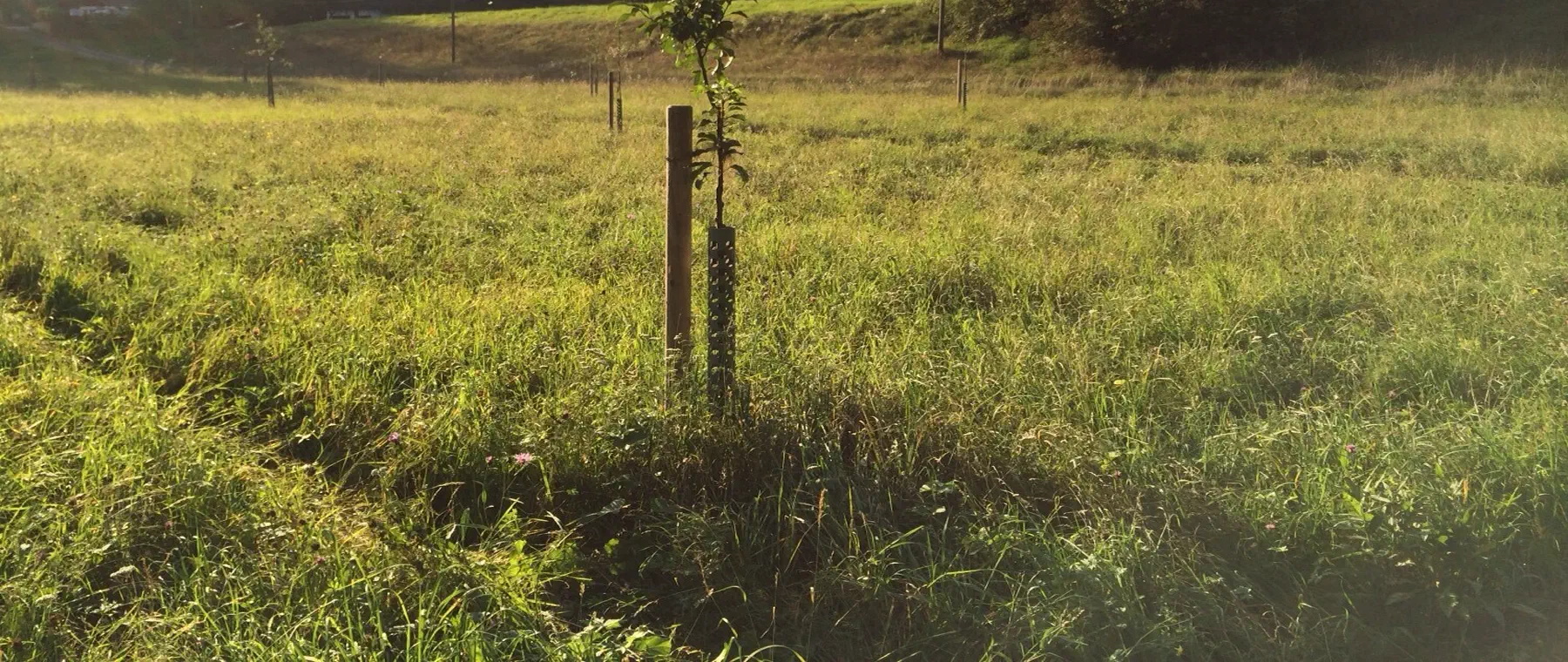
Extensification of grassland and creation of orchards in urban hinterland, conversion of structurally poor arable land into species-rich meadows and margins as replacement measure.
Species protection CEF and FCS
Precautionary measures for sand lizard on slopes and railway embankments, breeding water bodies for great crested newt and bat roosts, coordinated with access prohibitions of § 44 BNatSchG.
City greenery and habitat network
Creation and enhancement of green corridors, hedges and woodland structures to network riparian forest, parks and hinterland biotopes, stepping-stones for open land and woodland species.
Protected species in the Saxony's largest city in the Leipzig lowland basin
Kingfisher
The kingfisher nests at near-natural steep banks of White Elster, Pleiße and Parthe. Restored water bodies with cliff faces and clear water promote its population and are typical CEF measures.
About this species ›Bats in riparian forest
Leipzig riparian forest and old tree stocks house water bats, red kites and Natterer's bats. Cavity trees and roosts must be considered in impacts under § 44 BNatSchG.
About this species ›Great crested newt and amphibians
Great crested newt and further amphibians live in floodplain water bodies and small water bodies at the city edge. Newly created, fish-free breeding water bodies secure ecological function in spatial context.
About this species ›Sand lizard
Railway embankments, slopes and warm-dry wasteland and conversion sites provide sand lizard habitat. In construction and infrastructure projects, it is a frequent target species of detailed species protection assessment.
About this species ›Beaver and otter
White Elster, Pleiße and Luppe floodplains are core habitat for beaver and otter, both species of FFH Annex II. Near-natural banks and floodplain water bodies secure their expansion.
Skylark
Skylark nests as a ground-breeder in open arable land at the city edge. Flower and fallow strips and extensively used grassland support its declining population.
About this species ›Which projects trigger a compensation obligation?
Housing construction and densification
Continued population growth leads to extensive housing construction, densification and development of new building areas. Associated land consumption triggers compensation and replacement obligations under §§ 13 to 15 BNatSchG.
Commerce and industry
Settlements and expansions in commerce, manufacturing and logistics at Leipzig location claim land and require nature conservation compensation and frequently species protection measures.
Transport infrastructure
Expansion and new construction of roads, railway facilities and public transport networks impact on open land and woodland stocks and create compensation obligations.
Renewable energies
Photovoltaic ground-mounted systems on conversion and tipping sites and on rooftop and commercial locations in urban hinterland require nature conservation accompaniment and partly precautionary compensation measures.
From enquiry to monitoring
Contact and enquiry
Tell us your compensation requirement and the natural region. We check availability.
Offer and advice
A transparent offer covering measure types, scope and availability.
Coordination with authorities
Full coordination with the lower nature conservation authority. We handle everything.
Long-term monitoring
Permanent securing of the land, management and documentation across the contract term.
Eco-points in adjoining districts
All about eco-points
in the city of Leipzig
Request eco-points in the city of Leipzig
We will promptly prepare a transparent offer with matching eco-points held in stock in the city of Leipzig.