Eco-points and compensation areas
City of Dresden
Eco-points and compensation areas in the capital city Dresden, assessed according to the Saxon Eco-Account Ordinance (SächsÖKoVO) and Saxon guidance recommendation for assessing and accounting for impacts. greeNature develops and manages nature-region-appropriate compensation measures in the Elbe valley and Saxon Elbland, operating nationwide and authority-experienced.
The City of Dresden at a glance
Dresden is the capital of the Free State of Saxony and an independent city on the middle Elbe. The city is located in the Dresden Elbe valley widening, a broad valley basin framed by the loess hills of Elbland and spurs of the Osterzgebirge. An intermediate district level no longer exists in Saxony, as administrative regions were abolished in 2012. As an independent city, Dresden undertakes the duties of lower nature conservation authority itself.
In terms of natural regions, Dresden predominantly belongs to the BfN natural region D19 Saxon Elbe and Loess Hilly Land with the Elbe valley widening, fertile loess surfaces and warm, south-facing Elbe valley slopes. The south of the city, such as the left-bank narrow valleys of Weißeritz and Lockwitzbach, transitions into the Erzgebirge foothills (natural region D19). In the north-east is the Dresdner Heath, one of the largest contiguous urban forest areas in Germany.
Despite its size, Dresden is remarkably green. Characteristic are the open Elbe meadows in the valley, the EU bird protection area and FFH site along the Elbe, near-natural Elbe valley slopes between Loschwitz and Bonnewitz, stream valleys of Prießnitz, Weißeritz and Lockwitz and viticulture on the terrace slopes of Saxon Elbland. Multiple nature conservation areas, extensive landscape protection areas and Natura 2000 areas lie within the city area.
Economically, Dresden is a nationally significant site for microelectronics and semiconductor industry (Silicon Saxony) with research, mechanical engineering and healthcare. Plant expansions, new semiconductor factories, housing construction, commercial land and expansion of transport and infrastructure regularly trigger impacts whose compensation and replacement must be provided under §§ 13 to 15 BNatSchG and SächsÖKoVO.
🗺️ Associated natural regions
Go to natural region D19 ›
📍 City districts
🌿 Ecological features
- EU bird protection area and FFH site Elbe valley between Schöna and Mühlberg, Elbe floodplain with water birds and valuable floodplain grassland
- FFH site Elbe valley slopes between Loschwitz and Bonnewitz, warmth-loving dry slopes, rocky outcrops and dry-stone walls
- Nature conservation area Dresdner Elbe valley slopes (around 195 ha in city area), Dresden's largest nature conservation area
- Dresdner Heath, one of the largest contiguous urban forest areas in Germany, with FFH shares
- Stream valleys of Prießnitz, Weißeritz and Lockwitz as FFH sites and habitat network corridors from Erzgebirge foothills to the Elbe valley
- Open Elbe meadows as floodplain landscape in the city centre, shaping landscape and flood discharge
- Viticulture on the terrace slopes of Saxon Elbland, dry-stone walls and vineyard fallows as special sites
✅ greeNature on the ground
greeNature operates nationwide and is familiar with Saxon compensation law. In Dresden, we work according to the Saxon Eco-Account Ordinance (SächsÖKoVO) and the guidance recommendation for assessing and accounting for impacts. We coordinate measures with the Environmental Department of the capital city as lower nature conservation authority and know the characteristics of compensation in densely built city space, on Elbe valley slopes and in Dresdner Heath.
Typical measures in the city of Dresden
De-sealing and inner development
Removal and de-sealing of unused land, conversion into permeable, vegetated sites and enhancement of inner-city rest areas. In densely built city space an effective compensation with immediate reference to impact location.
Water restoration
Near-natural conversion and opening of piped sections on Prießnitz, Weißeritz and Lockwitzbach, creation of riparian strips and floodplain structures. Improvement of continuity, water structure and habitat network.
Elbe meadows and floodplain grassland
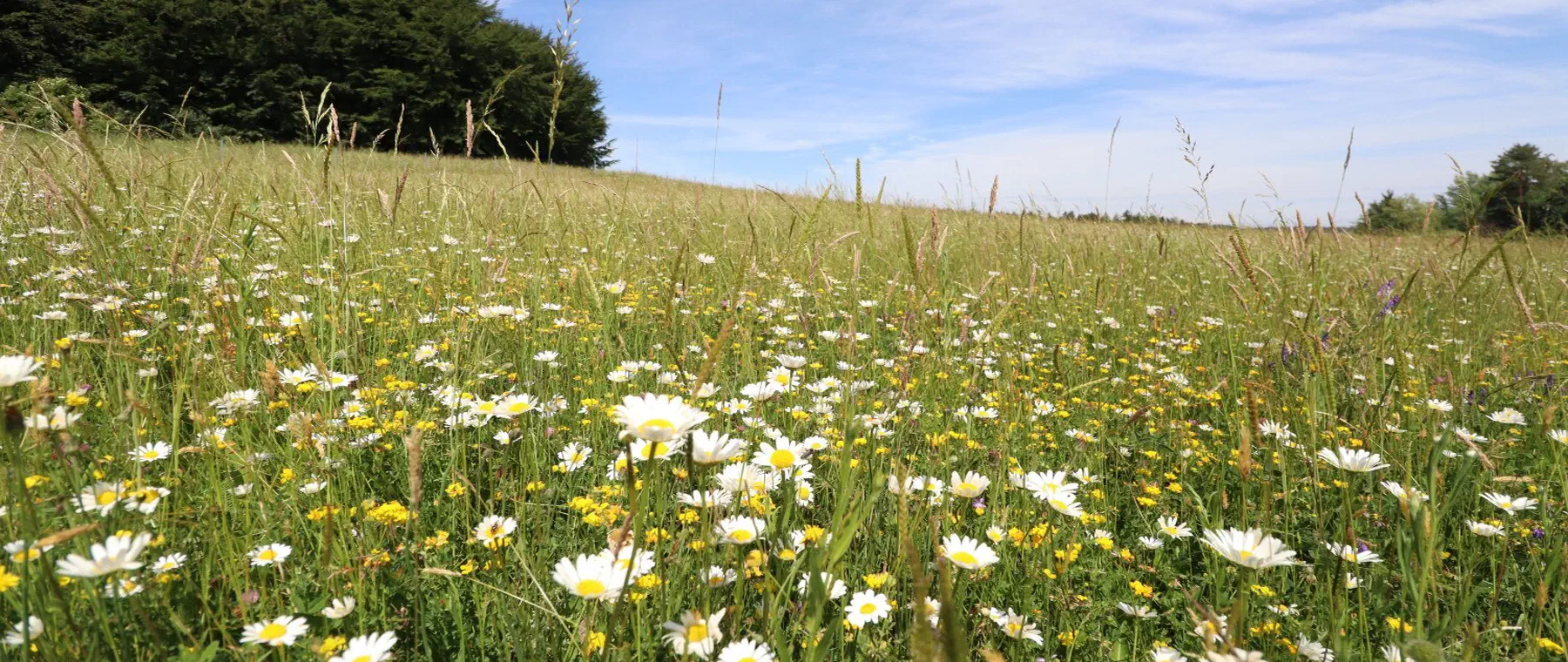
Extensification and species-rich development of Elbe meadows and floodplain grassland, adapted mowing and grazing. Habitat for meadow-breeding birds, insects and floodplain plants along Elbe valley.
Elbe slopes and orchards
Management and restoration of dry-stone walls, vineyard fallows, orchard stocks and calcareous grassland on warm Elbe valley slopes. Retention of warmth-loving communities of Saxon Elbland.
City forest and forest conversion
Conversion of structurally poor pine stocks in Dresdner Heath to site-appropriate deciduous and mixed forests, retention of old and cavity trees and development of forest edges and stream valleys.
Species protection CEF and FCS
Precautionary compensation measures (CEF) and conservation status measures (FCS) under § 44 BNatSchG, such as sand lizard habitats on railway embankments and slopes, bat roosts and alternative roosts for building-nesting birds.
Protected species in the Dresden Elbe valley widening and Saxon Elbland
Sand lizard
Sunny Elbe valley slopes, dry-stone walls, railway embankments and track margins are habitat for sand lizard. In construction and infrastructure projects in city area, it ranks among the most frequent target species for precautionary compensation measures.
About this species ›Bats
Elbe valley slopes, old cellars, buildings and Dresdner Heath provide roost and hunting space for numerous bat species. Roost securing, alternative roosts and retention of cavity trees are common CEF measures.
About this species ›Kingfisher and beaver
Kingfisher and the FFH Annex II-protected beaver live on Elbe, Weißeritz and Prießnitz. Near-natural banks, cliff faces and undisturbed riparian strips support the populations.
About this species ›Great crested newt and amphibians
Oxbows, pools and small water bodies of Elbe floodplain are habitat for great crested newt, common toad and further amphibians. Creation and networking of sunny, fish-free breeding water bodies are typical measures.
About this species ›Water birds in the Elbe valley
The bird protection area Elbe valley is staging and overwintering habitat for numerous water birds. Retention of open floodplain meadows, disturbance-free bank areas and shallow water zones secures these populations.
Skylark of the Elbe meadows
Open Elbe meadows and field land at city edge are habitat for skylark and further open land species. Extensification, flower strips and adapted mowing promote breeding populations.
About this species ›Which projects trigger a compensation obligation?
Semiconductor industry (Silicon Saxony)
Dresden is Europe's largest microelectronics location. Construction and expansion of semiconductor factories (including Infineon, Bosch, GlobalFoundries and the ESMC plant as joint venture with TSMC) in northern Dresden generate substantial compensation requirements under §§ 13 to 15 BNatSchG.
Housing construction and settlement development
Housing new construction, densification and development of new quarters in a growing major city lead to impacts on soil, green space and landscape character, for which compensation and replacement must be provided under Saxon law.
Transport and infrastructure
As a rail hub and crossing point of A4 and A17 with Elbe bridges, expansion of city rail network and renewal of transport routes, Dresden regularly triggers impacts requiring compensation measures.
Commerce and science
New commercial and research land in the vicinity of TU Dresden, University Hospital and non-university institutes as well as logistics and industrial settlements create nature conservation compensation requirements.
From enquiry to monitoring
Contact and enquiry
Tell us your compensation requirement and the natural region. We check availability.
Offer and advice
A transparent offer covering measure types, scope and availability.
Coordination with authorities
Full coordination with the lower nature conservation authority. We handle everything.
Long-term monitoring
Permanent securing of the land, management and documentation across the contract term.
Eco-points in adjoining districts
All about eco-points
in the city of Dresden
Request eco-points in the city of Dresden
We will promptly prepare a transparent offer with matching eco-points held in stock in the city of Dresden.