Eco-points and compensation areas
City of Chemnitz
Eco-points and compensation areas in Chemnitz, assessed according to the Saxon Eco-Account Ordinance (SächsÖKoVO). greeNature develops and manages compensation measures in Chemnitz city area and hinterland, operating nationwide and authority-experienced.
The City of Chemnitz at a glance
Chemnitz is an independent city and with around 247,000 residents the third-largest city in Saxony. The city is located in the Erzgebirge basin at the northern foot of the Erzgebirge, where the highland transitions into the hilly Erzgebirge foothills. The river Chemnitz, formed in the city from the confluence of Zwönitz and Würschnitz, is namesake and leaves the city to the north.
In terms of natural regions, the city area predominantly belongs to the BfN natural region D19 (Saxon Highland and Erzgebirge foothills). Southern city areas rise to natural region D16 (Erzgebirge). Characteristic are the floodplains of Chemnitz, Zwönitz and Würschnitz, extensive forest stocks such as Zeisigwald and an alternation of densely built city districts and agriculturally used margins.
Chemnitz is divided into 39 city districts, including eight municipalities annexed in the 1990s such as Grüna, Röhrsdorf, Einsiedel and Klaffenbach, which give the city area a rural character margin. This mixture of urban densification, post-mining and industrial land and near-natural valley areas creates a diverse habitat mosaic.
Economically, Chemnitz is shaped by mechanical engineering, automotive supply industry and IT. Major employers such as the VW engine plant, Technical University and numerous industrial and commercial locations shape the cityscape. Housing construction, commerce, transport and city conversion regularly trigger impacts on nature and landscape whose compensation is governed by the impact mitigation regulation of §§ 13 to 15 BNatSchG in conjunction with the Saxon Nature Conservation Act and SächsÖKoVO.
🗺️ Associated natural regions
Go to natural region D19 ›
Go to natural region D16 ›
📍 City districts
🌿 Ecological features
- FFH site Chemnitz valley along Chemnitz, near-natural valley area as habitat network through city
- FFH site Zwönitz valley in south of city area
- Nature conservation area North Zeisigwald, city's largest contiguous forest area with porphyry tuff and petrified forest
- Nature conservation area Chemnitz floodplain at Draisdorf, floodplain habitat at north edge of city
- Confluence of Zwönitz and Würschnitz to form Chemnitz in city area
- Transition from Erzgebirge foothills (D19) to Erzgebirge (D16) with different altitude levels
- Post-mining, industrial and railway land with potential for de-sealing and species protection
✅ greeNature on the ground
greeNature operates nationwide and is familiar with Saxon compensation law. In Chemnitz, we work according to the Saxon Eco-Account Ordinance (SächsÖKoVO) and the guidance recommendation for assessing and accounting for impacts in the Free State of Saxony. We coordinate measures with the lower nature conservation authority of Chemnitz (Environmental Department) and know natural region characteristics between Erzgebirge foothills, river floodplains and city-adjacent mountain land. From accounting through land securing to implementation, management and monitoring, we continuously accompany your project.
Typical measures in the city of Chemnitz
Water restoration
Removal of bank reinforcement and bed weirs on Chemnitz, Zwönitz and Würschnitz, creation of near-natural banks, riparian forest strips and breeding water bodies. Enhancement of valley floodplains as continuous habitat network through city area.
De-sealing of brownfield sites
Removal of sealed industrial, railway and commercial land, restoration of permeable soils and vegetation development. In densely built city area an effective compensation for new sealing.
Grassland extensification
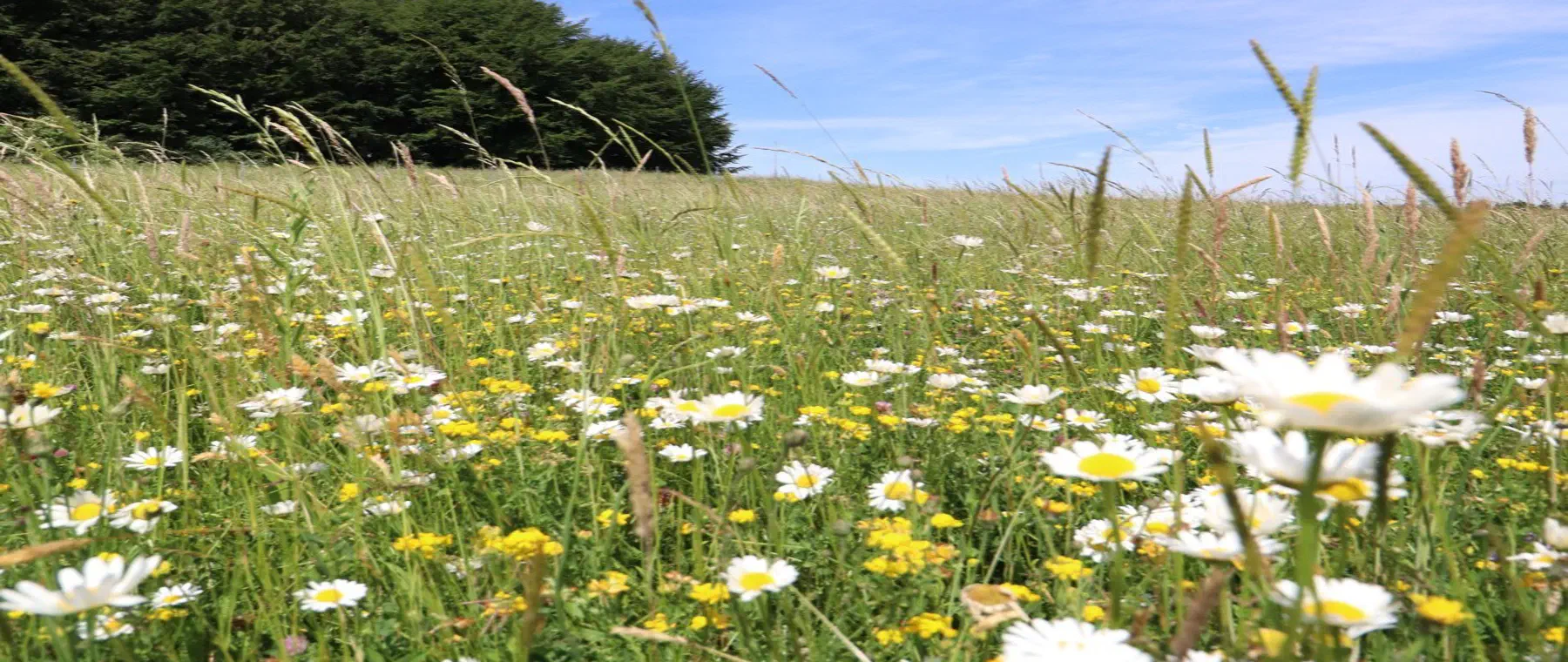
Conversion of intensively used meadows and arable land in rural-characterised municipalities into species-rich extensive grassland, habitat for skylark, insects and meadow-breeding birds at city edge.
Orchards and hedges
Creation of orchards and hedge structures in municipalities of Grüna, Röhrsdorf, Einsiedel and Klaffenbach, networking of open land and forest as habitat for wild bees, birds and small mammals.
Forest conversion and enhancement
Conversion of structurally poor conifer plantations in Zeisigwald and city-adjacent forest stocks to site-appropriate deciduous and mixed forests, increase of old and dead wood shares as habitat for bats and hazel dormouse.
Species protection CEF/FCS
Precautionary compensation measures under § 44 BNatSchG, such as alternative habitats for sand lizard on railway and slope land, bat roosts in buildings and galleries and kingfisher cliff faces at valley water bodies.
Protected species in the Erzgebirge basin at northern Erzgebirge edge
Kingfisher
Near-natural sections of Chemnitz, Zwönitz and Würschnitz offer kingfisher feeding and breeding habitats. Typical measures are modelling of cliff faces and bank abrasions and enhancement of water structure.
About this species ›Bats
Forest stocks such as Zeisigwald, old mining galleries and buildings in city area serve as roost and hunting grounds. Roost losses in renovations and demolitions are compensated via CEF measures and alternative roosts.
About this species ›Sand lizard
Railway facilities, slopes, heaps and industrial brownfields are important habitats for particularly protected sand lizard. In construction and infrastructure projects, it ranks among the most frequent target species for precautionary compensation measures.
About this species ›Amphibians
Ponds, pools and floodplain water bodies in valley areas and city edge house common toad, grass frog and newt species, including great crested newt. Creation and networking of breeding water bodies are proven compensation measures.
About this species ›Skylark
In open field land of annexed municipalities, skylark breeds. Extensification of arable land, lark windows and flower-rich margin strips secure its population at city edge.
About this species ›Hazel dormouse
Structured and berry-rich forest edges and hedges in transition to Erzgebirge provide hazel dormouse habitat. Forest edge design and hedge networking promote the species and simultaneously serve habitat network.
About this species ›Which projects trigger a compensation obligation?
Housing construction and inner development
New building areas, densification and activation of brownfields in city area require nature conservation compensation. greeNature determines compensation requirements according to SächsÖKoVO and provides suitable land and measures.
Commerce and industry
Expansions in automotive and mechanical engineering, VW engine plant, technology campus around Technical University and new commercial and industrial land regularly trigger impacts whose compensation must be accompanied technically and by authority.
Transport and infrastructure
Expansion of Chemnitz Model (city rail), road and bridge construction, supply lines and connection to A72 and federal roads create compensation and replacement obligations under impact mitigation regulation.
City conversion and cultural capital
City conversion, open space and green projects and projects in context of European Cultural Capital 2025 combine urban development with green infrastructure requirements and compensation in city area.
From enquiry to monitoring
Contact and enquiry
Tell us your compensation requirement and the natural region. We check availability.
Offer and advice
A transparent offer covering measure types, scope and availability.
Coordination with authorities
Full coordination with the lower nature conservation authority. We handle everything.
Long-term monitoring
Permanent securing of the land, management and documentation across the contract term.
Eco-points in adjoining districts
All about eco-points
in the city of Chemnitz
Request eco-points in the city of Chemnitz
We will promptly prepare a transparent offer with matching eco-points held in stock in the city of Chemnitz.