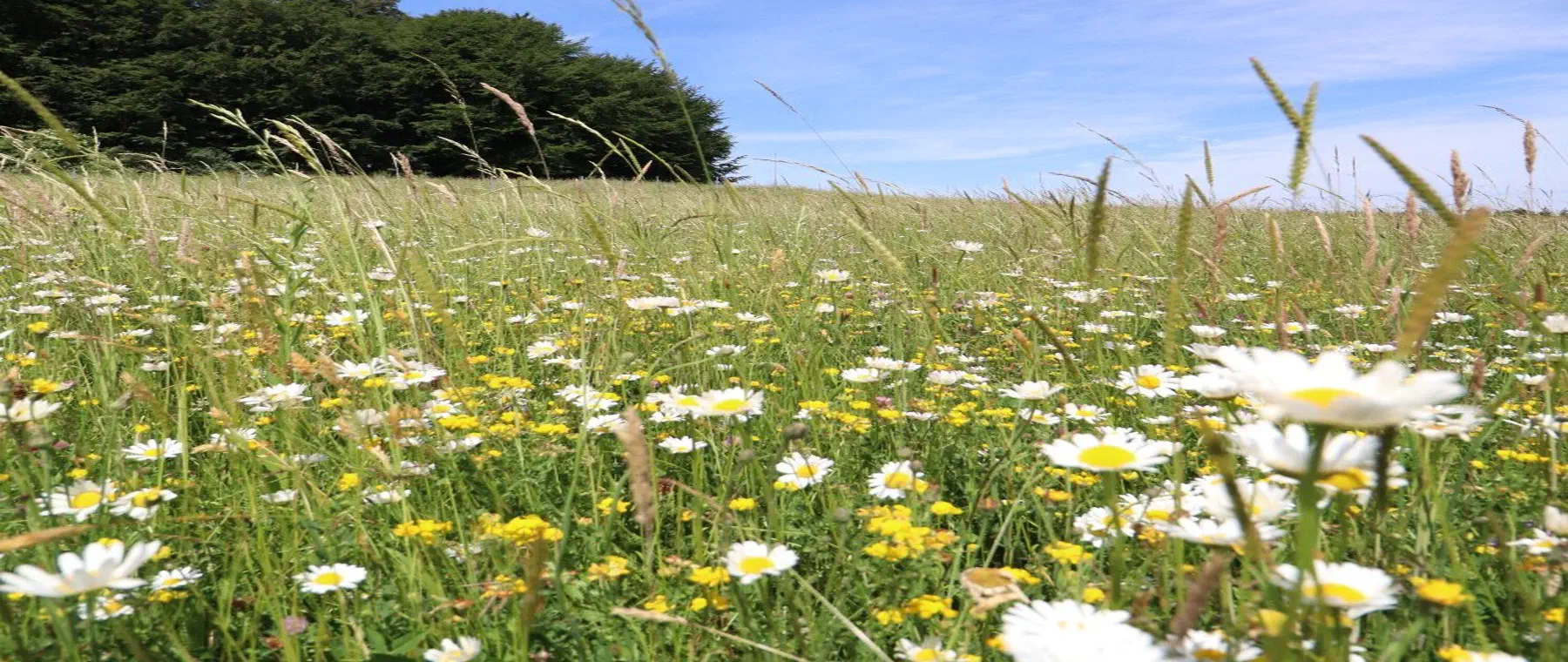
Eco-points and compensation areas
District of Börde
Eco-points and compensation areas in Börde District, assessed according to Saxony-Anhalt's eco-account regulation (ÖkoKVO LSA) and the state's assessment model. greeNature develops and manages compensation measures between Magdeburg loam, Colbitz-Letzlinger Heath and Drömling, operates nationwide and has authority experience.
The District of Börde at a glance
Börde District lies in the north of Saxony-Anhalt, west and north of the state capital Magdeburg, and is the second largest district in the state by area. It was created in 2007 from the merger of Bördekreis and Ohrekreis. The district seat and administrative centre is Haldensleben. The 34 cities and municipalities are divided into eight uniform municipalities and four municipal associations. There is no district level as Saxony-Anhalt abolished administrative regions in 2004; districts are directly subordinate to state authorities.
In terms of natural regions, the district extends from the wide Magdeburg loam in the south, one of the most fertile black earth landscapes in Germany, to the Colbitz-Letzlinger Heath and Drömling in the north and north-west. This gives the district a share in the BfN natural regions D20 (Central German black earth area) and D29 (Wendland and Altmark). The district is traversed by the flowing waters Ohre, Aller and Bode with their accompanying floodplains.
Ecologically, characteristic features are the deep-rooted loess and black earth soils of the loam, which include a national distribution centre for hamster, the Colbitzer lime forest as one of the largest closed lime forests in Europe, and the UNESCO Biosphere Reserve Drömling, one of the largest low-moor areas in Germany. The Colbitz-Letzlinger Heath is the largest bird protection area in Saxony-Anhalt; along the western border runs the Green Band of the former inter-German border.
Economically, the district is characterised by intensive agriculture (sugar beets and wheat on loam soils), the Zielitz potash works, a very high density of wind energy facilities, and commercial and logistics settlements in the Magdeburg hinterland. Traffic routes such as the A2 and A14 run through the area. Such projects regularly trigger impacts on nature and landscape whose compensation follows the impact mitigation regulation of §§ 13 to 15 BNatSchG in conjunction with Saxony-Anhalt's Nature Conservation Act, the state's assessment model and the Saxony-Anhalt eco-account regulation (ÖkoKVO LSA).
🗺️ Associated natural regions
Go to natural region D20 ›
Go to natural region D29 ›
Go to natural region D09 ›
📍 Selected municipalities
🌿 Ecological features
- Magdeburg loam, one of the most fertile black earth landscapes in Germany with deep-rooted chernozem soils on loess
- Colbitz-Letzlinger Heath, largest bird protection area in Saxony-Anhalt and one of the largest continuous heath landscapes in Central Europe, in parts training area Altmark
- Colbitzer lime forest, one of the largest closed lime forests in Europe
- UNESCO Biosphere Reserve Drömling, large-scale low-moor with dense ditch network (land of a thousand ditches) and habitat for otter, beaver and crane
- Flowing waters Ohre, Aller and Bode with accompanying floodplains as the backbone of the regional habitat network
- Green Band along the former inter-German border in the west of the district as a regional habitat network
- Zielitz potash works with defining mining heritage landscape and one of the highest densities of wind energy installations in Saxony-Anhalt
✅ greeNature on the ground
greeNature operates nationwide and is familiar with Saxony-Anhalt's compensation law. We work according to Saxony-Anhalt's eco-account regulation (ÖkoKVO LSA), the state's assessment model and the Nature Conservation Act of Saxony-Anhalt (NatSchG LSA) and coordinate measures with the Nature and Environmental Protection Office of Börde District as the lower nature conservation authority and with the State Administration Office Saxony-Anhalt. We know the characteristics between the black earth arable land of the loam, the Colbitz-Letzlinger Heath and the low-moors of the Drömling. From impact assessment through land securing to implementation, management and monitoring, we support your project throughout. If species protection requirements exist under § 44 BNatSchG, for example for hamster or open-land birds, we develop advance CEF measures that continuously secure the ecological function of affected habitats.
Typical measures in the district of Börde
Hamster and arable land
Creation of multi-year flower and arable margin strips and extensified management with adapted harvesting on the black earth sites of the loam. As advance CEF measures, they secure cover and food for the strictly protected hamster and enhance the cleared arable landscape for skylark and insects.
Heath and sand grassland management
Scrub clearance, extensive grazing and mowing on the sand and dwarf shrub heaths of Colbitz-Letzlinger Heath. Preserving open, nutrient-poor sites secures habitat for sand lizard, wild bees and thermophilic species.
Near-natural forest conversion
Conversion of structurally poor pine forests to site-appropriate deciduous and mixed forests with native tree species and promotion of old and dead wood. This increases biotope value and strengthens forest connectivity at the edge of heath and Flechtinger heights.
Peat bog and lowland restoration Drömling
Re-wetting of groundwater-influenced low-moors through raising water levels and adapted management of ditch systems in the Drömling. Reedbed, damp grassland and marsh grassland sequester carbon and create habitat for meadow-breeding birds and amphibians.
Flowing waters and floodplains
Restoration of sections on Ohre, Aller and Bode with watercourse buffer strips, shrub fringes and connection of old channels. Steep banks and near-natural watercourse structures promote kingfisher, beaver and aquatic fauna.
Species protection CEF and FCS
Advance compensation measures (CEF) and measures to maintain favourable conservation status (FCS) under § 44 BNatSchG, such as hamster management strips, bat roosts, sand lizard habitats and amphibian water bodies, tailored to the respective project.
Protected species in the Magdeburg loam between black earth, heath and Drömling
Hamster in the black earth
The deep-rooted loess and black earth soils of Magdeburg loam are part of the national distribution centre for hamster. This strictly protected species (Annex IV to the Habitats Directive) regularly depends on advance CEF measures such as protective strips and adapted management when affected by impacts.
Skylark on the loam fields
The wide open arable fields of the loam are habitat for skylark. In construction and infrastructure procedures, lark windows, flower strips and extensive arable margin strips are proven species protection measures under § 44 BNatSchG.
About this species ›Bats in heath and lime forest
The old forests of Colbitz-Letzlinger Heath and Colbitzer lime forest are home to a species-rich bat fauna, including Barbastelle and Bechstein's bat (Annex II and IV to the Habitats Directive) with maternity colonies in the area. Roost security, hollow tree protection and replacement roosts are common CEF measures.
About this species ›Northern lapwing in the Drömling
Damp grasslands, shallow basins and lowlands in the Drömling are breeding areas for northern lapwing and other meadow-breeding birds. Re-wetting, extensive grassland management and adapted mowing dates secure their breeding sites and enhance open land.
About this species ›Amphibians and great crested newt
The dense ditch and water body network of the Drömling provides breeding waters for great crested newt, red-bellied toad, European tree frog and marsh frog. Creation and linking of sunny, fish-free small water bodies with surrounding land habitat are typical measures for these legally protected species.
About this species ›Kingfisher on Ohre, Aller and Bode
Near-natural bank sections with steep walls on Ohre, Aller and Bode provide the strictly protected kingfisher with breeding opportunities. Steep wall modelling and bank restoration are typical measures for impacts affecting watercourses.
About this species ›Which projects trigger a compensation obligation?
Wind energy and grid expansion
Börde District has one of the highest densities of wind energy installations in Saxony-Anhalt. New construction, repowering and expansion of associated utility lines generate compensation needs and require species protection assessments and FCS measures for wind-sensitive species such as red kite.
Potash mining Zielitz
Zielitz potash works is one of Germany's most significant potash mines. Heap extensions, operational areas and shaping of mining heritage landscapes affect natural balance and landscape character and trigger compensation obligations under §§ 13 to 15 BNatSchG.
Traffic infrastructure
Motorways A2 and A14, federal roads, bypass routes and rail lines run through the district. Expansion and new construction projects lead to impacts for which compensation must be provided under Saxony-Anhalt law, often associated with species protection measures on routes and slopes.
Commercial and industrial settlement
Residential, logistics and industrial areas are being created in the Magdeburg hinterland, including in Ostfalen Technology Park and as part of semiconductor industry settlements. Such projects generate impacts that can be covered through eco-points from a recognised eco-account.
From enquiry to monitoring
Contact and enquiry
Tell us your compensation requirement and the natural region. We check availability.
Offer and advice
A transparent offer covering measure types, scope and availability.
Coordination with authorities
Full coordination with the lower nature conservation authority. We handle everything.
Long-term monitoring
Permanent securing of the land, management and documentation across the contract term.
Eco-points in adjoining districts
All about eco-points
in the district of Börde
Request eco-points in the district of Börde
We will promptly prepare a transparent offer with matching eco-points held in stock in the district of Börde.