Eco-points and compensation areas
District of Anhalt-Bitterfeld
Eco-points and compensation areas in Anhalt-Bitterfeld District, assessed according to Saxony-Anhalt's eco-account regulation (ÖkoKVO LSA) and Saxony-Anhalt's assessment model. greeNature develops and manages compensation measures between the middle Elbe, Köthen loam and Dübener Heath, operates nationwide and has authority experience.
The District of Anhalt-Bitterfeld at a glance
Anhalt-Bitterfeld District lies in the east of Saxony-Anhalt between the middle Elbe, the Köthen arable land and the Dübener Heath. The district seat and administrative centre is Köthen (Anhalt). Since 2004, Saxony-Anhalt is not divided into administrative regions, so the district is directly subject to state authorities.
In terms of natural regions, the district spans two BfN major landscapes: the Central German black earth area with the fertile loess soils of Köthen arable land (D20) and the Elbe-Mulde lowland (D10) with the floodplains of Elbe and Mulde as well as the forests of Dübener Heath in the south-east.
Ecologically, characteristic features are the floodplain landscape of the middle Elbe, the UNESCO Biosphere Reserve Middle Elbe with Steckby-Lödderitzer Forest, and the mining heritage landscape of Goitzsche near Bitterfeld. With around 20 nature conservation areas, extensive Natura 2000 areas and the Dübener Heath nature park, the district has a dense network of protected habitats.
Economically, the district is characterised by Chemiepark Bitterfeld-Wolfen, the solar and photovoltaic industry and structural change in the Central German brown coal region. Industrial expansions, transport projects along the A9, energy projects and rehabilitation of mining heritage sites regularly trigger compensation obligations under §§ 13 to 15 BNatSchG.
🗺️ Associated natural regions
Go to natural region D10 ›
Go to natural region D20 ›
Go to natural region D11 ›
Go to natural region D19 ›
📍 Selected municipalities
🌿 Ecological features
- UNESCO Biosphere Reserve Middle Elbe with Steckby-Lödderitzer Forest, part of the Elbe River landscape and significant Natura 2000 site
- Floodplains of Elbe and Mulde with hardwood floodplain forests, oxbows and damp grassland, habitat for Elbe beaver and otter
- Dübener Heath nature park in the south-east with large-scale pine and beech forests on sandy soils
- Mining heritage landscape Goitzsche and Muldestausee, lake and succession landscape developed from former brown coal open-cast mines
- Fertile Köthen arable land on loess, intensively used black earth soils of the Central German black earth area
- Around 20 nature conservation areas and Natura 2000 bird and Natura 2000 sites along Elbe, Mulde and Fuhne
- Elbe, Mulde, Fuhne and Ziethe as defining flowing waters with accompanying floodplains
✅ greeNature on the ground
greeNature operates nationwide and is familiar with Saxony-Anhalt's compensation law. In Anhalt-Bitterfeld, we work according to Saxony-Anhalt's eco-account regulation (ÖkoKVO LSA) and Saxony-Anhalt's assessment model for impacts on nature and landscape. We coordinate measures with the lower nature conservation authority of the district and know the natural region characteristics between Elbe floodplain, Köthen loam and Dübener Heath.
Typical measures in the district of Anhalt-Bitterfeld
Floodplains and damp habitats
Restoration of Elbe and Mulde floodplains, creation of floodplain channels, oxbows and floodplain forest fringes, and re-wetting of damp grassland. Habitat for meadow-breeding birds, amphibians and otter.
Field and arable habitats
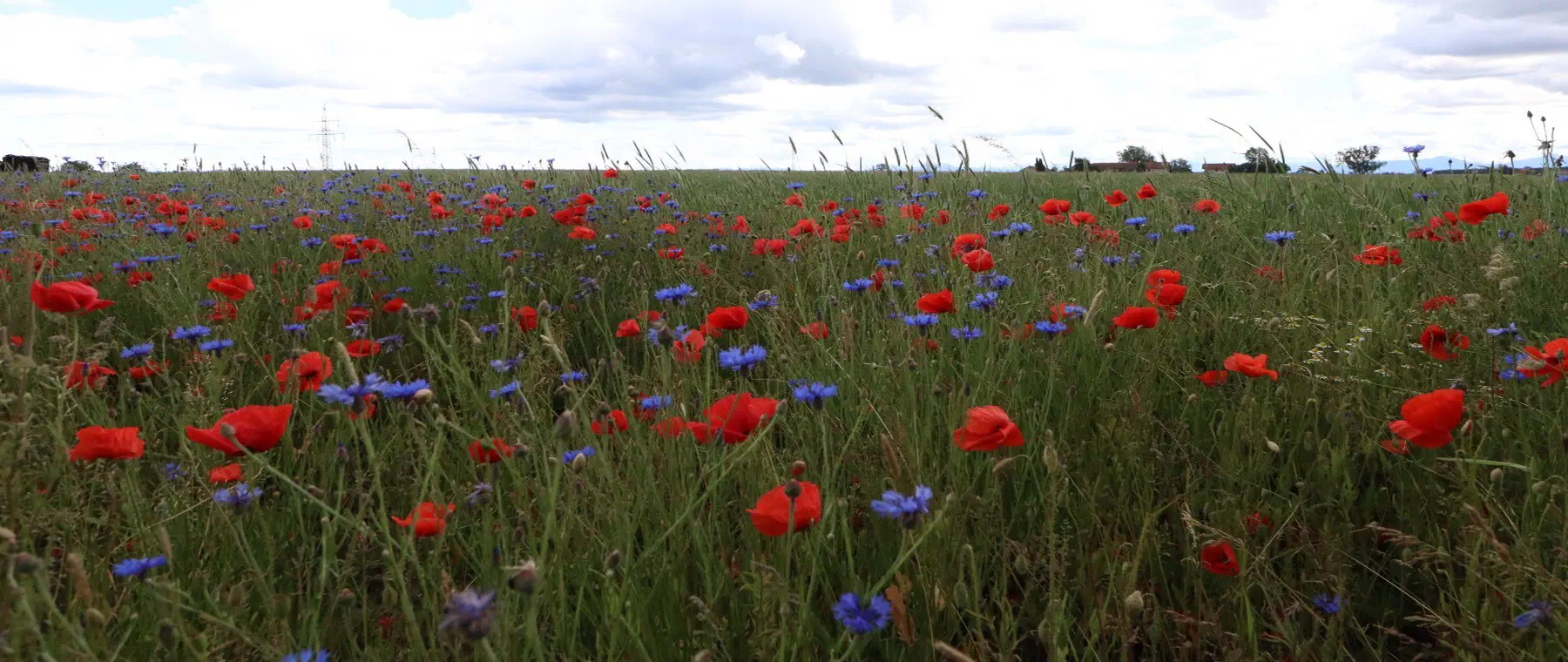
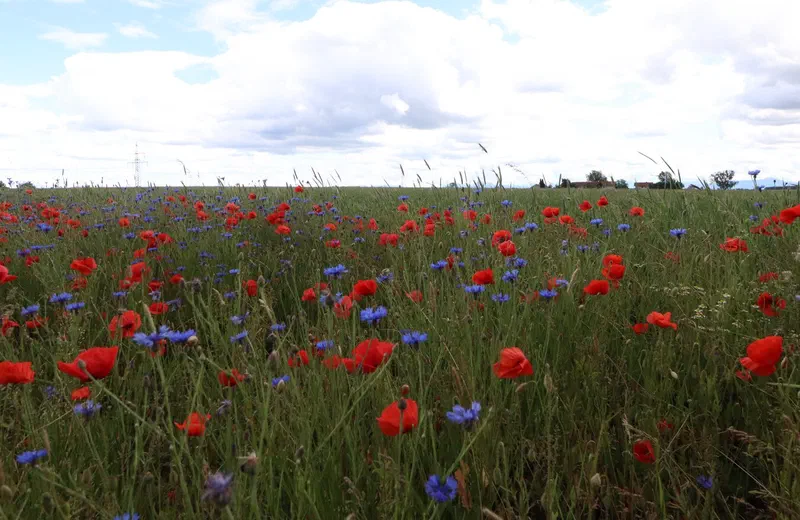
Flower strips, arable margin strips, lark windows and extensively managed field margins in Köthen arable land. Enhancement of the cleared loamy landscape for field birds and insects.
Mining heritage landscape
Development of raw substrate sites, small water bodies and succession areas at Goitzsche and Muldestausee, aligned with the goals of structural change in the Central German region.
Forest conversion Dübener Heath
Conversion of structurally poor pine forests to site-appropriate deciduous and mixed forests and restoration of peat bog and swamp forest sites with strengthened habitat connectivity.
Species protection CEF and FCS
Advance compensation measures (CEF) and measures to maintain favourable conservation status (FCS) under § 44 BNatSchG, such as sand lizard habitats, bat roosts and amphibian water bodies.
Flowing waters and banks
Watercourse buffer strips, bank restoration and steep walls on Mulde, Fuhne and Ziethe as breeding habitat for kingfisher and as migration corridor for water-dependent species.
Protected species in the Middle Elbe between Köthen loam and Dübener Heath
Skylark and field birds
The open loess arable fields of Köthen arable land are habitat for skylark, rustic bunting and grey partridge. Flower strips, lark windows and extensive arable margin strips are typical measures for the arable landscape.
About this species ›Northern lapwing and meadow-breeding birds
Damp grassland and flood areas of the Elbe and Mulde floodplain provide nesting sites for northern lapwing, common snipe and other meadow-breeding birds. Re-wetting and extensive grassland management support the populations.
About this species ›Bats
The forests of Dübener Heath and floodplain forests are hunting and roosting areas for bats such as greater mouse-eared bat. Roost security and hollow tree protection are common CEF measures.
About this species ›Black stork
The undisturbed forests of Dübener Heath and the water-rich floodplains provide breeding and feeding areas for black stork. Quiet zones and near-natural forest streams secure its habitat.
About this species ›Kingfisher
On Mulde, Elbe and Fuhne lives the kingfisher. Near-natural banks, steep walls as breeding habitat and connected watercourses are effective measures for its promotion.
About this species ›Amphibians
Oxbows and small water bodies of the floodplains are home to red-bellied toad, European tree frog and great crested newt. Creation and linking of sunny, fish-free breeding waters are typical compensation measures.
About this species ›Which projects trigger a compensation obligation?
Chemicals and industry
Chemiepark Bitterfeld-Wolfen is one of the most significant chemical sites in Central Germany. Settlements, factory expansions and logistics areas regularly generate compensation needs under §§ 13 to 15 BNatSchG.
Renewable energy
Solar farms and wind projects are emerging at the Bitterfeld-Wolfen site (Solar Valley) and throughout the district. They require nature conservation compensation and, depending on affected species, CEF and FCS measures.
Structural change and mining heritage
Coal phase-out in the Central German region brings rehabilitation and restoration of mining heritage sites as well as subsidised new settlements. Both affect natural balance and landscape character and trigger compensation measures.
Transport and infrastructure
The federal motorway A9 runs through the district, supplemented by expansions on federal roads, rail lines and industrial areas. Such impacts require compensation under Saxony-Anhalt law.
From enquiry to monitoring
Contact and enquiry
Tell us your compensation requirement and the natural region. We check availability.
Offer and advice
A transparent offer covering measure types, scope and availability.
Coordination with authorities
Full coordination with the lower nature conservation authority. We handle everything.
Long-term monitoring
Permanent securing of the land, management and documentation across the contract term.
Eco-points in adjoining districts
All about eco-points
in the district of Anhalt-Bitterfeld
Request eco-points in the district of Anhalt-Bitterfeld
We will promptly prepare a transparent offer with matching eco-points held in stock in the district of Anhalt-Bitterfeld.