Eco-points and compensation areas
District of Altmarkkreis Salzwedel
Eco-points and compensation areas in Altmarkkreis Salzwedel, assessed according to the assessment model of Saxony-Anhalt and the eco-account regulation (ÖkoKVO LSA). greeNature is your nationwide full-service partner for compensating impacts in the western Altmark, from the Green Band at the Landgraben-Dumme lowland to the Drömling.
The District of Altmarkkreis Salzwedel at a glance
Altmarkkreis Salzwedel lies in the far north-west of Saxony-Anhalt and forms the western Altmark on the border with Lower Saxony. With around 2,293 square kilometres, it is one of the largest districts in the state, and with approximately 82,000 inhabitants and only around 36 inhabitants per square kilometre, it is also the sparsest populated district in Saxony-Anhalt. The district seat and administrative centre is the Hanseatic town of Salzwedel. The district is divided into five uniform municipalities and the Beetzendorf-Diesdorf municipal association. Since Saxony-Anhalt abolished its administrative regions in 2004, the district administration is directly subordinate to the state.
In terms of natural regions, the district belongs almost entirely to the BfN major natural region D29 Wendland and Altmark, a widespread old moraine area from the Saale glaciation with embedded glacial islands, fluvio-glacial sand areas and groundwater-influenced lowlands. Characteristic features are extensive pine forests, dry heaths and sand calcareous grassland on nutrient-poor sites, as well as the river lowlands of Jeetzel, Dumme and Milde. The south-west of the district extends with the Drömling into the major natural region D31 (Weser-Aller lowland), a large-scale low-moor landscape interspersed with ditches and hedgerows.
The district is rich in protected areas. Along the state border runs the Green Band on the line of the former inter-German border, including the Natura 2000 site Landgraben-Dumme lowland north of Salzwedel and Chein peat bog. The Drömling is secured as a Natura 2000 site and bird protection area, supplemented by the Milde lowland/Altmark as a bird protection area and Lake Arendsee in the north. This Natura 2000 framework determines significantly where impacts are permitted and how compensation should be designed in a manner suited to the natural region.
Economically, the district is rural and dominated by agriculture and forestry, supplemented by natural gas extraction in the Altmark, growing expansion of wind energy with associated networks, and road and commercial projects. Impacts on nature and landscape must be compensated under §§ 13 to 15 BNatSchG. In Saxony-Anhalt, assessment is carried out using the state's assessment model, advance measures can be entered into an eco-account under the eco-account regulation (ÖkoKVO LSA) and later assigned to a specific impact as compensation.
🗺️ Associated natural regions
Go to natural region D29 ›
Go to natural region D28 ›
📍 Selected municipalities
🌿 Ecological features
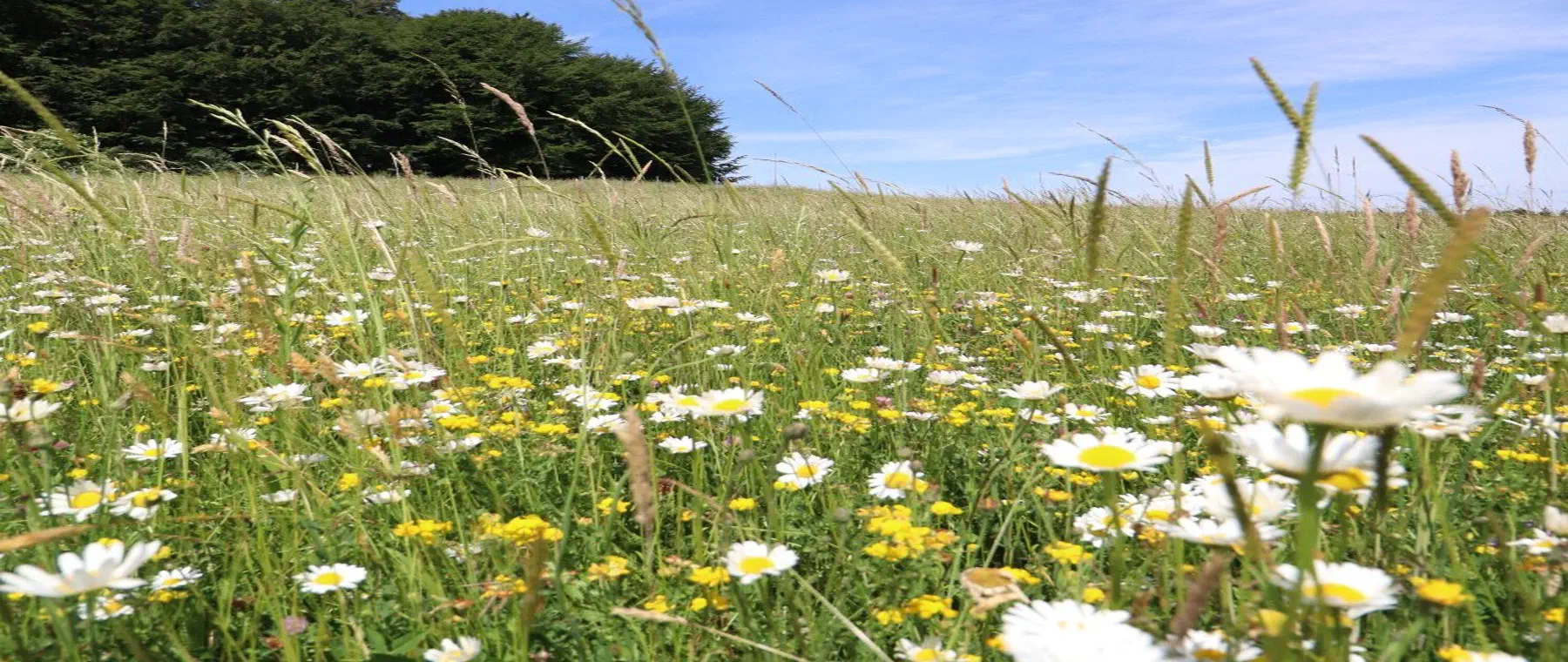
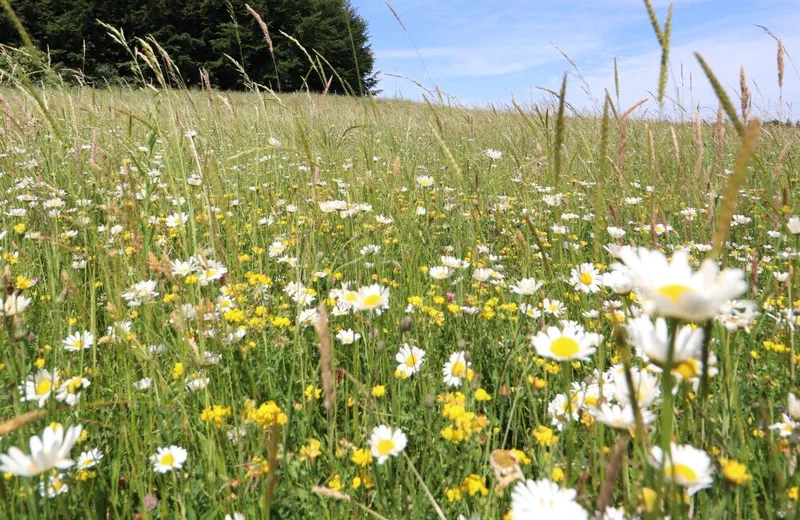
- Natura 2000 site Landgraben-Dumme lowland north of Salzwedel (around 2,937 ha) with Chein peat bog, species-rich grassland-reedbed mosaic on the Green Band
- Drömling in the south-west as a Natura 2000 site (around 4,328 ha, spanning the district of Börde) and large-scale bird protection area, low-moors, ditch and hedgerow landscape
- Bird protection area Milde lowland/Altmark with wet meadows and habitats for meadow-breeding birds
- Lake Arendsee in the north, a collapse lake and the largest natural lake in the Altmark
- Green Band along the former inter-German border as a regional habitat network
- Glacial islands, dry heaths, sand calcareous grassland and pine forests on nutrient-poor old moraine and fluvio-glacial sand sites
- Very sparse population and consequently large areas of well-preserved, near-natural habitats
✅ greeNature on the ground
greeNature operates nationwide and is familiar with Saxony-Anhalt's compensation law. Assessment, balancing and eco-account are based on the state's assessment model and eco-account regulation (ÖkoKVO LSA). We coordinate measures with the lower nature conservation authority of Altmarkkreis Salzwedel and, for matters of supra-local significance and Natura 2000 concerns, with the State Administration Office Saxony-Anhalt. From needs assessment through land securing to implementation, management and monitoring, we support your project throughout and ensure legally secure recording in the compensation register.
Typical measures in the district of Altmarkkreis Salzwedel
Peat bog and lowland restoration
Re-wetting of groundwater-influenced low-moor and lowland areas in the Drömling and surroundings of Chein peat bog by raising water levels and removing drainage. Such measures achieve high enhancements in Saxony-Anhalt's assessment model and sequester carbon.
Heaths and sand calcareous grassland
Management and restoration of dry heaths and sand calcareous grassland on nutrient-poor glacial and fluvio-glacial sand sites, for example through scrub clearance, sod removal and extensive grazing. These open-land habitats are home to thermophilic species and are widespread in the district.
Extensively managed grassland in river lowlands
Development and extensive management of wet and marsh grassland in the lowlands of Jeetzel, Dumme and Milde. Adapted mowing dates, no fertilisation and creation of shallow basins provide breeding and feeding habitats for meadow-breeding birds.
Watercourse and floodplain development
Restoration of flowing waters such as Jeetzel, Dumme and Milde with near-natural banks, watercourse buffer strips and connected floodplain habitats. Newly created small water bodies serve as habitat for amphibians, dragonflies and kingfisher.
Forest conversion to near-natural mixed forest
Conversion of structurally poor pine forests to site-appropriate deciduous and mixed forests with native tree species. Forest conversion enhances biotope value, strengthens forest connectivity and creates permanently secured compensation areas.
Species protection CEF and FCS
Advance compensation measures under § 44 BNatSchG, such as replacement roosts for bats, breeding waters for amphibians, steep walls for kingfisher, and habitat enhancements for sand lizard and grassland birds, tailored to the respective project.
Protected species in the Western Altmark between heathland, river lowlands and Drömling
Black stork and white stork
The old deciduous and mixed forests of the Altmark provide black stork with nesting sites, the damp lowlands and Drömling are feeding and nesting areas for white stork. In impacts affecting forest and open land, nest protection and habitat enhancement secure the populations.
About this species ›Meadow-breeding birds in the lowlands
Northern lapwing, common snipe and other grassland birds breed in the wet meadows of the Milde lowland and Drömling. Typical measures are re-wetting, creation of shallow basins and grassland extensification as advance CEF measures under § 44 BNatSchG.
About this species ›Skylark and open-land species
The wide-ranging agricultural landscape of the Altmark is habitat for skylark. In construction and infrastructure procedures, lark windows, flower strips and extensive arable margin strips are proven species protection measures.
About this species ›Great crested newt and amphibians
The ditch system of the Drömling and lowland water bodies are home to great crested newt, European tree frog and red-bellied toad (Annex II to the Habitats Directive). New or restored breeding waters in spatial context secure breeding sites for impacts.
About this species ›Bats in forests and peat bog
Old tree stands, forest edges and buildings provide roosts for strictly protected bat species (Annex IV to the Habitats Directive), for example in the surroundings of Chein peat bog. For demolition or tree felling, replacement roosts as a CEF measure are required.
About this species ›Sand lizard on heaths and sand dry grassland
The glacial islands, railway embankments and sand calcareous grassland of the district are habitat for the strictly protected sand lizard. Impacts require habitat enhancement, creation of structures and, where unavoidable, relocation with advance habitat creation.
About this species ›Which projects trigger a compensation obligation?
Roads and transport infrastructure
Federal and state roads such as B71, B190 and B248, bypass routes and cycle, path and bridge construction cross the district. Such projects regularly trigger compensation obligations that can be covered by eco-points.
Wind energy and grid expansion
The wind-rich Altmark is an important location for wind energy. Expansion of facilities and utility lines generates compensation needs and often requires species protection assessments and FCS measures for wind-sensitive species.
Raw material extraction and natural gas extraction
Sand and gravel extraction as well as the Altmark natural gas deposit shape the area. Development, removal and restoration of extraction sites, boreholes and pipelines are associated with impacts that must be compensated under nature conservation law.
Residential and commercial development
Residential, commercial and infrastructure areas are being created mainly in Salzwedel, Gardelegen and Klötze. Nature conservation compensation can be efficiently covered through pre-stocked eco-points from an eco-account.
From enquiry to monitoring
Contact and enquiry
Tell us your compensation requirement and the natural region. We check availability.
Offer and advice
A transparent offer covering measure types, scope and availability.
Coordination with authorities
Full coordination with the lower nature conservation authority. We handle everything.
Long-term monitoring
Permanent securing of the land, management and documentation across the contract term.
Eco-points in adjoining districts
All about eco-points
in the district of Altmarkkreis Salzwedel
Request eco-points in the district of Altmarkkreis Salzwedel
We will promptly prepare a transparent offer with matching eco-points held in stock in the district of Altmarkkreis Salzwedel.