Eco-points and compensation areas
District of Westerwaldkreis
Eco-points immediately available from recognised eco-accounts. greeNature solutions is your nationwide full-service partner for statutory nature conservation compensation under the Rhineland-Palatinate Landeskompensationsverordnung (LKompVO) in the Westerwald and Kannenbäckerland.
The District of Westerwaldkreis at a glance
The Westerwaldkreis lies in the northern part of Rhineland-Palatinate and, at around 989 km², ranks among the largest districts by area in the state. Rhineland-Palatinate has not been divided into administrative regions since 2000, so the district is assigned directly to the state administration. The district seat is the town of Montabaur. The district comprises ten Verbandsgemeinden with a total of 192 Ortsgemeinden and is characterised by the low mountain range of the Westerwald.
Geologically, the district belongs to the Rhenish Massif. Above the Devonian bedrock, the Hoher Westerwald features extensive basalt sheets from Tertiary volcanism, whose highest point, the Fuchskaute, reaches around 657 m. In the south and west lie the substantial clay deposits of the Kannenbäckerland, one of the largest continuous clay deposit areas in Europe, complemented by active basalt and quartzite quarries.
Ecologically significant is the Westerwälder Seenplatte (Westerwald lake district) with the Dreifelder Weiher and further historic fish ponds, designated as an FFH site (DE-5412-301) and a bird sanctuary (DE-5412-401) of national importance for resting and breeding birds. In addition, there is the Nistertal und Kroppacher Schweiz FFH site (DE-5212-303) with near-natural stream floodplains and rock formations, as well as extensive woodland providing habitat for black stork and European wildcat.
The regional economy is shaped by the ceramics and refractory industry of the Kannenbäckerland around Höhr-Grenzhausen and Ransbach-Baumbach, raw material extraction, and efficient transport links via the A3 and A48 motorways and the Montabaur ICE station. Raw material extraction, commercial and residential development, transport projects and the expansion of renewable energy regularly trigger impacts whose compensation must be provided under the LKompVO and sections 13 to 15 BNatSchG.
🗺️ Associated natural regions
Go to natural region D39 ›
📍 Selected municipalities
🌿 Ecological features
- Westerwälder Seenplatte FFH and bird sanctuary (DE-5412-301 and DE-5412-401), a historic pond landscape with the Dreifelder Weiher as a nationally significant resting and breeding site
- Nistertal und Kroppacher Schweiz FFH site (DE-5212-303), near-natural stream floodplains with rocks and warmth-loving dry habitats
- Kannenbäckerland, one of the largest clay deposits in Europe, home to the defining ceramics and refractory industry around Höhr-Grenzhausen
- Basalt and quartzite deposits of the Hoher Westerwald with active quarries and valuable secondary habitats
- Fuchskaute (around 657 m), the highest point of the Westerwald, with montane grassland and spring mires in the Hoher Westerwald
- Nister and Kleine Nister, near-natural low mountain range streams with one of the last populations of freshwater pearl mussel in Rhineland-Palatinate
- Krombachtalsperre reservoir and further standing waters as habitat for waterbirds and amphibians
✅ greeNature on the ground
greeNature solutions operates nationwide and supports project developers, municipalities and landowners in the Westerwald from practical professional experience. We know the requirements of the Rhineland-Palatinate Landeskompensationsverordnung (LKompVO), the biotope value procedure under the statewide practice guide, and the registration of eco-accounts in the compensation register. Coordination with the lower nature conservation authority in Montabaur and the particularities of natural regions D39 (Westerwald) and D40 (Lahntal and Limburger Becken) are part of our everyday work.
Typical measures in the district of Westerwaldkreis
Pond and floodplain restoration
Enhancement of standing waters in the Westerwälder Seenplatte, creation of shallow-water zones and silting-up areas, and restoration of the Nister floodplains. Such measures create spawning and breeding habitats for amphibians, dragonflies and waterbirds and structurally enhance watercourses.
Near-natural forest conversion
Conversion of structurally poor spruce stands damaged by bark beetle into site-appropriate broadleaved and mixed woodland of beech, oak and fir, with promotion of old and dead wood. The Westerwald's numerous storm and pest damage areas offer high enhancement potential for this.
Grassland extensification
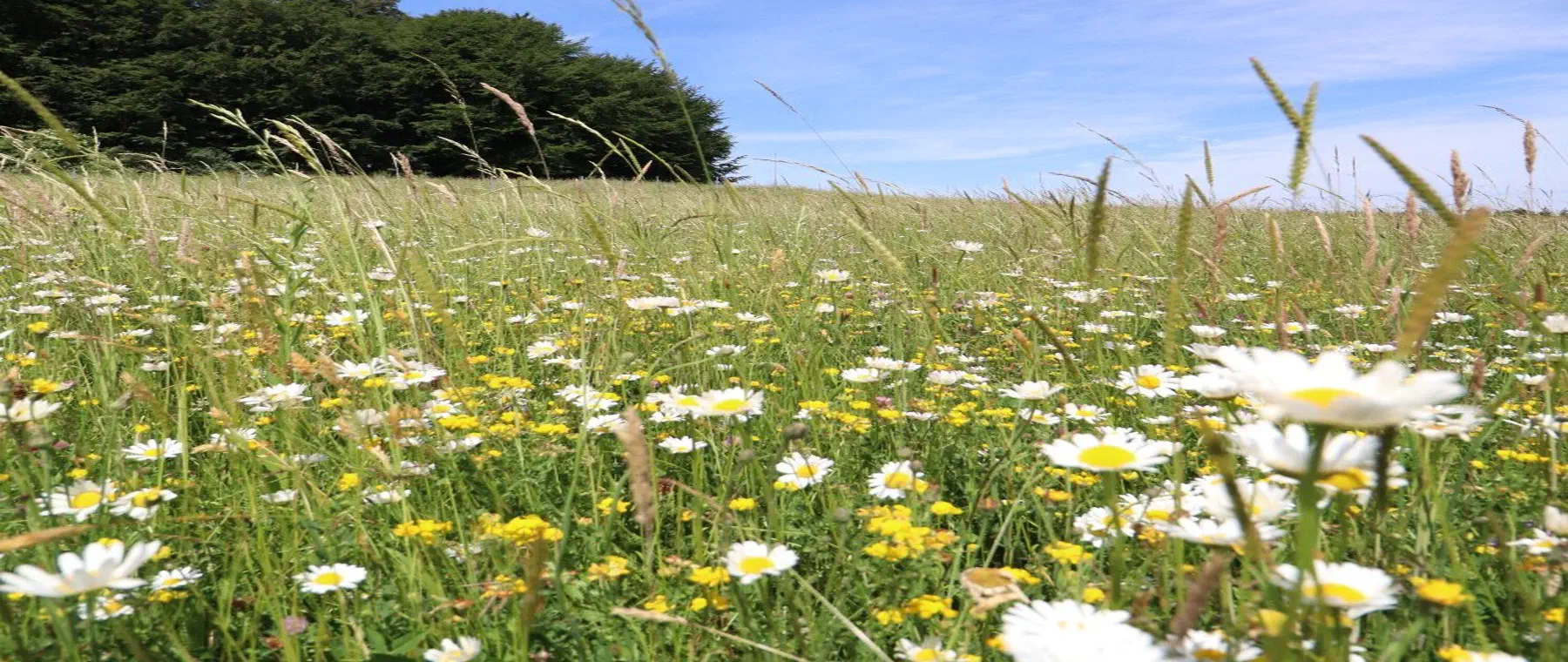
Development of species-rich montane and wet meadows in the Hoher Westerwald through adapted mowing dates, no fertilisation, and extensive grazing. Extensively managed grassland is habitat for meadow-breeding birds, insects and the typical flora of the low mountain range.
Restoration of quarries
Shaping cleared clay, basalt and quartzite quarry areas into near-natural secondary habitats with bare ground sites, steep faces and small water bodies. Such areas are valuable habitats for sand lizard, amphibians, wild bees and sand martin.
CEF and FCS species protection
Advance compensation measures for black stork, bat roosts in woodland, adits and buildings, and stepping stones for the European wildcat, each as a CEF or population-supporting FCS measure under sections 44 and 45 BNatSchG.
Hedgerows and habitat network
Creation of hedgerows, field copses and traditional orchards to connect open-land biotopes between the lake district, woodland edges and stream valleys. Such structures support the habitat network and serve as habitat for numerous bird and insect species.
Protected species in the Westerwald and Kannenbäckerland
Waterbirds and waders of the lake district
The ponds of the Westerwälder Seenplatte are of national importance for resting waders, terns and diving ducks. When the fish ponds are drained in autumn, extensive mudflats provide important feeding habitats for migrating birds.
Black stork
The large, low-disturbance woodland of the Westerwald with its near-natural streams provides breeding and foraging habitat for the black stork. Woodland edge management, nest protection and enhancement of stream floodplains are typical FCS measures.
About this species ›European wildcat
The Westerwald belongs to the range of the European wildcat, which needs continuous, deadwood-rich woodland with cover. Woodland habitat networks and structurally rich woodland edges are central components of species protection.
About this species ›Bats
Old woodland stands, former basalt adits and buildings provide roosts and hunting grounds for bats such as the greater mouse-eared bat and Bechstein's bat. Roost protection and replacement roosts are common CEF measures for construction and clearance projects.
About this species ›Kingfisher
The kingfisher breeds in natural bank collapses along the Nister, Gelbach and other near-natural watercourses. Developing steep banks and restoring stream courses create lasting breeding habitats.
About this species ›Amphibians and reptiles
Great crested newt and other amphibians inhabit the ponds and small water bodies of the lake district, while the sand lizard uses open, sunlit sites in former quarries and on railway embankments. Both are frequent target species for infrastructure and raw material projects.
About this species ›Which projects trigger a compensation obligation?
Raw material extraction (clay, basalt, quartzite)
The extraction of clay in the Kannenbäckerland and of basalt and quartzite in the Hoher Westerwald is a defining economic sector. New workings and extensions of quarries require restoration and compensation concepts, greeNature develops sound nature conservation solutions for this.
Infrastructure and transport
The A3 and A48 motorways, the Montabaur ICE station, and the expansion and upgrading of state and district roads generate compensation and replacement obligations. Impacts near these routes regularly trigger species protection requirements.
Commerce and industry
The ceramics, refractory and metal industries, as well as the designation of new commercial areas in the Verbandsgemeinden, lead to land sealing, whose compensation must be provided under the LKompVO.
Renewable energy
Wind energy projects on the heights of the Hoher Westerwald and ground-mounted photovoltaic installations require nature conservation compensation as well as species protection assessments, particularly for wind-sensitive species such as black stork and bats.
From enquiry to monitoring
Contact and enquiry
Tell us your compensation requirement and the natural region. We check availability.
Offer and advice
A transparent offer covering measure types, scope and availability.
Coordination with authorities
Full coordination with the lower nature conservation authority. We handle everything.
Long-term monitoring
Permanent securing of the land, management and documentation across the contract term.
Eco-points in adjoining districts
All about eco-points
in the district of Westerwaldkreis
Request eco-points in the district of Westerwaldkreis
We will promptly prepare a transparent offer with matching eco-points held in stock in the district of Westerwaldkreis.