Eco-points and compensation areas
City of Pirmasens
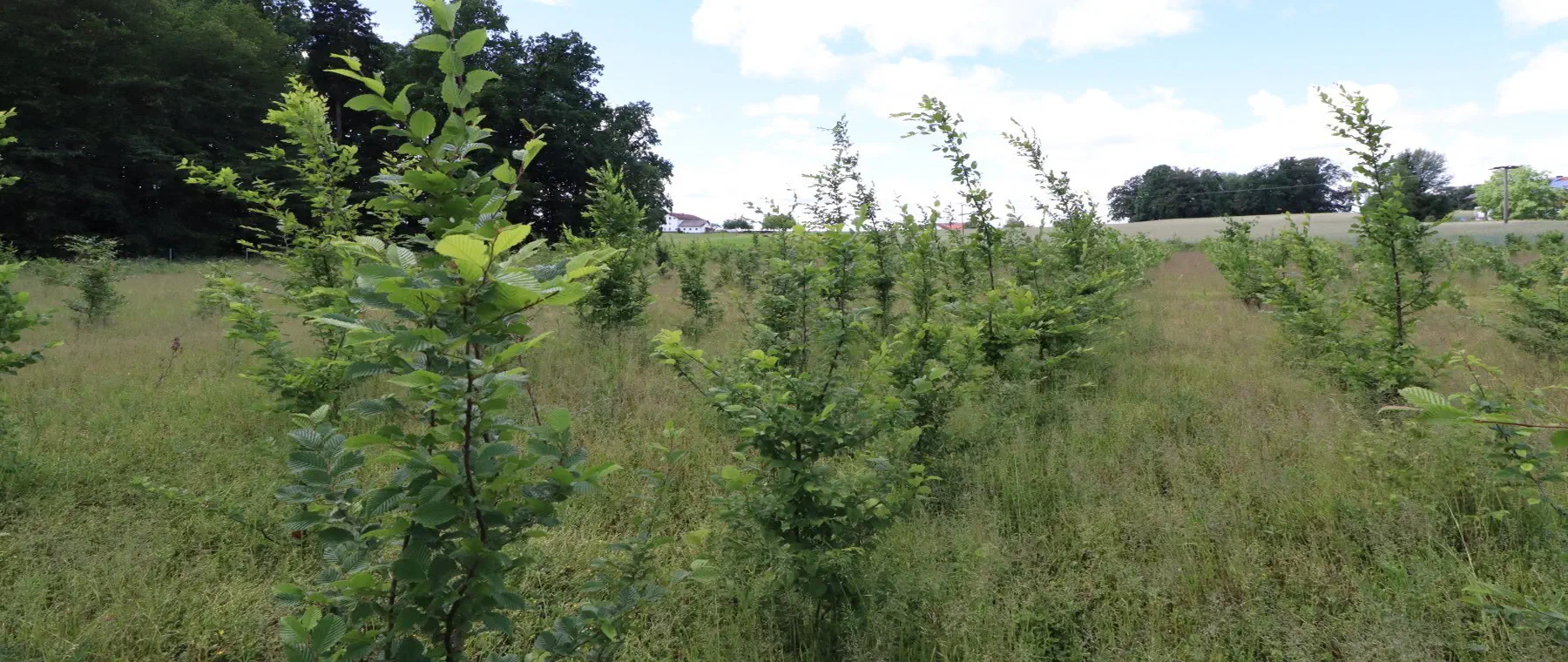
Eco-points and compensation areas for the independent city Pirmasens, valued according to the State Compensation Ordinance (LKompVO) of Rhineland-Palatinate. greeNature develops and manages compensation areas at the western edge of Palatinate Forest and on Sickinger height and accompanies project developers from assessment in the biotope value procedure to recognition by the nature conservation authority.
The City of Pirmasens at a glance
Pirmasens is an independent city in the south-west of Rhineland-Palatinate and is located at the western edge of Palatinate Forest. On around 61 km² approximately 39,000 people live. The city is completely surrounded by the Südwestpfalz district and is at the same time the seat of its district administration, but is not itself part of the district. Rhineland-Palatinate has not been divided into administrative regions since 2000. As an independent city, Pirmasens assumes the tasks of the lower nature conservation authority for its city territory itself.
In terms of natural regions, the city has shares in two BfN major natural regions. The eastern city districts belong to the Palatinate Forest (natural region D50), the largest contiguous forest area in Germany on Buntsandstone. The city centre and the western areas are located at the Westrich edge and on Sickinger stage and count to the Saar-Nahe Mountains and Hills (natural region D52). Pirmasens is built on several Buntsandstone ridge heights and belongs with an inner city location around 387 m above sea level to the highest-located larger cities in the state.
The eastern city edge has shares in the Biosphere Reserve Palatinate Forest, the German part of the cross-border UNESCO Biosphere Reserve Palatinate Forest-North Vosges. In the forested stream valleys around the city lie FFH areas such as Gersbachtal as well as Felsalbtal and Blümelsbachtal, plus landscape protection areas in Blümelstal and Gersbachtal. The near-natural mid-mountain streams with accompanying vegetation and structurally rich forest edges offer habitat for bats, European wildcat and numerous species bound to forests and water bodies.
Economically, Pirmasens is shaped by the heritage of the shoe industry, which once made the location Germany's shoe metropolis. Today, plastic processing, logistics, retail and the reuse of former military sites characterise the image, such as Husterhöhe with business park and higher education location. Residential construction, commercial settlements, the development of conversion areas and transport projects trigger impacts on nature and landscape. Their compensation is based on the State Compensation Ordinance (LKompVO) of Rhineland-Palatinate, which determines compensation requirements via a biotope value procedure.
🗺️ Associated natural regions
Go to natural region D51 ›
📍 City districts
🌿 Ecological features
- Share in the Biosphere Reserve Palatinate Forest at the eastern city edge, German part of UNESCO Biosphere Reserve Palatinate Forest-North Vosges
- FFH areas in surrounding stream valleys, including Gersbachtal as well as Felsalbtal and Blümelsbachtal
- Landscape protection areas Blümelstal with side valleys and Gersbachtal
- Location on Buntsandstone ridge heights at the western edge of Palatinate Forest, one of the highest-located larger cities in the state
- Near-natural mid-mountain streams with riparian forest remnants and structurally rich forest edges as habitat network towards Palatinate Forest
- Conversion areas such as Husterhöhe with potential for desealing and high-quality compensation
✅ greeNature on the ground
greeNature works nationwide and develops for projects in Pirmasens eco-account and compensation areas that match the character of Palatinate Forest, Buntsandstone heights and Sickinger stage. We secure suitable areas in the city territory and surrounding region, plan enhancement according to the State Compensation Ordinance (LKompVO) and coordinate measures with the lower nature conservation authority of Pirmasens city, landowners, forestry operations and city administration. From assessment in the biotope value procedure via implementation to permanent management, monitoring and documentation for recognition, project developers receive compensation from a single source. If species protection requirements exist pursuant to § 44 BNatSchG, we design preliminary CEF measures that continuously secure ecological function for affected species.
Typical measures in the city of Pirmasens
Desealing of conversion areas
Demolition and desealing of former military, industrial and transport areas in the city territory, conversion to rootable soils, succession areas and structurally rich biotopes as high-quality enhancement in the biotope value procedure.
Watercourse restoration
Restoration of continuous, structurally rich stream courses at Blümelsbach, Felsalb and the tributaries of Rodalb, development of bank vegetation and riparian forest as habitat for stream inhabitants and kingfisher.
Near-natural forest conversion
Conversion of non-natural coniferous plantations at the city edge into site-appropriate beech and beech-oak forests, securing of old and dead wood for woodpeckers, bats and dead-wood-dwelling species in the transition to Palatinate Forest.
Traditional orchard and poor meadows
Creation and management of traditional orchard stocks and species-rich grassland on Sickinger height, habitat for red-backed shrike, wryneck, wild bees and thermophilic insects.
Species protection CEF and FCS
Building and tree quarters for bats, replacement habitats for sand lizard at sunny slopes as well as small water bodies for amphibians, tailored according to LKompVO and § 44 BNatSchG.
City edge and grassland enhancement
Extensification of grassland, creation of hedgerows, margins and field trees in the transition from settlement to open land, to strengthen habitat network between city and Palatinate Forest.
Protected species in the Palatinate Forest, Buntsandstone heights and Sickinger stage
Bats
In the forests around Pirmasens and at buildings in the city territory, several strictly protected bat species live. Preservation of cavity trees, quarters at buildings and disturbance-free hunting areas is frequent goal of CEF measures.
About this species ›Sand lizard
Railway embankments, slopes, rudera areas and forest edges in the city territory offer the sand lizard suitable habitats. In construction projects, preliminary replacement habitats with sunny stone ridges and sand sills are a typical measure.
About this species ›European wildcat
The adjacent Palatinate Forest ranks amongst the most significant wildcat habitats in Germany. A continuous habitat network between the forest areas at the city edge can specifically strengthen the habitat of the species.
About this species ›Hazel dormouse
The hazel dormouse inhabits structurally rich forest edges, hedgerows and shrubs in the transition from city and Palatinate Forest. Preservation and new creation of networked shrub structures are typical protection measures.
About this species ›Kingfisher
At near-natural stream courses such as Blümelsbach and Felsalb, the kingfisher can find suitable breeding and food habitats. Steep banks and a good supply of small fish are decisive for the species, water course restorations benefit the species.
About this species ›Amphibians
Yellow-bellied toad and other amphibians use water-filled stone quarries, cart tracks and small water bodies in the surrounding region as spawning habitats. Creation of sunny pools is an effective compensation measure.
About this species ›Which projects trigger a compensation obligation?
Conversion Husterhöhe
The reuse of former US military sites on Husterhöhe as a business park and higher education location is a characteristic conversion project. Such developments require nature conservation compensation, but also offer potential for high-quality compensation through desealing and green areas.
Residential construction and urban development
New building areas and infill development at the city edge trigger impacts on soil, grassland and trees. Compensation takes place through desealing, grassland enhancement and species protection measures for building breeders and bats.
Commercial and logistics settlement
The establishment of commerce, trade and logistics on designated areas leads to land sealing and impacts that entail compensation and frequently CEF measures for sand lizard and open land species.
Transport infrastructure
The expansion of B10 with connection to Pirmasens as well as town passages and secondary roads generate impacts whose compensation can be provided via water body, forest and open land enhancement in the biotope value procedure.
From enquiry to monitoring
Contact and enquiry
Tell us your compensation requirement and the natural region. We check availability.
Offer and advice
A transparent offer covering measure types, scope and availability.
Coordination with authorities
Full coordination with the lower nature conservation authority. We handle everything.
Long-term monitoring
Permanent securing of the land, management and documentation across the contract term.
Eco-points in adjoining districts
All about eco-points
in the city of Pirmasens
Request eco-points in the city of Pirmasens
We will promptly prepare a transparent offer with matching eco-points held in stock in the city of Pirmasens.