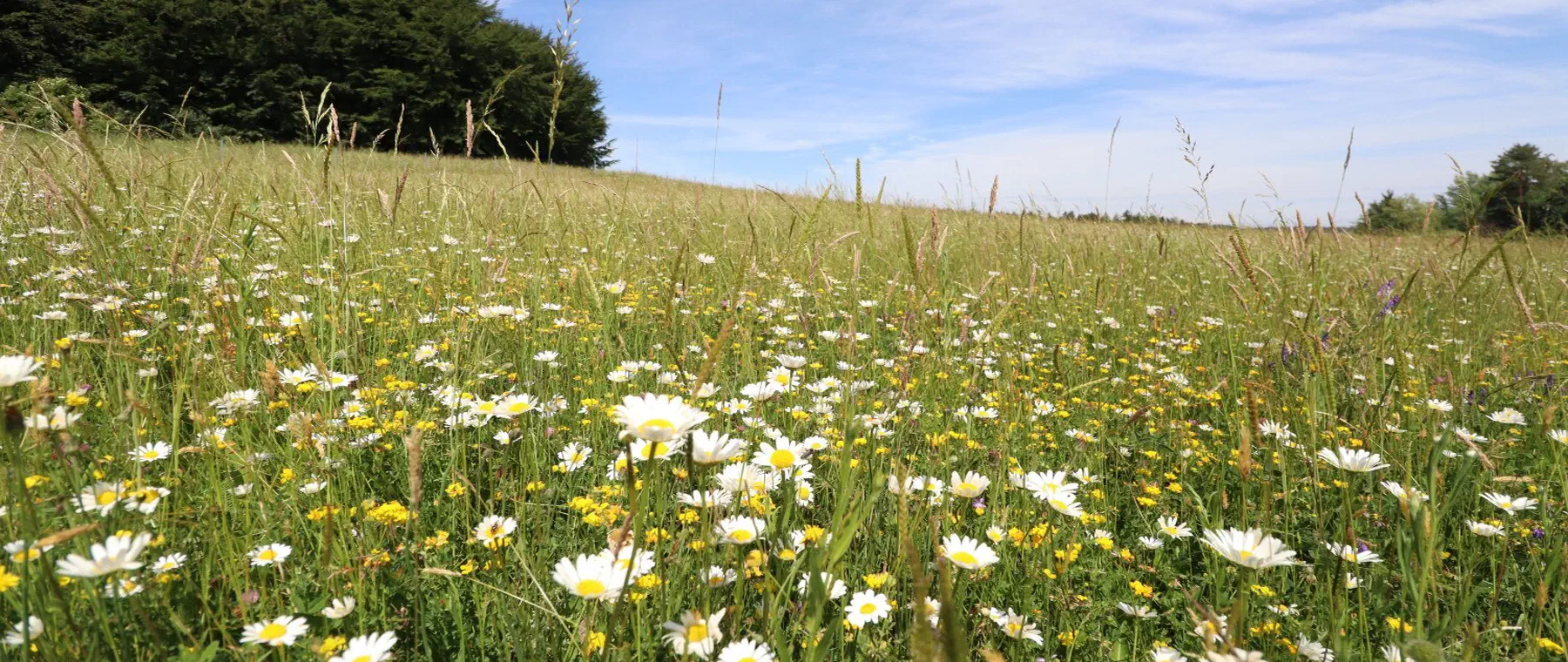
Eco-points and compensation areas
District of Germersheim
Immediately available eco-points from officially recognised eco-accounts. greeNature solutions is your nationwide full-service partner for nature conservation compensation according to the Landeskompensationsverordnung Rheinland-Pfalz (LKompVO) in the Vorderpfalz Rhine plain and at the Bienwald.
The District of Germersheim at a glance
Germersheim district lies in the far south-east of Rheinland-Pfalz in the northern Upper Rhine rift valley. Rheinland-Pfalz is not divided into administrative regions; the district administration with seat in the independent city Germersheim is the lower administrative level. The district covers around 463 km² with roughly 131,000 residents in 31 municipalities, including the independent cities Germersheim and Wörth am Rhein and the administrative associations Bellheim, Hagenbach, Jockgrim, Kandel, Lingenfeld and Rülzheim.
Naturally, the entire district lies in the Upper Rhine rift valley (BfN major region D53, Upper Rhine rift valley and Rhine-Main rift valley). Characteristic are the Rhine floodplain with its oxbow arms and floodplain forests in the east, the glacial sand and gravel terraces in the centre and the Bienwald in the south, at around 12,000 hectares the largest contiguous lowland forest in Rheinland-Pfalz.
Ecologically the district is of supra-regional importance. The Hördter Rhine floodplain (FFH area 6816-301, around 2,382 hectares, also bird protection area DE-6816-402) forms, with extensive oak-elm hardwood floodplains and white willow softwood floodplains, the state's largest floodplain forests. Added are the FFH area Rhine floodplain Germersheim-Speyer (6716-301) and in the south the Bienwald alluvial fan (FFH 6914-301) and the bird protection area Bienwald and pasture meadows (6914-401) with inland dunes, sand calcareous grasslands and native pine stands.
Economically, the Mercedes-Benz truck works in Wörth am Rhein, logistics and business on the Rhine and large-scale gravel extraction in the Rhine floodplain shape the district. These projects, supplemented by transport, settlement and energy projects, regularly trigger impacts whose compensation in Rheinland-Pfalz must follow §§ 13 to 15 BNatSchG and the LKompVO.
🗺️ Associated natural regions
Go to natural region D53 ›
📍 Selected municipalities
🌿 Ecological features
- Hördter Rhine floodplain, FFH area 6816-301 (around 2,382 ha) and bird protection area DE-6816-402, largest floodplain forests in Rheinland-Pfalz
- FFH area Rhine floodplain Germersheim-Speyer (6716-301) with oxbow arms and river valley meadows
- Bienwald, largest lowland forest in the state, FFH area Bienwald alluvial fan (6914-301)
- Bird protection area Bienwald and pasture meadows (6914-401) with nine target species of the Birds Directive
- Inland dunes and sand calcareous grasslands in the Bienwald with dwarf scrub heaths and native pines
- Nature conservation major project Bienwald for securing and developing the landscape
✅ greeNature on the ground
greeNature operates nationwide and supports project developers in Rheinland-Pfalz from impact and compensation assessment according to LKompVO through to lasting land securing. We know the requirements of the lower nature conservation authority at the Kreisverwaltung Germersheim, entry in the compensation register (KSP/LANIS) and the nature conservation peculiarities of Rhine floodplains and Bienwald from project practice.
Typical measures in the district of Germersheim
Rhine floodplain restoration
Reconnection of oxbow arms, reactivation of floodplain waterbodies and development of hardwood and softwood floodplains in the Rhine floodplain, habitat for floodplain-typical species and improvement of floodplain dynamics.
River valley meadows and grassland
Extensification and restoration of species-rich river valley and wet meadows along the Rhine and oxbow arms, promotion of meadow-breeding birds and flower-rich stands for insects.
Sand calcareous grassland and inland dunes
Management and creation of open sand habitats, calcareous grasslands and dwarf scrub heaths on the aeolian sand dunes of the Bienwald and Rhine terraces, habitat for warmth-loving reptiles and wild bees.
Species protection CEF/FCS
Advanced compensation measures for sand lizards on railway embankments and gravel surfaces, bat roosts in floodplain forests, waterbodies for great crested newts and amphibians, coordinated with § 44 BNatSchG.
Floodplain forest and forest development
Site-appropriate enrichment and new afforestation with pedunculate oak, elm, black alder and ash on floodplain sites, forest margin design and old and dead wood structures in the vicinity of the Bienwald.
Reclamation of gravel extraction sites
Nature conservation development of exhausted gravel areas into still waterbodies, steep banks and succession areas, spawning and breeding habitats for amphibians, kingfishers and sand martins.
Protected species in the Vorderpfalz Rhine plain and Bienwald
Kingfisher
The kingfisher breeds in high density in the Hördter Rhine floodplain and at the oxbow arms. Typical CEF measures are the creation of steep banks and naturally intact riverbank collapse zones at waterbodies and in reclaimed gravel quarries.
About this species ›Sand lizard
The sand lizard inhabits railway embankments, sand calcareous grasslands and the inland dunes of the Bienwald. For infrastructure and business projects in the Rhine plain it is one of the most frequently targeted species for advanced compensation measures.
About this species ›Great crested newt
The great crested newt (Appendix II of the Habitats Directive) uses oxbow waterbodies, floodplain waterbodies and rewetted gravel quarries of the Rhine floodplain as spawning habitat. Newly created, fish-free still waterbodies are proven compensation measures.
About this species ›Amphibians of the Rhine floodplain
Tree frog, natterjack toad and common spadefoot toad find suitable habitats in sunlit floodplain waterbodies and in reclaimed extraction areas. Waterbody creation and succession areas specifically promote occurrences.
About this species ›Bats
Floodplain forests and the old and dead wood-rich Bienwald offer roosts for Bechstein's bat, greater mouse-eared bat and further species. Roost securing, cavity tree protection and foraging habitat management are typical FCS building blocks.
About this species ›Black stork and forest birds
The Bienwald harbours breeding occurrences of black stork, black woodpecker and middle spotted woodpecker and raptors such as black kite. For projects in the forest vicinity, nest protection and undisturbed foraging habitats are crucial.
About this species ›Which projects trigger a compensation obligation?
Industry and vehicle manufacturing
The Mercedes-Benz truck works in Wörth am Rhein is one of the region's largest industrial sites. Works and business extensions in the Rhine forelands regularly trigger compensation requirements that greeNature covers with areas and measures according to LKompVO.
Gravel and sand extraction
Large-scale wet extraction of gravel and sand in the Rhine floodplain is a characteristic economic sector and at the same time a significant impact. Reclamation and accompanying compensation measures are a permanent part of permits.
Transport and infrastructure
Expansion measures on B9, B10 and A65, bypasses and railway and Rhine crossings in the Wörth and Germersheim area generate compensation and replacement obligations in a densely populated landscape.
Settlement, business and energy
Residential and business areas, logistics areas and open-area photovoltaic systems and wind energy projects require nature conservation compensation. Farmers can contribute suitable land as compensation areas.
From enquiry to monitoring
Contact and enquiry
Tell us your compensation requirement and the natural region. We check availability.
Offer and advice
A transparent offer covering measure types, scope and availability.
Coordination with authorities
Full coordination with the lower nature conservation authority. We handle everything.
Long-term monitoring
Permanent securing of the land, management and documentation across the contract term.
Eco-points in adjoining districts
All about eco-points
in the district of Germersheim
Request eco-points in the district of Germersheim
We will promptly prepare a transparent offer with matching eco-points held in stock in the district of Germersheim.