Eco-points and compensation areas
City of Frankenthal (Pfalz)
Immediately available eco-points from officially recognised eco-accounts for projects in the independent city Frankenthal (Palatinate). greeNature solutions is your full-service partner for compensation according to the State Compensation Ordinance (LKompVO) of Rhineland-Palatinate in the northern Lower Palatinate between Haardt margin and Rhine.
The City of Frankenthal (Pfalz) at a glance
Frankenthal (Palatinate) is an independent city in the northern Lower Palatinate with approximately 48,100 inhabitants on an area of 43.88 km². It is located in the Rhine-Neckar metropolitan region between the immediately neighbouring cities of Worms in the north and Ludwigshafen am Rhein in the south. As an independent city, Frankenthal assumes the tasks of the lower nature conservation authority itself, based in Area 32 Civic Services, Public Order and Environment of the city administration. Rhineland-Palatinate has not been divided into administrative regions since 2000, the state middle authority for the Lower Palatinate is the Structure and Permitting Directorate South (SGD South) in Neustadt an der Weinstraße.
In terms of natural regions, Frankenthal belongs to the BfN natural region Lower Palatinate (D53), the Lower Palatinate lowland and the Rhine floodplain in the northern Upper Rhine plain between Haardt margin in the west and the Rhine in the east. The largely level landscape is characterised by fertile loess soils and stream alluvial fans and transitions eastward to the Rhine floodplain. At Mörsch, at 87.3 metres above sea level, lies the lowest point of the Palatinate. The watercourses Isenach and Rehbach flow through the city territory, draining towards the Rhine.
No nature reserve is designated within the city territory itself, so the nature conservation focus lies in open fields, along water courses and in the adjacent Rhine floodplain. On the Rhine peninsula Petersau, remnants of softwood riparian forest have been preserved, in the neighbouring lowland oxbow channels such as the Roxheimer oxbow channel characterise the landscape. The structurally poor, intensively used field plain offers considerable upgrading potential for field birds, whilst railway embankments, dikes and derelict sites are habitats for thermophilic reptiles.
Economically, Frankenthal is a traditional industrial and mechanical engineering location. The pump and valve manufacturer KSB is based here, plus the RKW group, the floor covering manufacturer Tarkett (formerly Pegulan) as well as a large Amazon logistics centre. The persistent demand for housing in the Rhine-Neckar metropolitan region, the further development of commerce and logistics areas, the expansion of road and rail as well as flood protection measures on the Rhine regularly trigger impacts whose compensation must be provided pursuant to §§ 13 to 15 BNatSchG and the LKompVO of Rhineland-Palatinate.
🗺️ Associated natural regions
Go to natural region D53 ›
📍 City districts
🌿 Ecological features
- No nature reserve is designated within the city territory, the focus of compensation lies in open fields and at water bodies
- Isenach and Rehbach as characteristic water courses of the city with potential for near-natural water development
- Rhine peninsula Petersau with remnants of softwood riparian forest on the edge of the Rhine floodplain
- Proximity to the oxbow channels of the northern Lower Palatinate, including the Roxheimer oxbow channel in the adjacent Rhein-Pfalz district
- Lowest point of the Palatinate at 87.3 metres above sea level at Mörsch
- Structurally poor, intensively used loess arable plain with high upgrading potential for field birds
✅ greeNature on the ground
greeNature solutions is active nationwide and manages compensation in the Lower Palatinate and in the conurbation of the Rhine-Neckar metropolitan region. We know the State Compensation Ordinance (LKompVO) of Rhineland-Palatinate, the biotope value procedure and coordination with the lower nature conservation authority of Frankenthal city administration from project practice. From land search in the urban surroundings through recognition as an eco-account to implementation, management and monitoring, we take over the complete process.
Typical measures in the city of Frankenthal (Pfalz)
Restoration of Isenach and Rehbach
Near-natural development of urban watercourses through demolition of bank reinforcements, creation of bank vegetation and restoration of continuous water sections. Such measures combine water ecology with habitat for kingfisher, fish and amphibians.
Desealing and urban redevelopment
Demolition of no longer used sealed surfaces at commercial and conversion sites, followed by soil loosening and greening. In the densely built city, desealing creates ecologically effective compensation and improves infiltration.
Grassland enhancement and field margin strips in the surrounding region
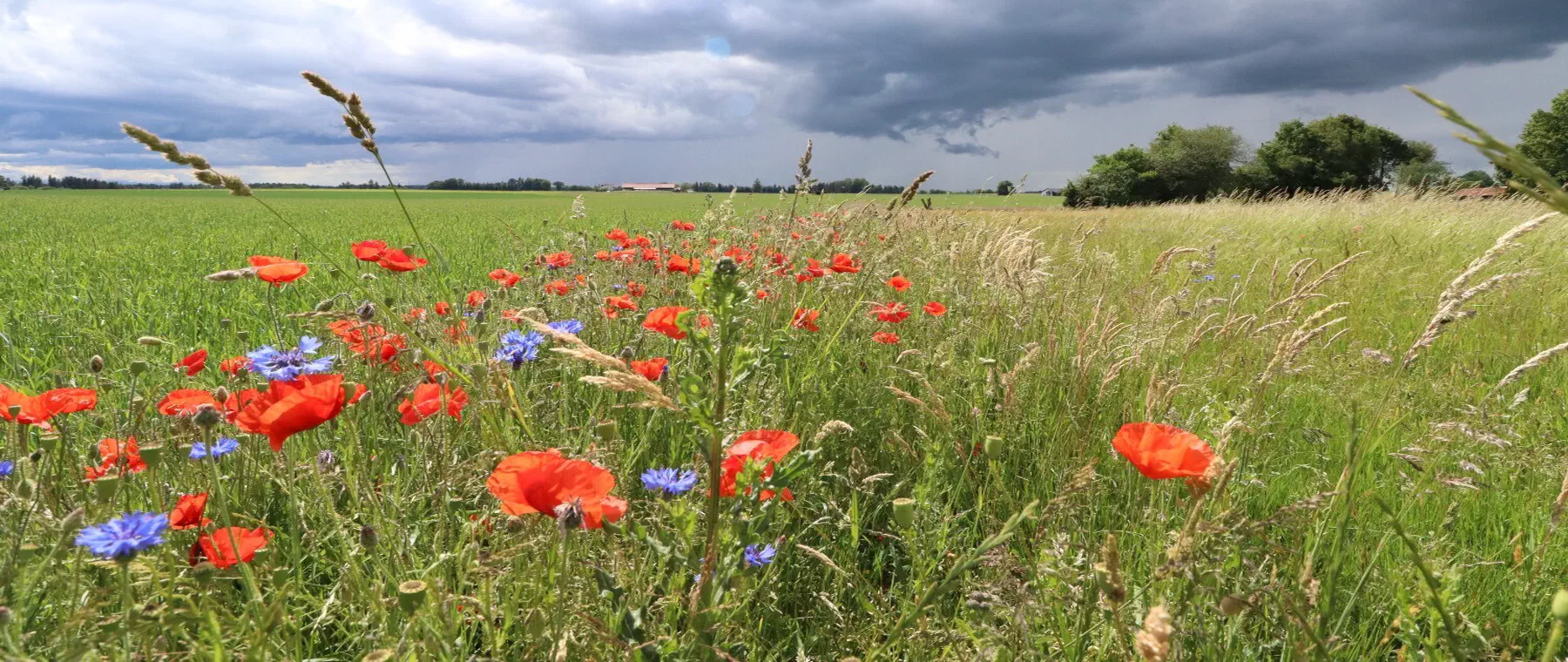
Extensification of arable land, creation of multi-year flowering and field margin strips as well as development of species-rich grassland in open fields. These structures promote the skylark and other species of agricultural landscape.
Floodplains and oxbow channels in the Rhine floodplain
Reconnection of oxbows, development of softwood riparian forest and creation of flood channels in the adjacent Rhine floodplain. Such floodplain habitats strengthen the habitat network along the Rhine and offer spawning and resting habitats.
Traditional orchard and vegetation network
Creation and management of traditional orchards, hedgerows and field trees as stepping-stone habitats between settlement edge and open fields. These elements network habitats and create cover and food for birds and small mammals.
Species protection CEF and FCS
Replacement quarters for building-dwelling bats, replacement habitats for sand lizard at slopes and dikes as well as skylark windows in arable land, each as a preliminary CEF measure or population-supporting FCS measure pursuant to § 44 BNatSchG.
Protected species in the Lower Palatinate and northern Upper Rhine plain
Skylark
The skylark breeds in open arable land around Frankenthal, but suffers from structurally poor use. Skylark windows, flowering strips and extensively managed field margins are typical CEF measures to promote the species.
About this species ›Sand lizard
Railway embankments, dikes, track margins and derelict sites in the city territory are habitat of the sand lizard. In construction and infrastructure projects, it is a frequent target species for preliminary CEF measures with replacement habitats and relocation.
About this species ›Bats
Buildings, cellars and old tree stocks in Frankenthal serve several bat species as quarters, the water bodies and gardens as hunting grounds. Quarter securing and replacement quarters are regularly required during demolition and renovation.
About this species ›Kingfisher
At Isenach, Rehbach and in the Rhine floodplain, the kingfisher finds suitable water sections. CEF measures include modelling of steep banks, allowing bank dynamics and securing structurally rich banks.
About this species ›Amphibians
In the oxbow channels and small water bodies of the Rhine floodplain, numerous amphibian species occur. Newly created pools and spawning waters as well as securing migration corridors are proven compensation measures.
About this species ›Northern lapwing
In wet arable depressions and meadows of the Rhine floodplain, the northern lapwing appears as an open land breeding bird. Rewetting, adapted use and nest protection count amongst measures for the rapidly declining species.
About this species ›Which projects trigger a compensation obligation?
Residential construction and urban development
The high demand for housing in the Rhine-Neckar metropolitan region leads to new building areas and infill development in Frankenthal. These projects trigger impacts whose compensation must be provided according to the LKompVO. greeNature supports project developers with assessment and land provision.
Commerce and logistics
Further development of industrial and logistics locations, such as in the surroundings of KSB and the Amazon logistics centre, generates land consumption and compensation obligations. greeNature supplies nature-region-appropriate compensation areas and takes over authority coordination.
Transport and infrastructure
Road construction, expansion of the railway line between Mannheim and Mainz as well as utility and energy projects lead to impacts on nature and landscape. greeNature assesses the requirement and provides recognised compensation and replacement measures.
Flood protection on the Rhine
Dike upgrading, retention areas and water management measures in the Rhine floodplain combine flood protection with impacts on floodplain habitats. greeNature links these projects with restoration and compensation.
From enquiry to monitoring
Contact and enquiry
Tell us your compensation requirement and the natural region. We check availability.
Offer and advice
A transparent offer covering measure types, scope and availability.
Coordination with authorities
Full coordination with the lower nature conservation authority. We handle everything.
Long-term monitoring
Permanent securing of the land, management and documentation across the contract term.
Eco-points in adjoining districts
All about eco-points
in the city of Frankenthal (Pfalz)
Request eco-points in the city of Frankenthal (Pfalz)
We will promptly prepare a transparent offer with matching eco-points held in stock in the city of Frankenthal (Pfalz).