Eco-points and compensation areas
District of Eifelkreis Bitburg-Prüm
Eco-points and compensation areas in Eifelkreis Bitburg-Prüm, developed and coordinated with nature conservation authorities according to the Landeskompensationsverordnung (LKompVO) of Rheinland-Pfalz. greeNature is your full-service partner for compensation and replacement between Schneifel, Islek and Bitburg Gutland, operating nationwide.
The District of Eifelkreis Bitburg-Prüm at a glance
Eifelkreis Bitburg-Prüm lies in the far north-west of Rheinland-Pfalz at the border with Belgium and Luxembourg. At around 1,626 km² it is the largest district by area and most sparsely populated in the state and at the same time the district with the most municipalities in Germany with 233 district municipalities. Rheinland-Pfalz has no administrative regions anymore; state supervision is with the Struktur- und Genehmigungsdirektion (SGD) Nord.
Naturally the district is divided into several landscapes: the Devonian-shaped, forest-rich Schneifel and Islek in the north (natural region D45 West Eifel), parts of the remaining Eifel (D45) and the open, agriculturally used Bitburg Gutland on Luxembourgish sandstone and shell limestone (D49). The river valleys of Prüm, Nims, Kyll, Enz and Our cut the uplands into deeply incised, naturally intact narrow valleys.
Ecologically significant are the FFH area Ourtal (DE 6003-301) along the German-Luxembourg border, the German-Luxembourg Nature Park (Naturpark Südeifel) and 30 nature conservation areas with around 2,385 hectares. The Eifel ranks among the most important retreat areas of the European wildcat, the bunker systems of the former Westwall on the Schneifel serve numerous bat species as winter roosts.
Economically, dairy farming and grassland management, the Bitburger Brewery, the trade and conversion site Bitburg airfield and substantial wind energy expansion shape the district. Such projects regularly trigger compensation or replacement obligations under §§ 13 to 15 BNatSchG; species protection impacts under § 44 BNatSchG additionally require advanced compensation measures (CEF).
🗺️ Associated natural regions
Go to natural region D45 ›
Go to natural region D49 ›
📍 Selected municipalities
🌿 Ecological features
- FFH area Ourtal (DE 6003-301), around 7,200 ha along the German-Luxembourg Our
- German-Luxembourg Nature Park (Naturpark Südeifel) with the Ferschweiler Plateau on Luxembourgish sandstone
- Naturally intact watercourses Prüm, Nims, Kyll, Enz and Our with kingfishers and bullheads
- Westwall bunkers of the Schneifel as significant bat winter roosts
- Extensive beech and oak forests as habitat for European wildcats
- 30 nature conservation areas with around 2,385 ha, supplemented in the north by the Naturpark Nordeifel
✅ greeNature on the ground
greeNature operates nationwide and applies the Rheinland-Pfalz habitat value procedure according to the Landeskompensationsverordnung (LKompVO) reliably. We know the responsible lower nature conservation authority at the Kreisverwaltung Eifelkreis Bitburg-Prüm and the higher nature conservation authority at the SGD Nord and develop naturally appropriate compensation areas in Schneifel, Islek and Bitburg Gutland, from land securing through implementation to lasting management and monitoring.
Typical measures in the district of Eifelkreis Bitburg-Prüm
Watercourse restoration
Riverbank release, creation of floodplain forest and spawning habitats as well as kingfisher steep banks at Prüm, Nims, Kyll, Enz and Our, often combined with establishing connectivity for fish and bullheads.
Grassland extensification
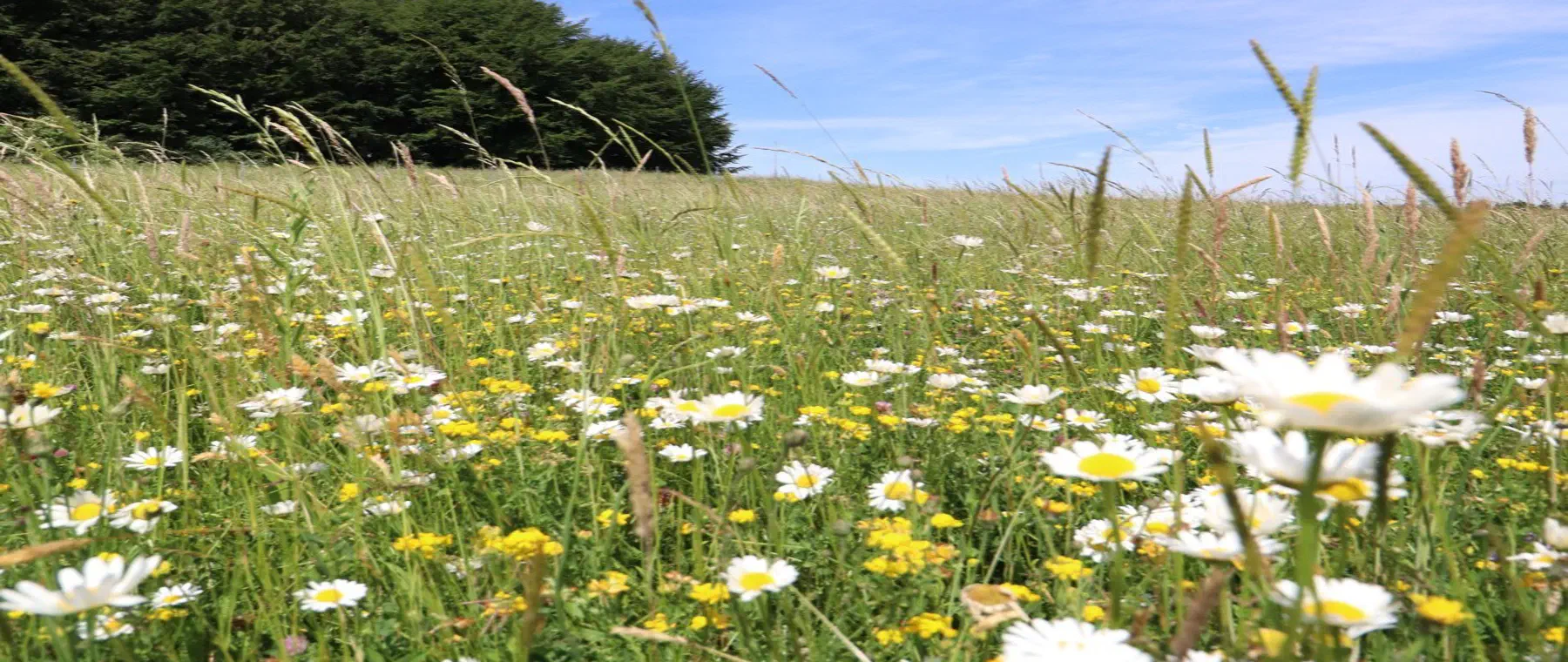
Development of species-rich mountain, wet and calcareous meadows in Islek and Schneifel through adapted mowing and grazing, habitat for meadow-breeding birds, butterflies and wild bees.
Natural forest conversion
Conversion of structurally sparse spruce plantations into site-appropriate beech and oak mixed forests with old and dead wood proportions, securing migration corridors for the European wildcat.
Traditional orchards and hedgerows in the Gutland
Creation and management of traditional orchard stands, field hedgerows and margins in the open arable land of the Bitburg Gutland, stepping-stone habitats for little owls, red-backed shrikes and hazel dormouse.
Bat roosts
Securing and enhancing bunkers and tunnels of the Schneifel as winter roosts and promotion of cavity trees and hunting structures in the surrounding forest.
Spring moorlands and wetlands
Rewetting of slope moorlands, spring flushes and wet fallows on the Eifel uplands, habitat for amphibians, dragonflies and rare wetland plants.
Protected species in the Schneifel, Islek and Bitburg Gutland
European wildcat
The forests of the Eifel form, with the Ardennes, one of the largest contiguous habitats of the European wildcat in Central Europe. Structurally diverse broadleaf forests, old and dead wood and networked woodland are decisive for the strictly protected species.
About this species ›Black stork
The low-disturbance, forest-rich stream valleys of Prüm, Enz and Our provide the black stork with breeding and foraging habitats. For wind and infrastructure projects, nest protection and FCS measures are frequently required.
About this species ›Bats
Greater mouse-eared bat, Bechstein's bat and further species use the Westwall bunkers of the Schneifel as winter roosts and the surrounding forests as hunting grounds. Roost securing and replacement roosts are typical CEF measures.
About this species ›Kingfisher
At the naturally intact watercourses Prüm, Nims, Kyll and Our, the kingfisher breeds in natural riverbank collapse zones. CEF measures include modelling of steep walls and enhancement of fish-rich watercourse sections.
About this species ›Hazel dormouse
The hazel dormouse inhabits structurally diverse forest edges, hedgerows and traditional orchard stands in the Gutland. For impacts on woodland, felling times, habitat networking and advanced replacement habitats under § 44 BNatSchG must be observed.
About this species ›Amphibians
Yellow-bellied toads, fire salamanders and common toads find spawning habitat in spring flushes, forest pools and the stream valleys of the Eifel. Creation of new small waterbodies and rewetting are effective compensation measures.
About this species ›Which projects trigger a compensation obligation?
Wind energy in the Eifel
The forest-rich heights of Schneifel and Islek rank among the windy sites in Rheinland-Pfalz. New wind farms and repowering trigger substantial compensation requirements, in particular FCS measures for red kites, black storks and bats. greeNature solutions develops and secures the required areas.
Business and conversion Bitburg airfield
The after-use of the former Bitburg airfield as business and energy park, expansions of Bitburger Brewery and further business settlement require compensation for sealing and vegetation loss according to LKompVO.
Transport infrastructure
Maintenance and expansion of the A60, federal roads B51 and B257 and bypasses and bridge structures across the Eifel valleys generate compensation and replacement obligations and species protection measures.
Photovoltaic and settlement development
Open-area photovoltaic systems on conversion and marginal-yield sites and residential and business development areas in Bitburg, Prüm and Speicher require nature conservation compensation. Owners of suitable land can benefit as land providers.
From enquiry to monitoring
Contact and enquiry
Tell us your compensation requirement and the natural region. We check availability.
Offer and advice
A transparent offer covering measure types, scope and availability.
Coordination with authorities
Full coordination with the lower nature conservation authority. We handle everything.
Long-term monitoring
Permanent securing of the land, management and documentation across the contract term.
Eco-points in adjoining districts
All about eco-points
in the district of Eifelkreis Bitburg-Prüm
Request eco-points in the district of Eifelkreis Bitburg-Prüm
We will promptly prepare a transparent offer with matching eco-points held in stock in the district of Eifelkreis Bitburg-Prüm.