Eco-points and compensation areas
City of Wuppertal
Eco-points and compensation areas in the independent city of Wuppertal, assessed according to the numerical biotope value procedure and managed via eco-accounts under the North Rhine-Westphalia Eco-Account Ordinance and § 32 LNatSchG NRW. greeNature operates nationally and is your full-service partner for impact mitigation, species protection and CEF measures in the Bergian Land and natural region D38.
The City of Wuppertal at a glance
Wuppertal is an independent major city in the administrative region of Düsseldorf and together with Solingen and Remscheid forms the Bergian City Triangle. With approximately 168 square kilometres of city area, about 365,000 people live there. The city is divided into ten city districts, its historical centres are Elberfeld and Barmen, which were united in 1929 as the city of Barmen-Elberfeld and renamed Wuppertal in 1930. Characteristic is the valley location of the Wupper, along which settlement, industry and the world-famous suspension railway extend.
In terms of natural regions, Wuppertal belongs to the Bergian Land and thus to BfN natural region D38 (Bergian Land and Sauerland) as part of the Rhenish Slate Mountains. Characteristic is an undulating relief of forested ridges, incised stream valleys (Siepen) and reservoirs in the surrounding area. Despite the dense building, Wuppertal is strongly interspersed with green: approximately eight per cent of the city area is designated as nature reserve, large forest areas such as Burgholz state forest with its arboretum, the Gelpe and Saalbach valley and numerous stream valleys form a coherent network of habitats.
Ecologically significant are especially naturally-oriented flowing waters and forest valleys. The Gelpe and Saalbach valley at the border to Remscheid is an FFH site part of the European Natura 2000 network. The Wupper and its tributaries, beech and mixed forests of the slopes as well as former quarries provide habitat for kingfisher, bats, amphibians and reptiles. The fine-grained interlocking of forest, grassland and water bodies in the Bergian relief makes the city an important building block in the regional habitat network.
Economically, Wuppertal is a traditional industrial and science location with emphasis on chemicals and pharmaceuticals, automotive supply, textile and tool engineering and Bergian University. Densification in housing construction, the development of commercial and industrial land on conversion sites, transport projects along road and rail and flood protection on Wupper regularly trigger impacts, whose balance must be provided via the biotope value procedure and eco-accounts under § 32 LNatSchG NRW.
🗺️ Associated natural regions
Go to natural region D38 ›
📍 City districts
🌿 Ecological features
- FFH site Gelpe and Saalbach valley at city border with Remscheid as part of Natura 2000
- Approximately eight per cent of city area designated as nature reserve, established in multiple landscape plans
- Burgholz state forest with arboretum as large-area, species-rich forest complex
- Wupper as a defining, partially restored flowing water body with accompanying stream valleys (Siepen)
- Bergian relief with forested heights, deeply incised valleys and reservoirs in surrounding area
- Bergian City Triangle of Wuppertal, Solingen and Remscheid with shared landscape space
✅ greeNature on the ground
greeNature operates nationally and manages compensation projects also in the Bergian Land. We know the numerical biotope value procedure applicable in North Rhine-Westphalia, the requirements of the North Rhine-Westphalia Eco-Account Ordinance and coordination with the lower nature conservation authority of the City of Wuppertal. For impacts in the densely settled, yet strongly greened city area, we develop precisely tailored compensation, replacement and CEF measures in the stream valleys, forests and grassland areas of natural region D38.
Typical measures in the city of Wuppertal
Water body restoration on Wupper
Removal of bank reinforcement, connection of secondary water bodies and naturally-oriented development of Wupper and its tributaries. This creates steep banks, shallow water zones and floodplain structures as habitat for kingfisher, fish and amphibians and simultaneously contributes to flood protection.
Unsealing and densification
Removal of sealed land at abandoned commercial and railway sites, conversion into green areas, woody vegetation or retention areas. Unsealing is an effective enhancement in the densely built city area and reduces runoff and summer overheating.
Forest conversion and forest development
Conversion of structure-poor coniferous forests into site-appropriate broadleaf and mixed forests of beech, sessile oak and hornbeam, for example around Burgholz and the Bergian slope forests, with targeted promotion of old and dead wood as habitat for bats and hazel dormouse.
Grassland enhancement in surrounding area
Conversion of intensively used land into species-rich extensively managed and wet grassland with adjusted cutting seasons. In the upland areas and valley floodplains of the Bergian Land, this promotes insects, meadow-breeding birds and the diversity of agricultural landscape.
Species protection CEF and FCS
Advance and population-supporting measures under § 44 and § 45 BNatSchG, such as substitute habitats for sand lizard on railway embankments and slopes, bat roosts, kingfisher steep banks and sunny substitute spawning waters for amphibians and great crested newt.
Habitat networks and traditional orchards
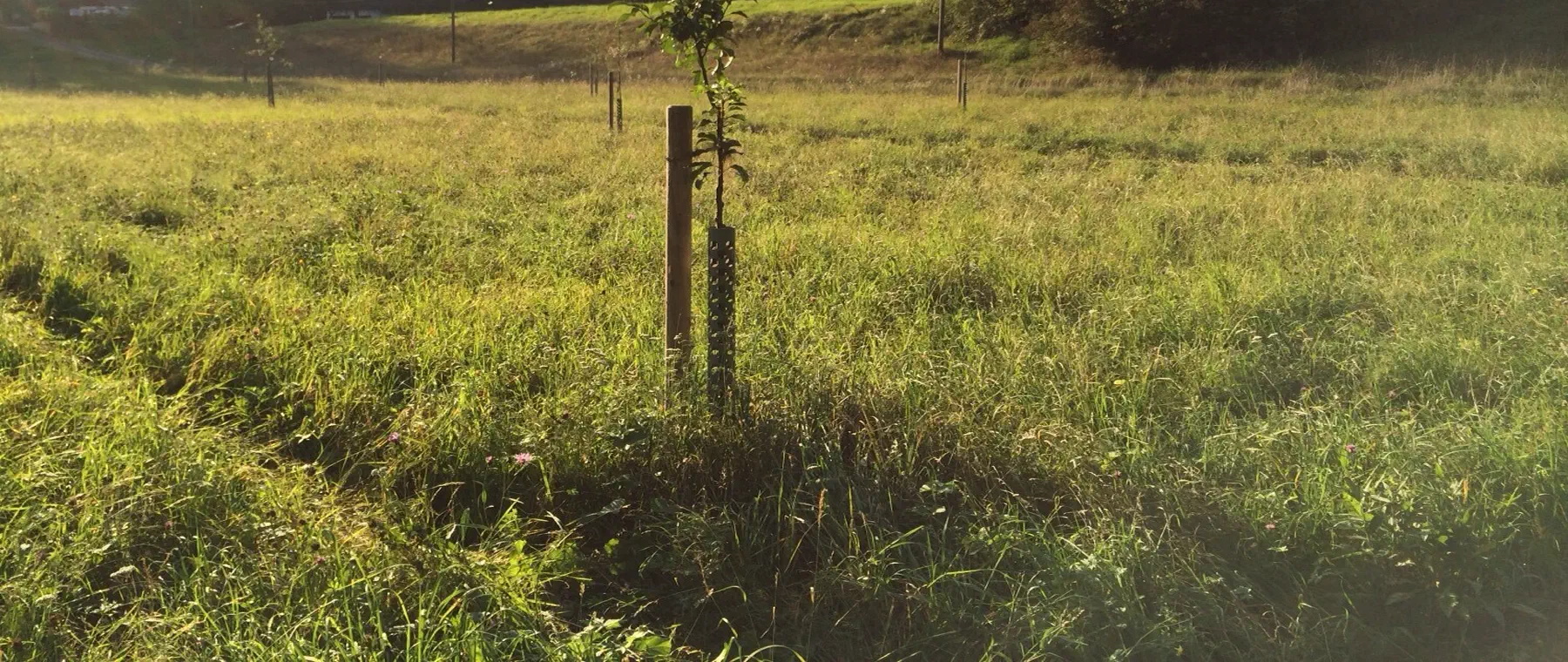
Creation of copses, hedgerows, small water bodies and traditional orchards to network stream valleys and forest areas. Such stepping-stone habitats strengthen the habitat network in the Bergian relief and create habitat for insects, birds and small mammals.
Protected species in the Bergian Land, Bergian City Triangle
Kingfisher
On the naturally-oriented sections of Wupper and tributaries, the kingfisher breeds in steep banks. Restoration, creation of bank collapse edges and clean, fish-rich water secure its occurrences and are effective compensation measures on flowing waters.
About this species ›Bats
Wuppertal's forests, stream valleys, caves and old buildings provide roosts for several bat species. Conservation of old and cavity trees, roost construction and protection of summer and winter roosts are central components of impact mitigation.
About this species ›Sand lizard
Slopes, railway embankments, quarries and sunny margins in the city area are habitat for the strictly protected sand lizard. Advance substitute habitats with sunning and shelter structures must be created before impacts and animals relocated.
About this species ›Great crested newt and amphibians
Former quarries, ponds and small water bodies in forest valleys are home to great crested newt, common toad and other amphibians. Creation and management of sunny, fish-free spawning waters secure breeding sites and serve as CEF measures.
About this species ›Hazel dormouse
The hazel dormouse inhabits structured forest and woody margins with hazelnut, bramble and dense undergrowth. Conservation and creation of connecting woody structures and careful forest edge management secure its small-scale habitats in the Bergian Land.
About this species ›European wildcat
The European wildcat is expanding from the Sauerland increasingly into the forests of the Bergian Land. Large, fragmented forest complexes with old and dead wood and connecting woody corridors promote possible resettlement.
About this species ›Which projects trigger a compensation obligation?
Housing and densification
New building areas and densification in existing stock, often on former industrial and railway sites, lead to sealing and loss of green structures and trigger corresponding compensation requirements.
Commercial and industrial land
The development and reactivation of commercial and industrial sites for chemicals, supply industry and logistics impact soil and habitats and require compensation via biotope value procedure and eco-accounts.
Traffic and infrastructure
Projects on road and rail, bridge structures and the reuse of closed railway lines touch slopes and vegetation that are habitat for sand lizard and bats and lead to species protection measures.
Flood protection on Wupper
Flood protection and water body development measures along Wupper combine engineering with ecological enhancement and can be linked with compensation and eco-account areas.
From enquiry to monitoring
Contact and enquiry
Tell us your compensation requirement and the natural region. We check availability.
Offer and advice
A transparent offer covering measure types, scope and availability.
Coordination with authorities
Full coordination with the lower nature conservation authority. We handle everything.
Long-term monitoring
Permanent securing of the land, management and documentation across the contract term.
Eco-points in adjoining districts
All about eco-points
in the city of Wuppertal
Request eco-points in the city of Wuppertal
We will promptly prepare a transparent offer with matching eco-points held in stock in the city of Wuppertal.