Eco-points and compensation areas
District of Paderborn
greeNature is your nationwide full-service partner for statutory nature-conservation compensation on Paderborn Plateau. We assess, plan and implement compensation measures under the Ökokonto-Verordnung NRW and State Nature Conservation Act NRW and undertake complete authority liaison.
The District of Paderborn at a glance
Kreis Paderborn lies in the south of the Detmold administrative region in East Westphalia-Lippe, between Senne and Sauerland. The district seat and regional centre is the university town Paderborn. The district divides into ten towns and municipalities and extends from Senneland in the north-west through Paderborn Plateau to the north edge of the Sauerland.
Naturally, the district divides into three parts. The north-west with Senne belongs to Westphalian Bay (natural region D34) and is shaped by sand, heaths and streams. The centre is Paderborn Plateau with adjoining Egge range, naturally part of Weser and Weser-Leine Highlands (D36). This gently undulating limestone plateau is Western Westphalia's largest karst landscape, traversed by dry valleys plus source areas of Alme, Lippe and Pader. The far south around Büren and Bad Wünnenberg transitions to South Berg Land and thus Sauerland (D38).
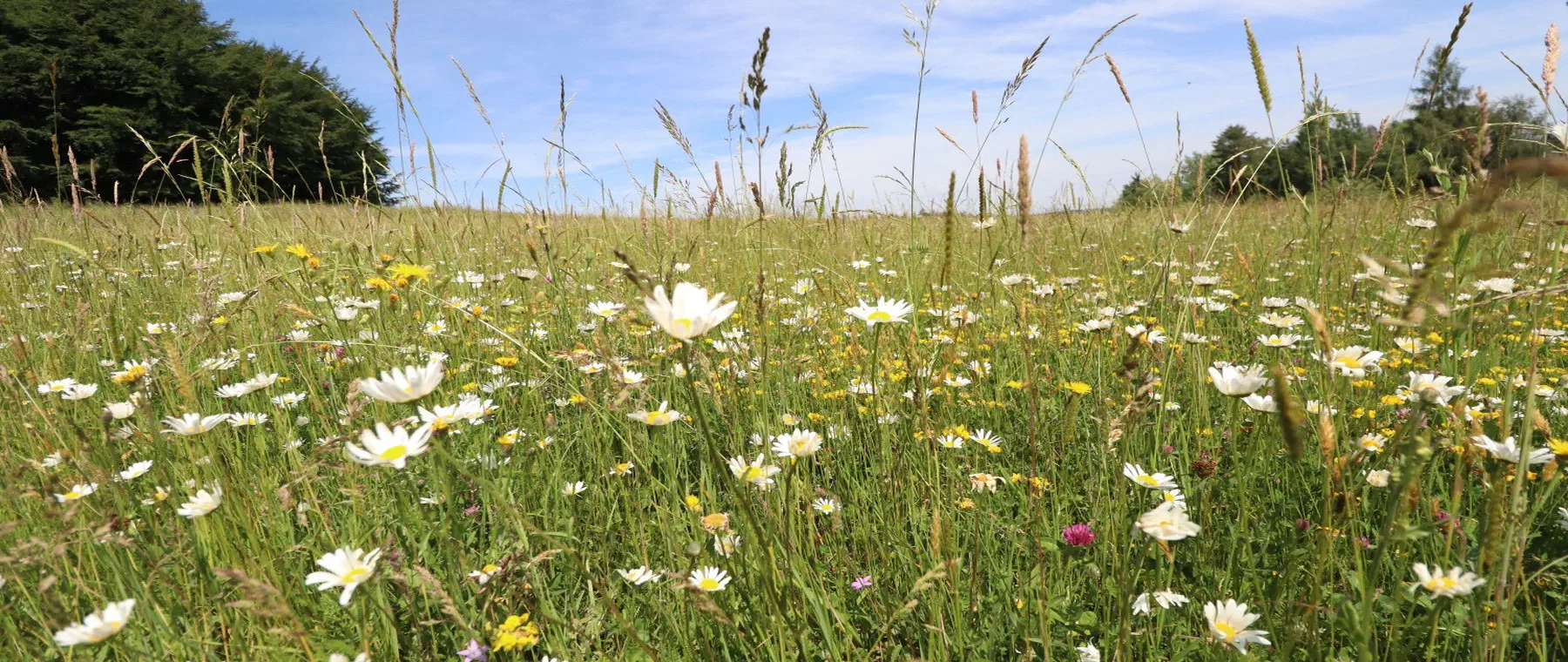
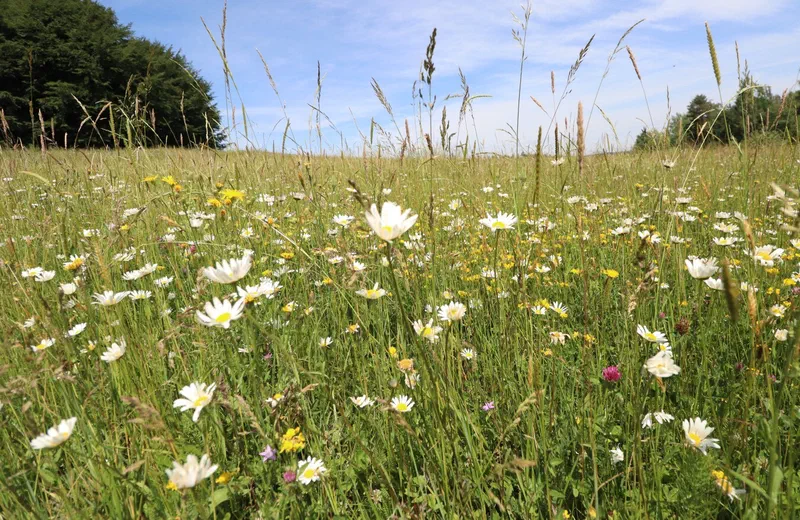
Ecologically, the district is characterised by large forest areas and open lime landscapes. Egge FFH site (DE-4219-301) protects continuous, species-rich beech forests; the EU bird protection site Senne with Teutoburger Wald (DE-4118-401) secures heath and open-land habitats of military training areas. On the plateau lie calcareous grasslands and juniper heaths; overall, around 11 per cent of district area is secured as nature reserves.
Economically, the district combines a strong technology and industrial location in and around Paderborn with intensive wind energy use, particularly in the Lichtenau area. Added are limestone and raw-material extraction on the plateau, logistics and commercial locations plus military-used land around Sennelager. Building projects in these areas regularly trigger impacts whose compensation must be provided via the numerical assessment procedure under Ökokonto-Verordnung NRW.
🗺️ Associated natural regions
Go to natural region D36 ›
Go to natural region D34 ›
Go to natural region D38 ›
📍 Selected municipalities
🌿 Ecological features
- Egge FFH site (DE-4219-301), extensive, species-rich beech forests
- EU bird protection site Senne with Teutoburger Wald (DE-4118-401)
- Paderborn Plateau as Western Westphalia's largest karst and limestone landscape
- Calcareous grasslands and juniper heaths with orchids and thermophilic insects
- Sand and heath habitats of Senne with nightjar, woodlark and red-backed shrike
- Lime-characterised watercourses Alme, Lippe and Pader with their source areas
- 67 nature reserves on around 11 per cent of district area
✅ greeNature on the ground
greeNature operates nationwide and guides compensation projects in North Rhine-Westphalia under the Ökokonto-Verordnung NRW and State Nature Conservation Act specifications. For Kreis Paderborn, we know the numerical assessment procedure, the natural-region particularities of Senne, plateau and Egge and the requirements of the lower nature conservation authority and co-ordinate all steps from assessment through monitoring.
Typical measures in the district of Paderborn
Calcareous grasslands and juniper heaths
Scrub clearance, resumption of sheep grazing and management mowing on Paderborn Plateau semi-arid grasslands. Such measures preserve protected FFH habitat types and support orchids, wild bees and butterflies of lime sites.
Heath and sand-grassland development
Scrub removal, turving and extensive grazing of sand heaths around Senne. The open, nutrient-poor sites provide habitat for woodlark, nightjar and numerous insect species.
Watercourse and floodplain restoration
Removal of bank reinforcement, connection of oxbows and development of riparian vegetation on Alme, Lippe and Pader. This creates steep banks, shingle banks and near-natural stream courses as habitat for kingfisher, bullhead and amphibians.
Near-natural forest development in Egge
Conversion of structurally poor coniferous plantations to site-appropriate beech and beech-mixed forests plus promotion of dead and fallen timber. Such measures enhance woodland habitats for black stork, bats and cavity-breeding birds.
species protection CEF und FCS
Fledermausquartiere an Gebäuden und in Karsthöhlen, Eisvogel-steep banks an den Gewässern sowie Ersatzhabitate für die Zauneidechse an Bahndämmen und Böschungen, jeweils als vorgezogene CEF- oder populationsstützende FCS-Maßnahme nach § 44 und § 45 BNatSchG.
Ackerextensivierung und Feldflurstrukturen
Anlage von hedgerows, Blüh- und field margin strips sowie extensive management auf der ausgeräumten field landscape der Hochfläche. Diese Strukturen schaffen stepping-stone habitats für Feldlerche, Rebhuhn, Kiebitz und Feldhase.
Protected species in the Paderborn Plateau between Senne and Egge
Fledermäuse in Karst und Buchenwäldern
Die Karsthöhlen der Hochfläche und die alten Buchenwälder der Egge sind roosts für Bechsteinfledermaus, Großes Mausohr und weitere Arten. caves dienen als Winterquartiere, alte forest stands als Wochenstuben und hunting ground.
About this species ›Schwarzstorch in der Egge
Die zusammenhängenden, quellreichen forest areas des Eggegebirges bieten dem störungsempfindlichen Schwarzstorch geeignete Brut- und feeding habitats. Ungestörte Altholzbestände und naturnahe Waldbäche sind für ihn entscheidend.
About this species ›Wildkatze im Eggegebirge
Die großen, strukturreichen deciduous woodlands der Egge und des angrenzenden Berglands zählen zum Ausbreitungsraum der Europäischen Wildkatze. Waldverbund, Alt- und deadwood sowie ungestörte Rückzugsräume sind für sie zentral.
About this species ›Feldlerche und open-land species der Hochfläche
Die weiten Ackerlandschaften der Paderborner Hochfläche beherbergen Feldlerche, Rebhuhn und Kiebitz. Bei Eingriffen in die field landscape sind Ackerextensivierung und Blühstrukturen typische Kompensations- und CEF-Maßnahmen.
About this species ›Eisvogel an Alme, Lippe und Pader
Die kalkgeprägten running waters bieten mit Steilufern und klarem Wasser habitat für Eisvogel und Groppe. riverbank erosion sites und naturnahe stream development sind wirksame Maßnahmen zur Förderung dieser Arten.
About this species ›Zauneidechse in der Senne
Sandige, besonnte Böschungen, Heideränder und Bahndämme im space der Senne sind Habitate der Zauneidechse. Sie ist eine häufige Zielart bei infrastructure- und Siedlungsvorhaben und erfordert oft vorgezogene Ersatzhabitate.
About this species ›Which projects trigger a compensation obligation?
wind energy auf der Hochfläche
Der Kreis Paderborn zählt zu den windkraftstärksten Regionen Deutschlands, insbesondere im space Lichtenau. Neubau und repowering von wind energy installations lösen artenschutzrechtliche Prüfungen nach § 44 BNatSchG sowie Ausgleichspflichten aus, häufig mit CEF- und FCS-Maßnahmen für red kite und Fledermäuse.
Technologie, Industrie und Logistik
Der Wirtschaftsraum Paderborn mit seinen Technologie-, Industrie- und Logistikstandorten wächst stetig. Gewerbegebietsentwicklungen und Betriebserweiterungen führen zu Flächenversiegelung, deren Ausgleich über das numerische Bewertungsverfahren der eco-account-Verordnung NRW zu erbringen ist.
limestone extraction und Rohstoffgewinnung
Auf der Paderborner Hochfläche wird in mehreren Steinbrüchen limestone gewonnen. Neue excavations und Erweiterungen erfordern naturschutzrechtliche compensation sowie Rekultivierungs- und Renaturierungskonzepte für die beanspruchten Flächen.
Verkehr und Siedlungsentwicklung
Der Ausbau von roads wie der A33 und der B64, der Flughafen Paderborn-Lippstadt sowie Wohn- und Gewerbebauflächen in den zehn Städten und Gemeinden lösen Eingriffe aus. Eigentümer geeigneter Flächen können diese als eco-account- oder compensation areas anbieten.
From enquiry to monitoring
Contact and enquiry
Tell us your compensation requirement and the natural region. We check availability.
Offer and advice
A transparent offer covering measure types, scope and availability.
Coordination with authorities
Full coordination with the lower nature conservation authority. We handle everything.
Long-term monitoring
Permanent securing of the land, management and documentation across the contract term.
Eco-points in adjoining districts
All about eco-points
in the district of Paderborn
Request eco-points in the district of Paderborn
We will promptly prepare a transparent offer with matching eco-points held in stock in the district of Paderborn.