Eco-points and compensation areas
District of Oberbergischer Kreis
Eco-points and compensation areas in Oberbergischer Kreis, assessed using the Ökokonto-Verordnung NRW and State Nature Conservation Act. greeNature guides your project in water-rich Bergisches Land from impact assessment through to recognised compensation land.
The District of Oberbergischer Kreis at a glance
Oberbergischer Kreis lies in the Cologne administrative region and naturally belongs to the South Berg Land (BfN major region D38). Characteristic are Bergische Highlands with wooded summits, deeply incised stream valleys and one of Germany's most dam-rich areas.
Agger, Wiehl and Wupper plus numerous reservoirs, including Aggertal, Wiehl and Bever reservoirs, shape water management and serve drinking water supply to large parts of the Rhineland.
For compensation in North Rhine-Westphalia, impact mitigation regulation under §§ 13 to 15 BNatSchG applies in conjunction with the State Nature Conservation Act NRW (LNatSchG). Eco-points arise on recognised eco-accounts under the Ökokonto-Verordnung NRW and are assessed using a numerical assessment procedure.
A small and medium-sized industrial area with metal processing, plastics engineering and automotive suppliers plus transport axes like A4 and Oberbergische Railway regularly create compensation requirements.
🗺️ Associated natural regions
Go to natural region D38 ›
📍 Selected municipalities
🌿 Ecological features
- One of Germany's most dam-rich areas with around ten reservoirs whose catchment areas set high demands on water and drinking water protection.
- FFH site "Wupper and Wipper near Wipperfürth" (DE-4810-301) is a significant habitat network element for watercourse-dependent species.
- Numerous nature reserves, for example on banks and slopes of Wuppertal reservoir, secure near-natural slope forests and rock habitats.
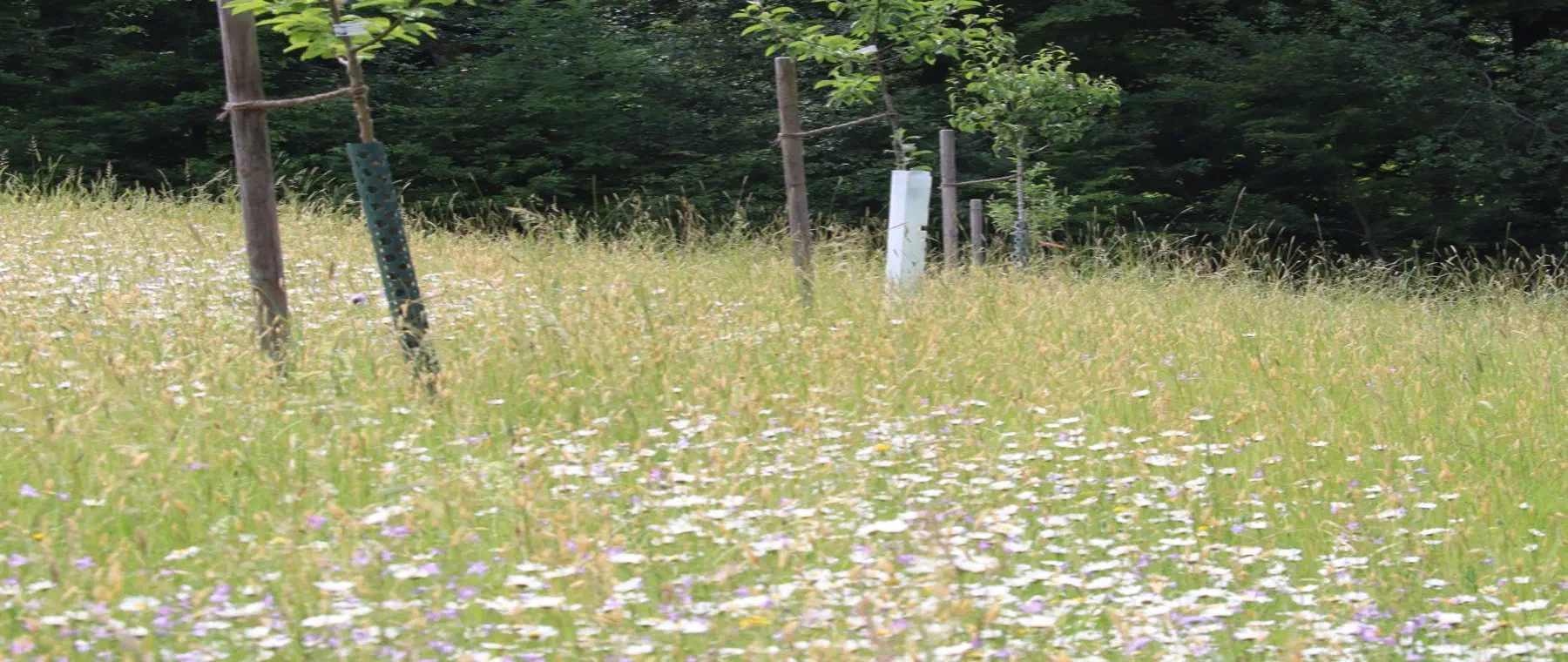
- Bergische Highlands with wet grassland, bristle-grass meadows and stream-accompanying alder-ash forests provide high-value, yet sensitive habitats.
- Extensive broadleaf and mixed forests plus a dense network of near-natural watercourses make the district a core area for watercourse and forest-dependent species in South Berg Land.
✅ greeNature on the ground
greeNature manages project developers in Oberbergischer Kreis from the first impact and compensation assessment through to permanently secured compensation land. We know the water-rich South Berg Land's particularities, from sensitive upper stream reaches through highland wet grassland to slope forest trees. We develop measures site-appropriately under the Ökokonto-Verordnung NRW and numerical assessment procedure and co-ordinate them with the lower nature conservation authority in Gummersbach. As a nationwide nature-conservation compensation specialist, we combine regional know-how with long-term land management.
Typical measures in the district of Oberbergischer Kreis
Watercourse restoration
Removal of bank reinforcement on Agger, Wiehl and Wupper, establishment of connectivity plus creation of shingle banks and near-natural steep banks. Such measures enhance the district's streams as habitat for kingfisher, bullhead and brown trout.
Floodplains and stream-accompanying forests
Development of alder-ash floodplain forests and riparian vegetation along valley floors, combined with connection of wetland areas. This improves water retention, shading and habitat network in the watercourse system.
Grassland extensification
Conversion of intensively managed meadows to species-rich mountain and wet grassland through adjusted mowing and no fertilisation. Damp and grassland rank among South Berg Land's highest-value habitats.
Near-natural forest conversion
Conversion of structurally poor coniferous stands to site-appropriate broadleaf and mixed forests of beech, oak and sycamore plus promotion of dead and fallen timber. This strengthens forest-dependent species like hazel dormouse and bats.
Small waterbodies and amphibian habitats
Creation of sunny pools and spring habitats plus securing of upper stream reaches as breeding areas for fire salamander, newts and other amphibians of Bergische stream valleys.
Hedgerows, traditional orchards and habitat network
Creation of hedgerows, field copses and traditional orchard meadows at slope edges of Bergische Highlands as stepping-stone biotopes and network elements between forest and open land.
Protected species in the Upper Berg Land in Bergisches Land
Kingfisher
Clear, structured streams and reservoir bank areas offer the kingfisher breeding and feeding habitats. Typical measures are near-natural steep banks and securing of fish-rich watercourse sections.
About this species ›Bats
Bechstein's bat, greater mouse-eared bat and water bat use old broadleaf forests, tunnels of former mining sites and watercourses as hunting and roost areas. Roost securing and winter roosts are frequent CEF measures.
About this species ›Hazel dormouse
The hazel dormouse inhabits structure and berry-rich forest edges, hedgerows and light broadleaf forests of Bergisches Land. Retention of continuous hedgerow structures is central in cases of forest-edge impact.
About this species ›Black stork
Extensive, quiet broadleaf forests with near-natural stream valleys provide the black stork with breeding and feeding habitats. In forest-adjacent projects, nest protection and low-disturbance feeding waters are relevant.
About this species ›Amphibians and fire salamander
The fire salamander is a characteristic species of spring-fed upper streams in Bergisches Land, accompanied by alpine and thread newts. Small waterbodies and intact spring reaches are crucial compensation goals.
About this species ›Sand lizard
Railway embankments, quarry and extraction sites plus south-exposed slopes are habitat for sand lizard. In infrastructure and commercial projects, replacement habitats as advance compensation and safeguarding measures (CEF) are usual.
About this species ›Which projects trigger a compensation obligation?
Transport and infrastructure
Preservation and expansion of motorway A4 in the section between Cologne and Olpe, federal and state roads plus bridges and town bypasses regularly trigger compensation and replacement obligations under §§ 13 to 15 BNatSchG.
Commerce and industry
Oberbergischer Kreis is a small and medium-sized industrial area with metal processing, plastics engineering and automotive suppliers. Business and commercial land expansions create statutory nature-conservation compensation requirements.
Renewable energies
Wind energy projects and repowering on Bergische Highlands plus free-field photovoltaic installations require compensation and species protection assessment under § 44 BNatSchG, for example for wind-sensitive species.
Settlement development
New residential and commercial areas around Gummersbach, Wiehl and Wipperfürth lead via land-use planning to impacts whose compensation can be assessed numerically in NRW and covered via eco-accounts.
From enquiry to monitoring
Contact and enquiry
Tell us your compensation requirement and the natural region. We check availability.
Offer and advice
A transparent offer covering measure types, scope and availability.
Coordination with authorities
Full coordination with the lower nature conservation authority. We handle everything.
Long-term monitoring
Permanent securing of the land, management and documentation across the contract term.
Eco-points in adjoining districts
All about eco-points
in the district of Oberbergischer Kreis
Request eco-points in the district of Oberbergischer Kreis
We will promptly prepare a transparent offer with matching eco-points held in stock in the district of Oberbergischer Kreis.