Eco-points and compensation areas
City of Mönchengladbach
Immediately available eco-points from authority-recognised eco-accounts for projects in Mönchengladbach. greeNature accompanies project developers on the western Lower Rhine from land search to recognised compensation measure, processed according to the impact mitigation regulation of §§ 13 to 15 BNatSchG, the North Rhine-Westphalia Nature Conservation Act (LNatSchG) and the North Rhine-Westphalia Eco-Account Ordinance.
The City of Mönchengladbach at a glance
Mönchengladbach is an independent city in the west of North Rhine-Westphalia and belongs to the administrative region of Düsseldorf. With approximately 170 square kilometres, about 268,000 people live there, divided into the four city districts North, South, East and West with a total of 44 city quarters. In terms of natural regions, the city area lies predominantly in the Lower Rhenish Lowland (D35), in the south it mediates to the Lower Rhenish Plain (D35) and the loess soils of Jülich Börde.
The characteristic flowing water is the Niers, which runs through the city area from south to north and with its floodplain and accompanying wet meadows forms an ecological guide through the densely settled landscape. Geologically, the ice-age sand terraces of the Lower Rhine determine the substrate, in the south they transition into fertile loess soils.
The proportion of designated protected areas is comparatively low in Mönchengladbach's densification area. Valuable cores include the nature reserves People's Park, Bungtwald and Elschenbruch, Knippertz stream valley, Gerkerat Forest and Hoppbruch. The low Natura 2000 proportion underscores the importance of city-near compensation and enhancement areas.
Economically, Mönchengladbach has transformed from the former textile city to a location for logistics, mechanical engineering and services. Growing residential and commercial land, the reactivation of brownfield and conversion sites and the expansion of transport routes regularly generate compensation requirements under the impact mitigation regulation.
🗺️ Associated natural regions
Go to natural region D35 ›
📍 City districts
🌿 Ecological features
- Niers as characteristic flowing water with accompanying Niers floodplain and wet grassland through the entire city area
- Volksgarten, Bungtwald and Elschenbruch nature reserve as forested green core in the south of the city
- Knippertz stream valley, Gerkerat Forest and Hoppbruch nature reserves with stream, woodland and fen habitats
- Vorster Busch gravel lake as nature conservation-worthy water body habitat from former excavation
- low Natura 2000 and protected area proportion, which increases the value of city-near compensation areas
- Transition from the sand terraces of the Lower Rhine to the loess soils of Jülich Börde in the south
- former NATO headquarters JHQ Rheindahlen as large conversion area with restoration potential
✅ greeNature on the ground
greeNature operates nationally and manages projects on the western Lower Rhine from practice. We know the requirements of the lower nature conservation authority of the City of Mönchengladbach, the numerical assessment procedure under the North Rhine-Westphalia Eco-Account Ordinance and the natural region peculiarities of the Niers lowland. Especially in the densely settled urban space where compensation land is limited, we secure project developers legally secure compensation. From requirement determination through land search to recognition and management of the measure, we undertake complete handling.
Typical measures in the city of Mönchengladbach
Niers and stream restoration
Removal of bank reinforcement and bed fixation on Niers and tributaries such as Knippertz stream, creation of floodplain structures, shallow water zones and riparian vegetation. Such measures significantly raise biotope value and create habitat for kingfisher and fish fauna.
Unsealing and brownfield recycling
Removal of sealed land on brownfield, industrial and conversion sites with subsequent greening or naturally-oriented development. In the densification area, unsealing is a particularly effective enhancement that converts sealed into green-filled areas.
Grassland enhancement in surrounding area
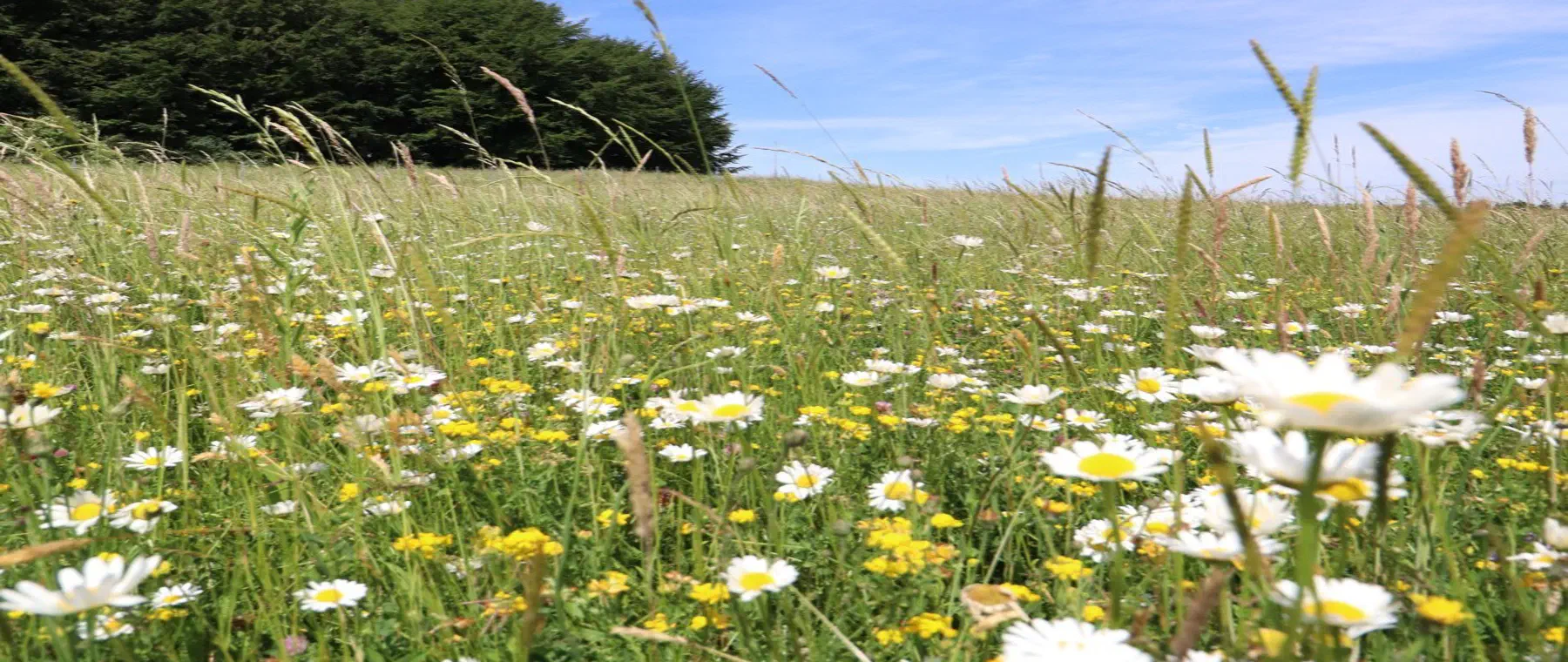
Extensification and rewetting of grassland in the Niers lowland and at the city's edge. Adapted cutting and grazing regimes secure wet meadows as breeding and feeding habitat for meadow-breeding birds such as northern lapwing.
Forest and vegetation development
Site-appropriate development of fen and floodplain forest in wet lowlands and creation of hedgerows, copses and margins in transition to open field landscape. These structures act as stepping stones in habitat networks.
Traditional orchards and calcareous grassland
Creation of traditional orchards and maintenance of open sandy and calcareous sites, for example on railway embankments and brownfields. They provide habitat for thermophilic species and insects and link nature conservation with city-near landscape.
Species protection CEF and FCS
Advance measures under § 44 BNatSchG for sand lizard, bats and amphibians, such as substitute habitats, roosts and spawning waters. The design is based on the respective target species and the impact.
Protected species in the Niers lowland on western Lower Rhine
Northern lapwing and meadow-breeding birds
The wet grassland areas of the Niers lowland and city's edge are breeding and resting areas for meadow-breeding birds. Rewetting, extensive grassland use and nest protection are typical compensation and CEF measures.
About this species ›Skylark
As characteristic species of open field landscape, the skylark is distributed in the arable landscapes at Mönchengladbach's edge, but declining. Skylark windows, wildflower strips and extensive field margins are proven measures.
About this species ›Sand lizard
Railway embankments, slopes, sand areas and brownfields in the city provide suitable habitats for sand lizard. In impacts, advance CEF measures with substitute habitats and relocation are regularly required.
About this species ›Bats
Parks, water bodies, old tree stands and buildings in urban areas are important hunting and roost areas. In impacts to vegetation and buildings, for example on conversion sites, roost replacement and protection of flight routes under § 44 BNatSchG must be considered.
About this species ›Kingfisher
The kingfisher breeds in steep banks on Niers and tributaries. Naturally-oriented water development with overhanging edges and structured banks secures its breeding and feeding habitats.
About this species ›Amphibians
Small water bodies, excavation lakes such as Vorster Busch and wet fen areas are home to numerous amphibian species. Newly created, fish-free spawning waters are well suited as advance CEF measure.
About this species ›Which projects trigger a compensation obligation?
Housing and urban development
The strategy of a growing city with new residential quarters, including on inner-city conversion areas, leads to land take and sealing. New development planning requires balance under the impact mitigation regulation, which can be easily covered via recognised eco-accounts.
Logistics and commerce
Logistics and commercial sites such as Regiopark and North Park bind large areas and trigger compensation obligations. greeNature pools this requirement via extensive measures in natural region D35.
Traffic and infrastructure
The expansion of motorways (including A61, A52 and A44), bypass roads and projects in rail and utilities networks generate compensation requirements that can be represented via eco-points.
JHQ Rheindahlen conversion
The reuse of the former NATO headquarters JHQ Rheindahlen combines demolition, unsealing and naturally-oriented development. Such conversion sites offer special potential for high-value enhancement and compensation measures.
From enquiry to monitoring
Contact and enquiry
Tell us your compensation requirement and the natural region. We check availability.
Offer and advice
A transparent offer covering measure types, scope and availability.
Coordination with authorities
Full coordination with the lower nature conservation authority. We handle everything.
Long-term monitoring
Permanent securing of the land, management and documentation across the contract term.
Eco-points in adjoining districts
All about eco-points
in the city of Mönchengladbach
Request eco-points in the city of Mönchengladbach
We will promptly prepare a transparent offer with matching eco-points held in stock in the city of Mönchengladbach.