Eco-points and compensation areas
District of Märkischer Kreis
Eco-points and compensation land in Märkischer Kreis, assessed using the numerical biotope-value procedure and via eco-accounts under the Ökokonto-Verordnung NRW. greeNature operates nationwide and guides impact projects in the north-western Sauerland from assessment through to permanent securing.
The District of Märkischer Kreis at a glance
Märkischer Kreis lies in central North Rhine-Westphalia and belongs to the Arnsberg administrative region in the South Westphalia region. The district seat is Lüdenscheid; overall, 15 towns and municipalities form the district. The district area extends from the transition to the Ruhr region in the north to the Sauerland highlands in the south and borders the independent city Hagen plus the districts Unna, Soest, Hochsauerlandkreis, Kreis Olpe, Oberbergischer Kreis and Ennepe-Ruhr-Kreis.
Naturally, the district belongs to the north-western Sauerland and thus to the BfN major unit D38 (Bergisches Land and Sauerland) as part of the Rhenish Slate Mountains. Characteristic are wooded ridges of Devonian shales and graywackes, deeply incised valleys of Lenne, Volme, Hönne and Ruhr plus limestone ridges in the Hönnetal with extensive cave systems. The highest elevation is Nordhelle at 663 metres; the lowest point is on the Ruhr at around 106 metres.
Ecologically characteristic are near-natural beech and ravine forests, montane meadows and structure-rich watercourses. The district contains 17 FFH sites, including the Felsenmeer near Hemer (also a National Natural Monument), the limestone faces and caves of Hönnetal, the ravine forests in Lenne valley and the Ebbe moors in Ebbegebirge. The numerous limestone caves and old mining shafts are significant bat winter roosts. Large parts of the south belong to the Sauerland-Rothaargebirge nature reserve.
Märkischer Kreis ranks among Germany's most industrial regions, characterised by small and medium-sized metal processing, tools and machinery, wire and electrical engineering plus the sanitary sector. Commercial expansions, transport projects such as the A45 Rahmedetal Bridge rebuild near Lüdenscheid and renewable energy expansion regularly trigger impacts. Their compensation follows §§ 13 to 15 BNatSchG in conjunction with the State Nature Conservation Act NRW and the Ökokonto-Verordnung NRW, supplemented by species protection under § 44 BNatSchG.
🗺️ Associated natural regions
Go to natural region D38 ›
📍 Selected municipalities
🌿 Ecological features
- Felsenmeer near Hemer, National Natural Monument and FFH site
- Hönnetal with limestone faces and caves (FFH), bat winter roosts
- Ravine forests in Lenne valley (FFH), habitat for, among others, fire salamander
- Ebbe moors in Ebbegebirge, raised and transitional moors (FFH)
- Limestone caves near Iserlohn, Balve and Altena as bat winter roosts
- Watercourses Lenne, Volme, Hönne and Ruhr with their floodplains
- Sauerland-Rothaargebirge nature reserve, forest-rich mid-altitude landscape
✅ greeNature on the ground
greeNature operates nationwide and manages projects in Märkischer Kreis according to law applicable in North Rhine-Westphalia. We work with the numerical biotope-value procedure, know the Ökokonto-Verordnung NRW and the system of state-wide compensation areas and co-ordinate measures with the district's lower nature conservation authority. This enables compensation to be undertaken as far as possible in the same natural region, the Sauerland.
Typical measures in the district of Märkischer Kreis
Near-natural forest conversion
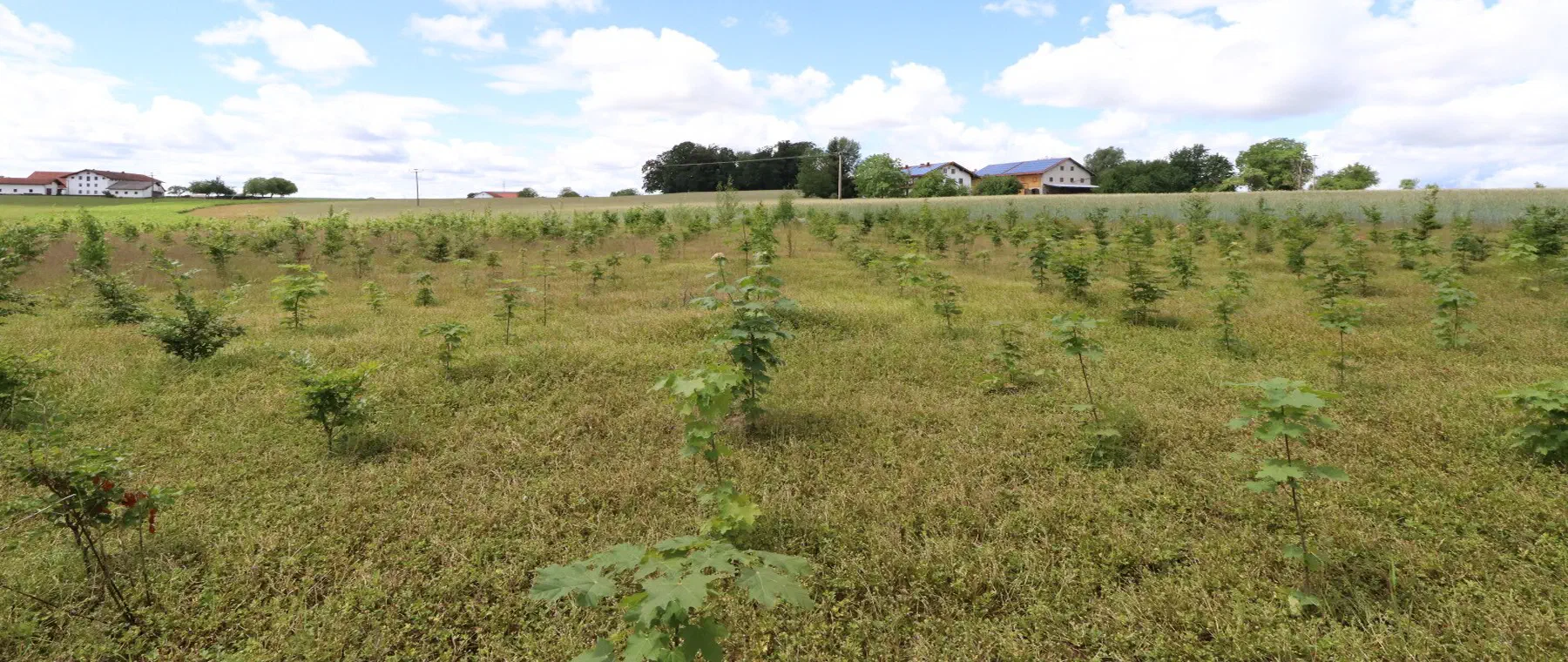
Conversion of spruce plantations damaged by storm and bark beetle to site-appropriate beech and oak mixed forests. On the freed calamity areas, climate-stable, structure-rich forest stands develop.
Watercourse restoration
Restoration of connectivity and natural dynamics on Lenne, Volme, Hönne and Ruhr, removal of bank reinforcement and creation of floodplain woodland strips as habitat for bullhead, brook lamprey and kingfisher.
Grassland extensification
Development of species-rich mountain and valley meadows plus bristle-grass meadows through extensive use, habitat for meadow-breeding birds, butterflies and wild bees in the Sauerland highlands.
Species protection bats (CEF)
Securing and reducing disturbance to limestone caves and shafts as winter roosts, retention of dead-wood and roost trees plus creation of hunting habitats as advance measures under § 44 BNatSchG.
De-sealing of industrial brownfield sites
Breakdown and restoration of disused commercial and industrial land in densely built valley locations, with enhancement to hedgerow, grassland or waterbody structures.
Hedgerows and habitat network
Creation of hedgerows, field copses and traditional orchard stands in open valley and edge locations as stepping-stone biotopes networking forest edges and watercourses in habitat connectivity.
Protected species in the North-western Sauerland and Lenne valley
Bats in limestone caves
The caves and shafts in Hönnetal plus near Iserlohn, Balve and Altena rank among the region's significant bat winter roosts, including the greater mouse-eared bat and Bechstein's bat. Cave securing and roost retention are typical CEF measures.
About this species ›Kingfisher in river valleys
Near-natural sections of Lenne, Hönne, Volme and Ruhr offer the kingfisher steep banks and fish-rich waters. Restorations with bank erosion and floodplain development create new breeding and feeding habitats.
About this species ›Amphibians of forests and quarries
The fire salamander inhabits the spring-fed ravine forests of Lenne valley, while the midwife toad uses small waterbodies in former quarries. Both benefit from near-natural waters and open-kept extraction sites.
About this species ›European wildcat in Sauerland forests
The European wildcat is returning to the continuous forest areas of the Sauerland. Structure-rich forest edges, dead wood and networked hedgerow corridors support its recolonisation in the district.
About this species ›Hazel dormouse at forest edges
The hazel dormouse lives in shrub-rich forest edges, hedgerows and light mixed forests. Retention of berry and hazel-bearing vegetation plus continuous linking structures secure its occurrences.
About this species ›Black stork in quiet forest valleys
In the large, water-rich forest areas of the Sauerland, the black stork finds low-disturbance breeding sites and food in near-natural streams. Undisturbed nest-area surroundings and intact watercourses are crucial for it.
About this species ›Which projects trigger a compensation obligation?
Metal and tool industry
Märkischer Kreis counts among Germany's most industrial regions with numerous world-market leaders. Expansions of production and commercial locations in metal processing, tool-making and electrical engineering regularly create compensation requirements under impact mitigation regulation.
Transport infrastructure (A45)
The A45 Rahmedetal Bridge rebuild near Lüdenscheid plus further bridge, road and rail projects in tight valley locations trigger compensation and replacement obligations, often combined with species protection requirements.
Renewable energies
Wind installations on wooded ridge tops and free-field photovoltaic systems require statutory nature-conservation compensation and, where wind-sensitive species are affected, measures to maintain favourable conservation status (FCS).
Settlement and commercial development
Residential and commercial area designations in Lüdenscheid, Iserlohn, Menden and Hemer require compensation measures. Forest and land owners can contribute their properties as eco-account areas.
From enquiry to monitoring
Contact and enquiry
Tell us your compensation requirement and the natural region. We check availability.
Offer and advice
A transparent offer covering measure types, scope and availability.
Coordination with authorities
Full coordination with the lower nature conservation authority. We handle everything.
Long-term monitoring
Permanent securing of the land, management and documentation across the contract term.
Eco-points in adjoining districts
All about eco-points
in the district of Märkischer Kreis
Request eco-points in the district of Märkischer Kreis
We will promptly prepare a transparent offer with matching eco-points held in stock in the district of Märkischer Kreis.