Eco-points and compensation areas
City of Köln
Eco-points and compensation areas in Cologne, the largest city in North Rhine-Westphalia on both sides of the Rhine in the Cologne Bay. greeNature develops and manages naturally region-appropriate compensation areas according to the North Rhine-Westphalia Eco-Account Ordinance and the numerical assessment procedure, from conception through recognition by the lower nature conservation authority to permanent management. Active nationally, your full-service partner for impact mitigation, species protection and CEF measures.
The City of Köln at a glance
With approximately 1.08 million inhabitants, Cologne is the largest city in North Rhine-Westphalia and the fourth largest in Germany. The independent city lies on both sides of the Rhine in the administrative region of the same name and is divided into nine city districts with 86 city quarters. On an area of approximately 405 square kilometres, dense city centre districts, extensive forests and open countryside meet at the city's edge.
In terms of natural regions, Cologne belongs to the Lower Rhenish Plain (BfN natural region D35), whose central part is called the Cologne Bay. The Rhine with its terraces forms the defining axis. On the left bank, the landscape extends to the forested ridge of the Ville, on the right bank it rises to the Bergian Heath Terrace, a sandy transition band to the Bergian Land with heath remnants, pine forests and small water bodies.
Despite the high degree of sealing, Cologne has significant protected areas. The Wahner Heath in the south on the right bank is both an FFH site (DE-5108-301) and a European bird protection area (DE-5108-401) and ranks among the most species-rich heath and moor landscapes in Central Europe. Added to this are the Worringer Bruch as a former Rhine oxbow in the north, the woodland areas of Dünnwald and Königsforst, the Rhine floodplains at Langel and Merkenich, and the Cologne Green Belt as an inner-city habitat network.
As a metropolitan area, Cologne is under continued settlement pressure. Housing construction, commercial and logistics land, the expansion of motorways, Rhine crossings and railways, as well as major urban development projects regularly trigger impacts under §§ 13 to 15 BNatSchG, which must be compensated under the North Rhine-Westphalia Eco-Account Ordinance and the numerical assessment procedure. Because land within the city is limited, naturally region-appropriate compensation areas in the surrounding area and eco-accounts become increasingly important.
🗺️ Associated natural regions
Go to natural region D35 ›
📍 City districts
🌿 Ecological features
- Wahner Heath, also an FFH site (DE-5108-301) and bird protection area (DE-5108-401), one of Central Europe's most species-rich heathlands
- Bergian Heath Terrace on the right bank, sandy transition band to the Bergian Land with heath remnants and small water bodies
- Worringer Bruch in the north of Cologne, a former Rhine oxbow with fen woodland and wetland habitats
- Woodland areas of Dünnwald, Thielenbruch and Königsforst as right-bank recreation and habitat areas
- Rhine floodplain with remaining fen forests, oxbows and flood-meadows at Langel, Merkenich and Zündorf
- Cologne Green Belt and green corridors as inner-city habitat network in a metropolitan area
✅ greeNature on the ground
greeNature operates nationally and accompanies project developers, municipalities and landowners in Cologne through nature conservation compensation. We understand the requirements of the North Rhine-Westphalia Nature Conservation Act (LNatSchG), the North Rhine-Westphalia Eco-Account Ordinance and the numerical assessment procedure, which is used to assess biotope types in North Rhine-Westphalia. In the densely built city, suitable compensation areas are limited, so we secure land in the Rhine floodplain, in the surrounding area near the city and on the Bergian Heath Terrace, plan naturally region-appropriate enhancements, implement them and undertake permanent management and documentation for recognition by the lower nature conservation authority. Where species protection requirements apply under § 44 BNatSchG, for example for sand lizard, bats or northern lapwing, we develop advance CEF measures that continuously secure ecological function for the affected species.
Typical measures in the city of Köln
Rhine floodplain and water body development
Restoration of Rhine oxbows, floodplain forest strips and secondary water bodies such as Strunde and Flehbach, creation of riparian margin zones and wet depressions. The measures strengthen the habitat network along the Rhine and enhance the water body environment according to the numerical assessment procedure.
Grassland extensification in the surrounding area
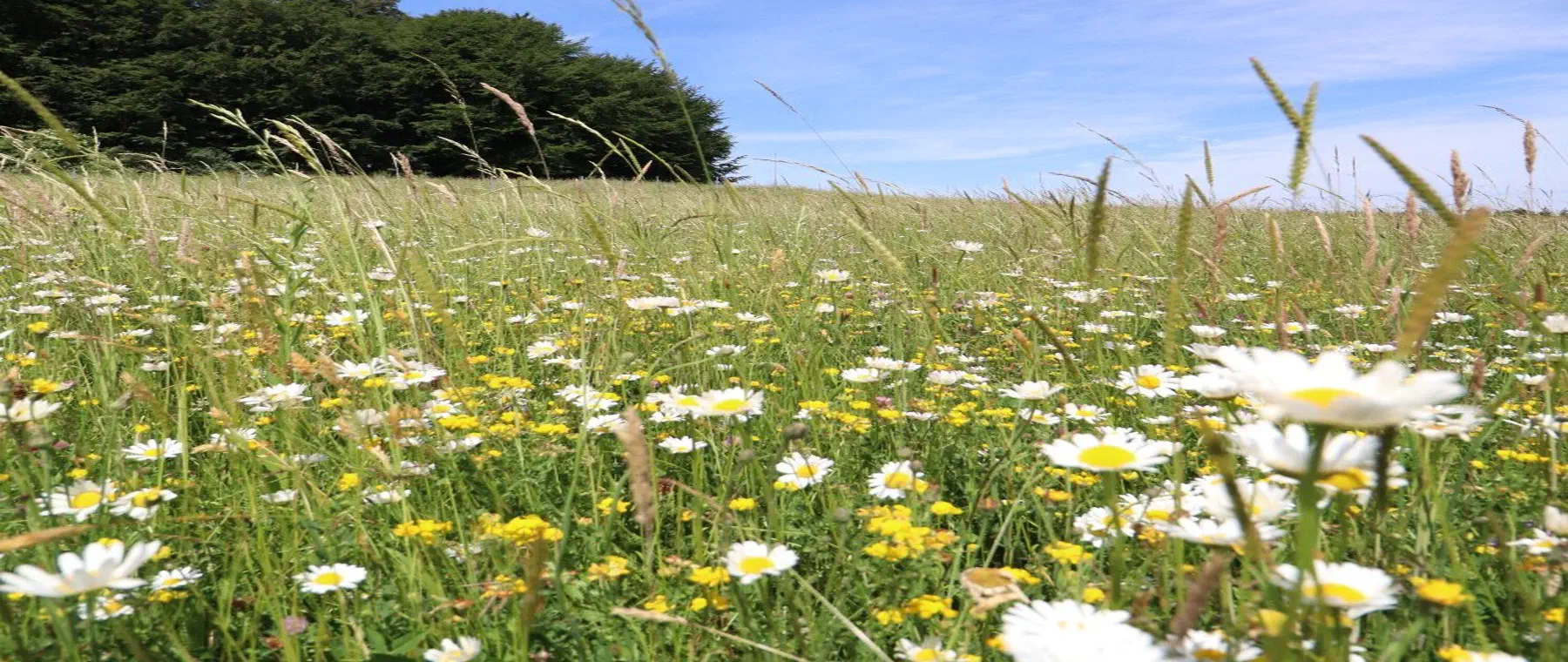
Conversion of intensively used arable and grassland at the city's edge into species-rich extensively managed grassland and wet meadows, for example in Worringer Bruch and the Rhine floodplains. This creates habitats for open-land and meadow-breeding species and produces measurable enhancement gains.
Unsealing and urban nature
Removal and unsealing of no longer used sealed surfaces and their development into habitat areas, woody vegetation or naturally-oriented green spaces. In the densely built city area, unsealing is an effective enhancement with high ecological value.
Heath and sand calcareous grassland management
Development and management of heathland, sand calcareous grassland and open pine forests on the Bergian Heath Terrace. Scrub clearance, turving and extensive grazing maintain the open, nutrient-poor habitats of this rare landscape type.
Species protection CEF and FCS
Targeted measures for strictly protected species under § 44 BNatSchG, such as sand lizard habitats with rock piles on railway embankments and heathland, bat roosts and skylark windows at the city's edge. As advance CEF measures, they secure the function of affected breeding sites.
Still water bodies and amphibian protection
Creation and management of fish-free small and spawning waters, coordinated with the moor and heath pools of Wahner Heath. Such waters promote the great crested newt and other amphibians and are frequently requested replacement measures in impacts.
Protected species in the Cologne Bay and Bergian Heath Terrace
Sand lizard
The sand lizard (Annex IV FFH Directive) inhabits sunny heathland, sandy slopes and railway embankments, particularly on the Bergian Heath Terrace and in Wahner Heath. In infrastructure and construction projects, it is a frequent target species for which advance CEF measures and habitat structures such as rock piles are created.
About this species ›Great crested newt and amphibians
The great crested newt (Annex II FFH Directive) and other amphibians use the moor and heath pools of Wahner Heath as well as small water bodies in the area near the city. Newly created, fish-free spawning waters are typical replacement measures for their promotion.
About this species ›Bats
The woodland areas of Königsforst and Dünnwald, old park trees and buildings provide roosts for several bat species, including species listed in Annex IV of the FFH Directive. When felling trees and demolishing buildings, roost assessments and substitute roosts are regularly part of compensation.
About this species ›Northern lapwing and open-land birds
In the wet depressions of Worringer Bruch and the Rhine floodplains, the northern lapwing breeds. It benefits from standing water, flood furrows and extensively used wet grassland, as created through compensation and CEF measures.
About this species ›Kingfisher on the Rhine
The kingfisher inhabits naturally-oriented sections of the Rhine and its secondary water bodies and requires steep banks as nesting cliffs and clear, fish-rich waters. Bank restoration and the development of overhanging edges promote the species along the water corridor.
About this species ›Skylark
The skylark is a characteristic breeding bird of open arable land at the city's edge, for example in the north of Cologne around Chorweiler and Roggendorf. In the simplified field landscape, skylark windows, wildflower strips and extensive margin zones are proven measures to secure breeding and feeding habitats.
About this species ›Which projects trigger a compensation obligation?
Housing and urban development
Large urban development projects such as the Deutz Harbour, Parkstadt Süd and the new district of Kreuzfeld create housing on former commercial and open land. Such projects trigger impacts that must be compensated under §§ 13 to 15 BNatSchG and assessed using the numerical procedure.
Commerce and logistics
As an economic metropolis on the Rhine, Cologne experiences ongoing demand for commercial, office and logistics land. Construction and expansion of business sites require nature conservation compensation, increasingly provided through eco-accounts and compensation areas in the surrounding area.
Traffic and infrastructure
The expansion of motorways such as A1, A3 and A4, the renewal of Rhine bridges, the planned Rhine crossing 553 and the expansion of the urban rail network impact nature and landscape. These projects regularly trigger compensation and replacement obligations as well as species protection measures.
Energy and technical infrastructure
The transformation of energy supply, new transmission lines, substations and district heating facilities lead to land take in the city and surrounding area. The related impacts are balanced through compensation measures and eco-accounts.
From enquiry to monitoring
Contact and enquiry
Tell us your compensation requirement and the natural region. We check availability.
Offer and advice
A transparent offer covering measure types, scope and availability.
Coordination with authorities
Full coordination with the lower nature conservation authority. We handle everything.
Long-term monitoring
Permanent securing of the land, management and documentation across the contract term.
Eco-points in adjoining districts
All about eco-points
in the city of Köln
Request eco-points in the city of Köln
We will promptly prepare a transparent offer with matching eco-points held in stock in the city of Köln.