Eco-points and compensation areas
District of Höxter
Immediately available eco-points from officially recognised eco-accounts. greeNature, your full-service partner for compensation under the Ökokonto-Verordnung NRW in the Weser Highlands and Warburger Plain.
The District of Höxter at a glance
Kreis Höxter lies in the far east of North Rhine-Westphalia in the Detmold administrative region and borders Lower Saxony and Hesse. At around 1,201 km², it is the largest district by area in East Westphalia-Lippe. Characteristic are the Weser Highlands and the fertile Warburger Plain.
Geographically the district divides into the wooded highlands of the Egge in the west, the Oberwälder Highlands with the Nieheim-Brakeler Heights plus the valleys of Nethe, Emmer, Bever and Diemel, which drain towards the Weser.
Ecologically significant are the calcareous grasslands in the Diemel valley, rare across Europe, with their richness of orchids and butterflies, plus the extensive beech forests of Egge and Oberwälder Highlands, habitat for wildcat, black stork and red kite.
Compensation requirements arise mainly from wind energy on the highlands, transport infrastructure expansion, raw material extraction and settlement development. All impacts are assessed in NRW using the numerical assessment procedure on the basis of the State Nature Conservation Act (LNatSchG NRW).
🗺️ Associated natural regions
Go to natural region D36 ›
📍 Selected municipalities
🌿 Ecological features
- EU bird protection site Egge, extensive forest area for red kite, black stork and honey buzzard
- FFH sites in the Diemel valley with calcareous grasslands of European significance, orchids and butterflies
- Nethe valley and Emmer valley, near-natural watercourses with floodplain habitats
- Weser and Weser floodplain as characteristic watercourse in the east of the district
- Extensive beech forests of Egge and Oberwälder Highlands, habitat for wildcat
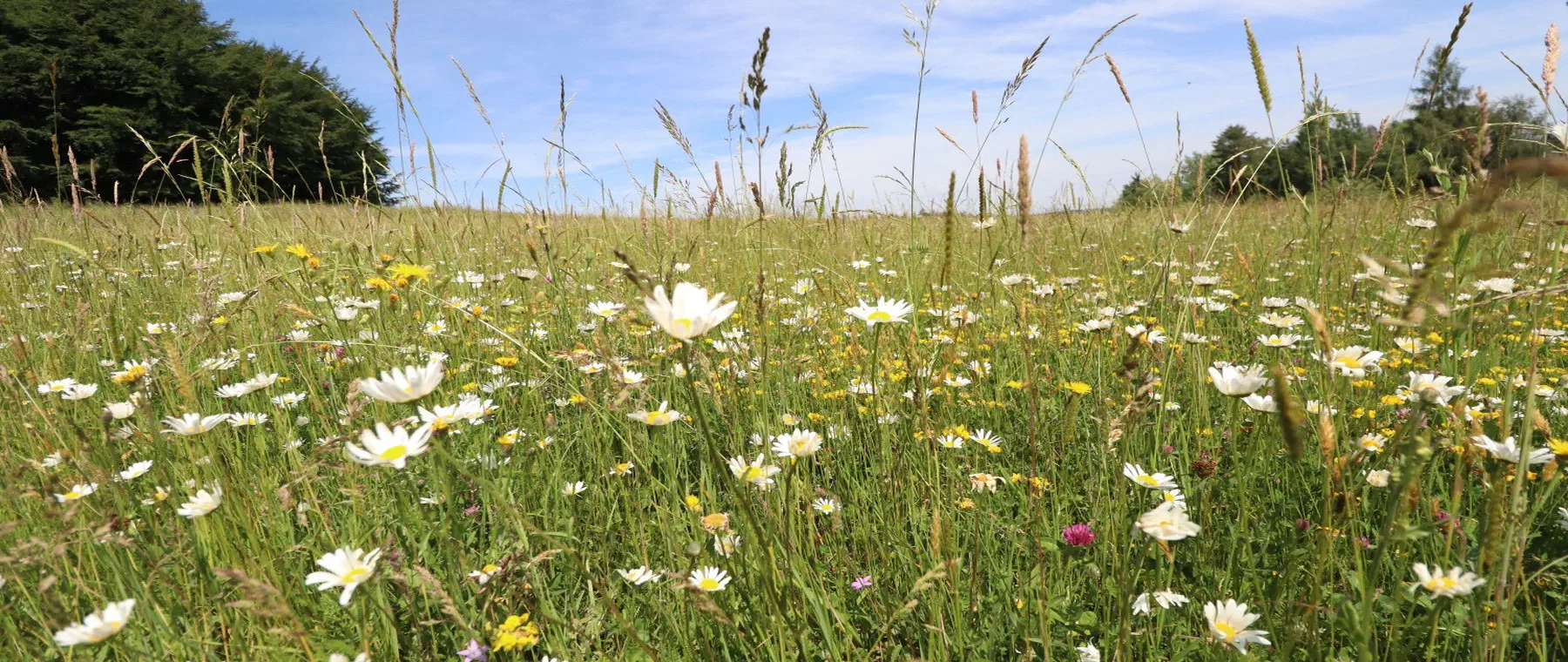
- Warburger Plain, fertile loess plain with characteristic field bird communities
✅ greeNature on the ground
greeNature manages compensation projects nationwide and is familiar with North Rhine-Westphalian compensation law. We know the numerical assessment procedure under LNatSchG NRW, the Ökokonto-Verordnung NRW and the requirements of the lower nature conservation authority of Kreis Höxter from project experience in the Weser Highlands and Warburger Plain.
Typical measures in the district of Höxter
Calcareous grassland restoration
Scrub clearance, restoration and sheep grazing of species-rich calcareous grasslands in the Diemel and Nethe valleys, habitat for orchids, butterflies and thermophilic insects.
Watercourse development
Restoration of Nethe, Emmer, Bever and Diemel with bank sloping, riparian vegetation and new spawning habitats for fish and amphibians.
Forest conversion and old-growth timber
Development of structure-rich broadleaf forests from site-appropriate beech and oak, retention of dead and fallen timber as habitat for black stork, bats and wildcat.
Grassland extensification
Conversion of intensively managed arable land in the Warburger Plain into species-rich grassland, habitat for skylark, northern lapwing and grey partridge.
Species protection CEF and FCS
Advance compensation and safeguarding measures under § 44 BNatSchG for red kite, black stork, bats and sand lizard, assessed using the NRW numerical assessment procedure.
Hedgerows, margins and traditional orchards
Creation of hedgerows, field copses and traditional orchard meadows as stepping-stone biotopes and habitat network between Egge, plain and Weser valley.
Protected species in the Weser Highlands and Warburger Plain
Red kite
The Weser Highlands and Egge rank among the significant red kite breeding areas in NRW. In wind energy and infrastructure projects, FCS measures such as diversion areas and coordinated mowing management are typical objectives.
Black stork
The low-disturbance broadleaf forests of Egge and Oberwälder Highlands provide the black stork with breeding space. Retention of old-growth islands and near-natural stream courses is a central compensation measure.
About this species ›European wildcat
The continuous beech forests of Egge and Oberwälder Highlands are wildcat habitat. Woodland edge design and habitat networking along watercourses support the species.
About this species ›Bats
Bechstein's bat, greater mouse-eared bat and other species use the old beech and oak forests as roosts and hunting areas. Roost trees and winter roosts are deliberately secured.
About this species ›Field birds of the Warburger Plain
Skylark, northern lapwing and grey partridge breed in the open plain landscape. Flower strips, skylark windows and extensive grassland are effective compensation measures.
About this species ›Amphibians and great crested newt
Great crested newt, yellow-bellied toad and other amphibians inhabit small waterbodies in calcareous grasslands and former quarries. Creation of sunny breeding ponds is a frequent CEF measure.
About this species ›Which projects trigger a compensation obligation?
Wind energy
Kreis Höxter ranks among North Rhine-Westphalia's windiest regions with numerous wind parks on the highlands. Repowering and new construction regularly trigger species protection assessment and FCS measures for red kite and black stork.
Infrastructure and transport
Town bypasses, expansion of federal roads such as B64 and B252 plus bridge and cycle-route projects generate compensation and replacement obligations under the impact mitigation regulation of §§ 13 to 15 BNatSchG.
Raw material extraction
Limestone and hard-rock quarrying in the Warburger Plain and Weser Highlands requires reclamation and compensation concepts, often with grassland development and steep-face biotopes.
Settlement and commerce
New residential and commercial areas in Höxter, Brakel, Warburg and Bad Driburg require statutory nature-conservation compensation. Owners of suitable arable and grassland can benefit as land providers.
From enquiry to monitoring
Contact and enquiry
Tell us your compensation requirement and the natural region. We check availability.
Offer and advice
A transparent offer covering measure types, scope and availability.
Coordination with authorities
Full coordination with the lower nature conservation authority. We handle everything.
Long-term monitoring
Permanent securing of the land, management and documentation across the contract term.
Eco-points in adjoining districts
All about eco-points
in the district of Höxter
Request eco-points in the district of Höxter
We will promptly prepare a transparent offer with matching eco-points held in stock in the district of Höxter.