Eco-points and compensation areas
District of Herford
Immediately available eco-points from officially recognised eco-accounts. greeNature solutions, your full-service partner for compensation under the Ökokonto-Verordnung NRW in the Ravensberger Uplands and Weser floodplain.
The District of Herford at a glance
Kreis Herford is located in the north-east of North Rhine-Westphalia and belongs to the Detmold administrative region. Characteristic is the Ravensberger Uplands, a gently undulating loess landscape between the Wiehengebirge to the north and the foothills of the Teutoburger Wald to the south.
Geologically, fertile loess soils and numerous small streams determine the landscape. The Else-Werre lowland runs through the district in a west-east direction; to the east, the district borders the Weser valley near Vlotho.
Ecologically significant are the wet and damp meadows along the Weser, Werre and Else plus calcareous special sites such as the Doberg near Bünde. These structures provide habitat for meadow-breeding birds, amphibians and thermophilic species.
Economically, the district is characterised by furniture and textile industries and dense settlement. Settlement development, commercial land and infrastructure regularly generate compensation requirements under the State Nature Conservation Act NRW.
🗺️ Associated natural regions
Go to natural region D36 ›
📍 Selected municipalities
🌿 Ecological features
- Ravensberger Uplands (BfN natural region D36), gently undulating loess landscape between Wiehengebirge and Teutoburger Wald
- Nature reserve Doberg near Bünde with calcareous beech forest and grassland on tertiary marine deposits
- Weser floodplain near Vlotho with wet meadows, reed beds and floodplain forest remnants
- Else-Werre lowland as a supra-regional watercourse axis through the district
- numerous near-natural streams from the slopes of the Wiehengebirge
- Traditional orchard stands and hedgerow lines of rural cultural landscape
✅ greeNature on the ground
greeNature operates nationwide and manages compensation projects in the North Rhine-Westphalian area. We understand the numerical assessment procedure of the Ökokonto-Verordnung NRW, liaison with the lower nature conservation authority of Kreis Herford and the natural-region features of the Ravensberger Uplands from project practice.
Typical measures in the district of Herford
Watercourse restoration
Near-natural conversion of Werre, Else and smaller streams from the Wiehengebirge, creation of riparian vegetation, shingle banks and accompanying floodplain structures.
Grassland extensification
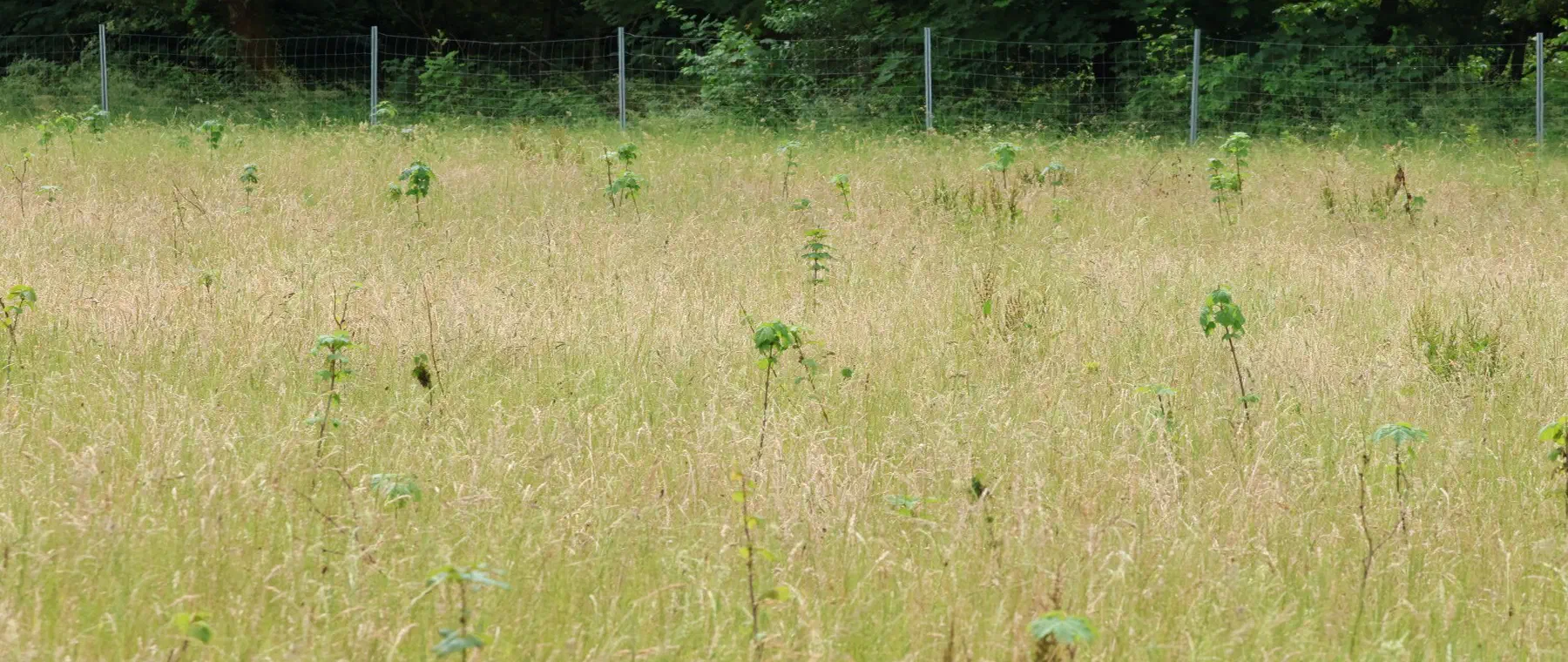
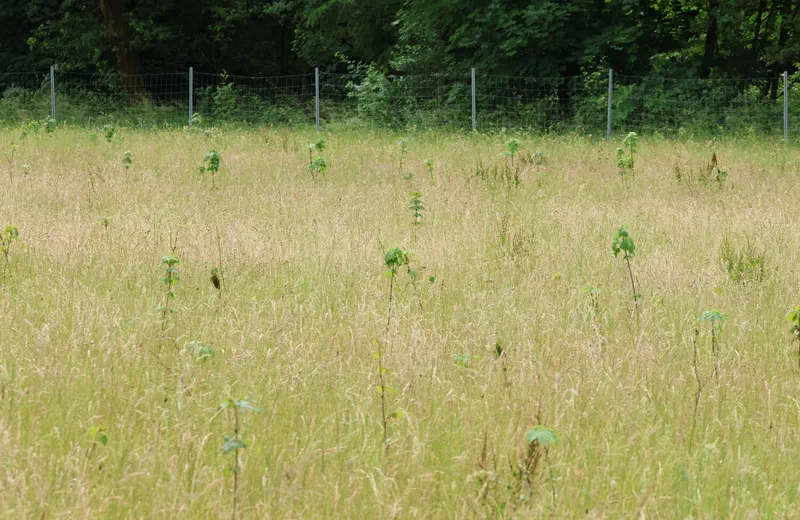
Conversion of intensively managed land into species-rich wet and damp meadows along the Weser floodplain, habitat for meadow-breeding birds and insects.
Traditional orchards and hedgerows
Creation and management of traditional orchard meadows and hedgerow lines in the loess landscape as stepping-stone biotopes and habitat-network elements.
Small waterbodies and amphibian protection
Creation of breeding ponds and pools for tree frog, great crested newt and other amphibians in the lowlands of the uplands.
New afforestation and forest conversion
Site-appropriate broadleaf mixed forests on marginal production sites plus structural enrichment of existing stands, for instance around the Doberg.
Species protection CEF and FCS
Advance compensation and safeguarding measures for skylark, sand lizard and bats, tailored to the requirements of the State Nature Conservation Act NRW.
Protected species in the Ravensberger Uplands and Weser floodplain
Meadow-breeding birds of the Weser floodplain
Northern lapwing and other meadow-breeding birds use the wet and damp meadows along Weser and Werre. Extensification and rewetting of grassland are typical compensation measures.
About this species ›Kingfisher on Werre and Else
Near-natural watercourses with steep banks offer the kingfisher breeding sites. As CEF measures, modelled steep banks, bank erosion and watercourse-adjacent vegetation are options.
About this species ›Amphibians and great crested newt
Tree frog, great crested newt and common toad inhabit small waterbodies of the uplands. Creation of networked breeding ponds ranks among the frequent measures in the district.
About this species ›Bats in forest and settlement
Species such as the greater mouse-eared bat and common pipistrelle use calcareous beech forests like the Doberg and building roosts. Roost protection and habitat security take priority.
About this species ›Skylark of arable landscape
The open loess landscape of the Ravensberger Uplands is habitat for the skylark. Skylark windows, flower strips and extensive arable margins function as advance compensation.
About this species ›Sand lizard on special sites
Railway embankments, slopes and lean margins provide habitat for the sand lizard. Habitat creation and expert relocation are regularly required in infrastructure projects.
About this species ›Which projects trigger a compensation obligation?
Settlement and commercial development
Residential and commercial areas in Herford, Bünde and Löhne trigger statutory nature-conservation compensation obligations under the impact mitigation regulation. Owners of suitable land can benefit as providers of compensation areas.
Transport and infrastructure
Expansion and renewal of roads, including A2 and A30, plus rail routes and bridges over Werre and Weser create compensation and species protection requirements.
Furniture and manufacturing industry
Extensions of facilities and logistics land for the furniture and textile sectors characteristic of the district require statutory nature-conservation compensation under LNatSchG NRW.
Energy and networks
Free-field photovoltaics, wind energy at the edge of the Wiehengebirge and new utility routes require compensation plus advance measures for affected species.
From enquiry to monitoring
Contact and enquiry
Tell us your compensation requirement and the natural region. We check availability.
Offer and advice
A transparent offer covering measure types, scope and availability.
Coordination with authorities
Full coordination with the lower nature conservation authority. We handle everything.
Long-term monitoring
Permanent securing of the land, management and documentation across the contract term.
Eco-points in adjoining districts
All about eco-points
in the district of Herford
Request eco-points in the district of Herford
We will promptly prepare a transparent offer with matching eco-points held in stock in the district of Herford.