Eco-points and compensation areas
City of Gelsenkirchen
Eco-points and compensation areas in the independent city of Gelsenkirchen, assessed according to the state's numerical assessment procedure and managed via eco-accounts under the North Rhine-Westphalia Eco-Account Ordinance and North Rhine-Westphalia Nature Conservation Act (LNatSchG). greeNature operates nationally and is your full-service partner for impact mitigation, species protection and CEF measures in the Emscher region and northern Ruhr area.
The City of Gelsenkirchen at a glance
Gelsenkirchen is an independent city in the northern Ruhr area and belongs to the administrative region of Münster. With approximately 104.94 square kilometres, about 260,000 people live there, distributed across five city districts (Centre, North, East, West and South) with a total of 18 city quarters. Besides the old town in the south, the former city centre Buer in the north forms a second focus. In terms of natural regions, the city area lies entirely in the Westphalian Bay (BfN natural region D34), more precisely in the Emscher region at the south edge of this major landscape.
The landscape is characterised by dense settlement and commercial structures, mining heritage and water. The Emscher and Rhine-Herne Canal run through the city from east to west. The Emscher conversion by the Emscher Association has transformed the former open wastewater course into a naturally-oriented water body. Between settlement areas lie green corridors, woodland such as city forest and Nienhausen as well as mining heap remains and post-mining land on which species-rich industrial nature has developed. Nature reserves such as Ressor Woodland and areas in Emscher fen secure valuable habitats.
Even in a dense city, §§ 13 to 15 BNatSchG apply: avoidable impacts on nature and landscape must be prevented, unavoidable impacts must be compensated or replaced. The North Rhine-Westphalia Nature Conservation Act (LNatSchG NRW) and the North Rhine-Westphalia Eco-Account Ordinance are applicable in Gelsenkirchen. The compensation requirement is determined using the state's numerical assessment procedure based on biotope value points. Because free land is limited, brownfield recycling, unsealing and the ecological enhancement of brownfields and water bodies play a special role here.
Economically, Gelsenkirchen is undergoing structural change from a coal and steel location to new fields such as logistics, solar business, health and services. Housing construction on former pit and industrial sites, commercial and logistics settlements, the expansion of transport routes such as A42, A2 and A52 and free-area photovoltaics on heaps and brownfields regularly trigger impacts. Their balance must be provided via the assessment procedure and via eco-accounts under § 31 and § 32 LNatSchG NRW, in close coordination with the lower nature conservation authority of the city.
🗺️ Associated natural regions
Go to natural region D34 ›
📍 City districts
🌿 Ecological features
- Independent city in northern Ruhr area, entirely in natural region D34 (Westphalian Bay, Emscher region)
- Emscher conversion by the Emscher Association, restoration of the formerly open wastewater course to naturally-oriented water bodies
- Pronounced industrial nature on pit and mining brownfields with pioneer species such as sand lizard and natterjack toad
- Nature reserves such as Ressor Woodland and areas in Emscher fen north of Ewald Lake
- Mining heaps and large-scale landscape construction works as new habitats and viewpoints
- Green and forest areas such as North Star Park, city forest and Nienhausen as part of the regional green corridor
- High settlement density, therefore compensation requirements primarily via brownfield recycling and unsealing
✅ greeNature on the ground
greeNature operates nationally for project developers, municipalities and planning offices and manages compensation projects also in the northern Ruhr area and in Gelsenkirchen. We know the specifics of impact mitigation in dense settlement areas, the numerical assessment procedure applicable in North Rhine-Westphalia, the requirements of the North Rhine-Westphalia Eco-Account Ordinance and coordination with the Environment Department as lower nature conservation authority. For impacts in the Emscher region we develop precisely tailored compensation, replacement and CEF measures, from unsealing and water body restoration to the securing of industrial nature and grassland enhancement in the city-surrounding area of natural region D34.
Typical measures in the city of Gelsenkirchen
Water body restoration on Emscher and tributaries
Naturally-oriented conversion of Emscher, tributaries and ditch systems with removal of bed and bank reinforcement, creation of shallow water zones and floodplain structures. Such measures build on the Emscher conversion and create habitat for kingfisher, fish, dragonflies and amphibians.
Unsealing and brownfield recycling
Removal of sealed pit, commercial and transport land, soil loosening and development of green, vegetation or water body habitats. In densely built urban space, unsealing is one of the most effective compensation measures with high enhancement gains.
Securing and development of industrial nature
Conservation and management of species-rich pioneer vegetation on heaps and post-mining land with sunny raw soils, small water bodies and sunny sites. Such areas are habitat for sand lizard, natterjack toad and wild bees and can be specifically developed as substitute habitats.
Grassland and traditional orchard enhancement in surrounding area
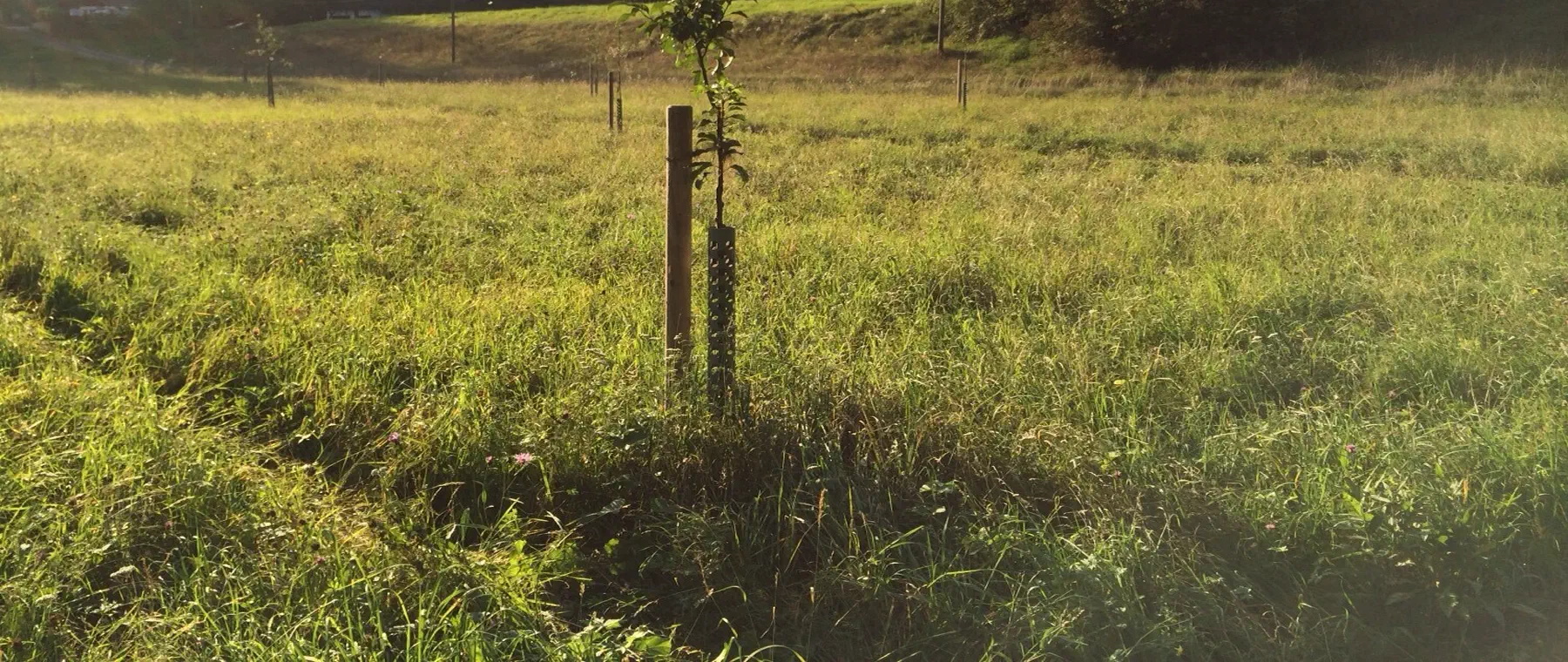
Conversion of intensively used land into species-rich extensively managed grassland with adjusted cutting regimes and creation of traditional orchards and hedgerows in the open north of the city and in Emscher fen. These structures enhance the landscape and create habitat for insects and field birds.
Forest development and urban green
Conversion of structure-poor stands into site-appropriate broadleaf and mixed forests of sessile oak, hornbeam and beech and enhancement of forest edges and park areas such as city forest and Nienhausen. Old and dead wood and forest margins increase ecological value.
Species protection CEF and FCS
Advance and population-supporting measures under § 44 and § 45 BNatSchG, such as substitute roosts for bats on buildings and in trees, substitute habitats for sand lizard on brownfields and sunny substitute spawning waters for natterjack toad, great crested newt and other amphibians.
Protected species in the Emscher region and northern Ruhr area
Sand lizard on brownfields and heaps
On pit brownfields, railway lines and mining heaps with sunny raw soils, the sand lizard is a typical target species in settlement and infrastructure projects. Substitute habitats with sunning, egg-laying and shelter sites are standard in species protection compensation in the Ruhr area.
About this species ›Natterjack toad and amphibians of post-mining landscape
Natterjack toad, spadefoot toad and other amphibians inhabit as pioneer species the alternately-damp depressions and small water bodies on industrial brownfields. Newly created, sunny spawning waters in spatial proximity secure their breeding sites in construction projects.
About this species ›Bats in buildings and parks
Common pipistrelle, serotine bat and other species use buildings, tree cavities and the city's green corridors as roosts and hunting grounds. All species are strictly protected (Annex IV FFH Directive), substitute roosts are required as CEF measure during demolition and renovation.
About this species ›Kingfisher on restored Emscher
With the restoration of Emscher and tributaries, naturally-oriented bank sections return where the strictly protected kingfisher finds steep banks for breeding. In water body impacts, steep bank modelling and bank restoration are typical CEF measures.
About this species ›Great crested newt in small water bodies
The great crested newt inhabits fish-free small water bodies, ditches and water-filled depressions near woodland and on brownfields. As an Annex IV FFH Directive species, impacts require conservation or creation of suitable spawning waters with structured surroundings.
About this species ›Northern lapwing and field birds in open north
In the more open field and grassland areas in the city's north and in Emscher fen, meadow and field birds such as northern lapwing occur. Grassland extensification and adapted management are effective measures here to secure their habitats.
About this species ›Which projects trigger a compensation obligation?
Housing and brownfield recycling
New residential quarters in Gelsenkirchen mostly develop on former pit, commercial and transport sites. Such conversion and densification projects trigger impacts and require nature conservation compensation, often combined with unsealing and roof and facade greening.
Commerce, industry and logistics
The settlement and expansion of commercial, industrial and logistics enterprises on post-mining and open land leads to soil sealing and impacts. Balance is assessed via the numerical assessment procedure, landowners can benefit as land providers.
Traffic and infrastructure
Expansion and renovation of motorways and federal roads such as A42, A2 and A52, urban rail and cycle path projects and canal and bridge construction along Emscher and Rhine-Herne Canal trigger compensation and replacement obligations and species protection assessments.
Renewable energies on heaps and brownfields
Free-area photovoltaics on mining heaps, landfills and conversion sites is a focus of structural change. Such projects require impact assessment and, depending on site, the protection of industrial nature and its pioneer species via CEF and FCS measures.
From enquiry to monitoring
Contact and enquiry
Tell us your compensation requirement and the natural region. We check availability.
Offer and advice
A transparent offer covering measure types, scope and availability.
Coordination with authorities
Full coordination with the lower nature conservation authority. We handle everything.
Long-term monitoring
Permanent securing of the land, management and documentation across the contract term.
Eco-points in adjoining districts
All about eco-points
in the city of Gelsenkirchen
Request eco-points in the city of Gelsenkirchen
We will promptly prepare a transparent offer with matching eco-points held in stock in the city of Gelsenkirchen.