Eco-points and compensation areas
City of Wolfsburg
Eco-points and compensation areas for the independent city of Wolfsburg, assessed using the Lower Saxon biotope value procedure. greeNature is your nationwide full-service partner for compensation of impacts in the Weser-Aller Lowlands, the Drömling and the Aller lowland.
The City of Wolfsburg at a glance
Wolfsburg is an independent city in eastern Lower Saxony, founded in 1938 as a planned city for the Volkswagen works and with approximately 204 square kilometres of area one of the younger major cities in Germany. Following the administrative reform of 1972, in addition to the compact city centre, numerous rural settlements now belong to the city area, a total of 41 city districts, which are consolidated into 16 municipality areas with their own local councils. Since Lower Saxony is not subdivided into administrative regions, the city administration undertakes the duties of the lower nature conservation authority directly itself.
In terms of natural regions, Wolfsburg lies in the Weser-Aller lowlands (BfN natural region D31), at the intersection of East Braunschweig lowlands, Aller lowland and the Drömling in the east. Characteristic are flat geest ridges from ice age sands, broad lowlands along Aller, Schunter and Mittellandkanal as well as the extensive bog and marsh forest areas of the Drömling, one of the largest continuous bog landscapes in northern Germany.
The city area is covered by a dense network of protected areas. These include the FFH areas Drömling (FFH 092), Aller with Barnbruch, lower Leine, lower Oker (FFH 090) and Oak-hornbeam forests between Braunschweig and Wolfsburg (FFH 101) as well as the EU bird protection areas Drömling (V46), Barnbruch (V47) and Broadleaf forests between Braunschweig and Wolfsburg (V48). In addition, there are several nature reserves, including Barnbruch forest, Wendschotter and Vorsfeld Drömling with Kötherwiesen as well as the Aller valley between Gifhorn and Wolfsburg.
Economically, Wolfsburg is shaped by the Volkswagen main works and the automotive industry, supplemented by supplier firms, logistics and ongoing residential and commercial development. Works extensions, new building areas, commercial sites and transport projects regularly trigger impacts, the compensation for which in Lower Saxony must be provided via the biotope value procedure with eco-points on the basis of the impact mitigation regulation under sections 13 to 15 of the Federal Nature Conservation Act and the NAGBNatSchG.
🗺️ Associated natural regions
Go to natural region D28 ›
📍 City districts
🌿 Ecological features
- Drömling, one of the largest bog landscapes in northern Germany, secured in the city area as FFH area 092 and EU bird protection area V46 (Drömling)
- FFH area 090 Aller (with Barnbruch), lower Leine, lower Oker with EU bird protection area V47 Barnbruch, marsh forest and wet meadows west of Fallersleben
- FFH area 101 and EU bird protection area V48, old oak-hornbeam and broadleaf forests between Braunschweig and Wolfsburg
- Nature reserves Barnbruch forest, Wendschotter and Vorsfeld Drömling with Kötherwiesen as well as Aller valley between Gifhorn and Wolfsburg
- Aller lowland as a largely undeveloped river section with wet grassland and remnants of floodplain forest
- Mittellandkanal and Allersee as defining water bodies in the settlement area
- Close interweaving of densely built city centre, industrial areas and large-scale lowland and woodland biotopes in the surrounding area
✅ greeNature on the ground
greeNature operates nationwide and is familiar with the Lower Saxony compensation system. We assess impacts according to the NAGBNatSchG via the biotope value procedure with eco-points, follow the working guidelines of the NLWKN and coordinate measures with the lower nature conservation authority of Wolfsburg city. We take account of the special features of the Weser-Aller lowlands, the Drömling and the Aller lowland from the needs assessment through land securing to implementation, management and monitoring.
Typical measures in the city of Wolfsburg
Re-wetting in the Drömling
Raising water levels and removal of drainage ditches in the bog and marsh areas of Vorsfeld and Wendschotter Drömling. Such measures achieve high revaluations in the biotope value procedure, secure bog-typical habitats and sequester carbon.
Floodplain and water body restoration
Naturalistic redesign of Aller, Schunter and the marsh water bodies of Barnbruch, removal of riverbank structures and creation of water body edge strips. New ponds create habitat for amphibians, dragonflies and the kingfisher.
Grassland extensification for meadow-breeding birds
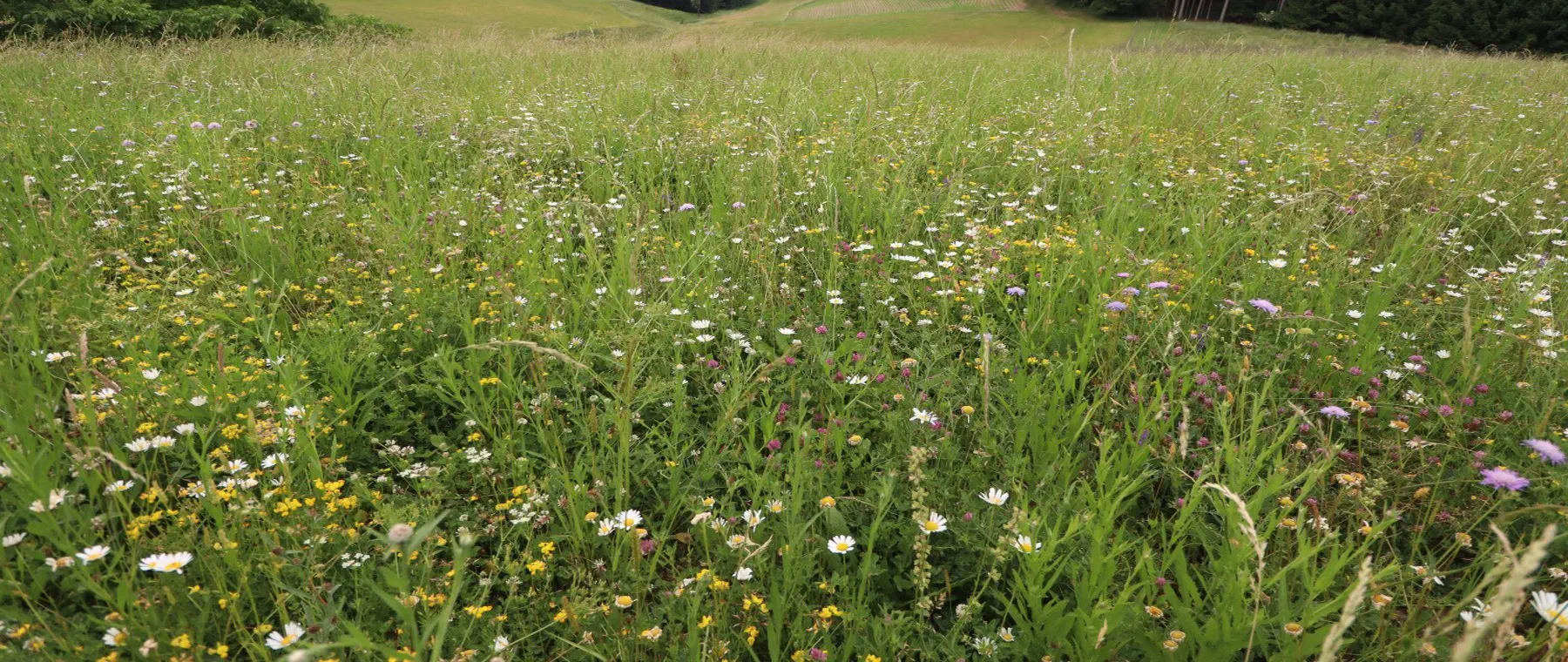
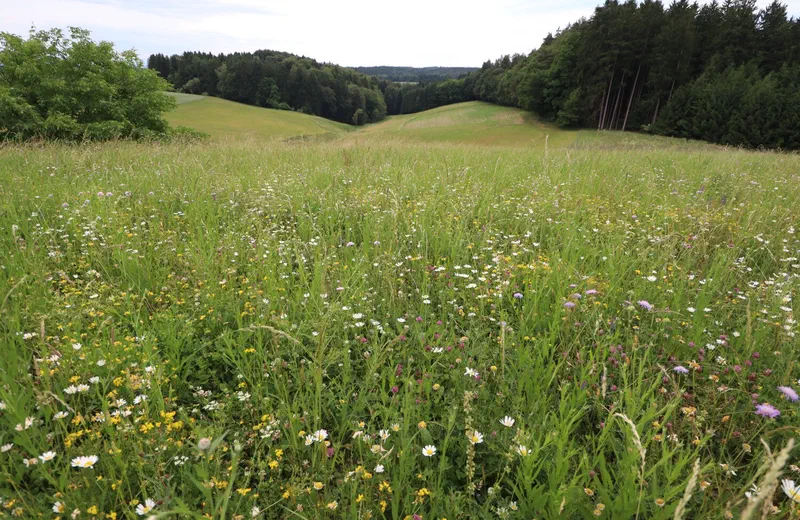
Conversion of intensively used areas into species-rich wet and damp grassland in the lowlands of Aller and Drömling. Adapted mowing dates, absence of fertilisation and creation of ponds provide breeding and feeding habitats for meadow-breeding birds.
Unsealing and urban green
Removal of no longer used sealed areas in settlement and industrial areas, green roofs and facades as well as creation of structured green corridors. In urban environments, these measures make a nature conservation contribution to compensation that can be credited.
Broadleaf forest development and woodland conversion
Development of site-appropriate oak-hornbeam and floodplain forests as well as enrichment with deadwood and old timber in the broadleaf forest complexes between Braunschweig and Wolfsburg. They serve as replacement for felled stocks and as permanently secured compensation areas.
Species protection CEF and FCS
Advanced compensation measures under section 44 of the Federal Nature Conservation Act, such as replacement roosts for bats in old structures and buildings, steep banks for the kingfisher as well as replacement habitats for amphibians and meadow-breeding birds, coordinated to the particular project.
Protected species in the East Braunschweig lowland, Aller lowland and Drömling
White stork and meadow-breeding birds in the Drömling
The wet meadows of the Drömling and the Aller lowland are breeding and feeding grounds for the white stork as well as meadow-breeding birds such as the northern lapwing. Re-wetting, creation of ponds and grassland extensification act as advanced CEF measures.
About this species ›Bats in the broadleaf forests
The old oak-hornbeam and floodplain forests as well as buildings in the city area provide roosts for strictly protected bat species (Annex IV of the Habitats Directive). When felling trees or demolishing buildings, replacement roosts are required as a CEF measure.
About this species ›Great crested newt and amphibians
Small and marsh water bodies in the Drömling and Barnbruch harbour the great crested newt, moor frog and other amphibians. New or restored spawning waters in spatial context secure the breeding sites when impacts occur.
About this species ›Kingfisher on Aller and Schunter
Naturalistic riverbank sections of Aller and Schunter offer the kingfisher steep banks for breeding. Steep bank modelling and riverbank restoration are typical CEF measures in water body impacts.
About this species ›Skylark in open agricultural land
The arable landscapes around Almke, Nordsteimke and Hehlingen are habitat for the skylark. In construction and infrastructure projects, skylark windows, flower strips and extensive arable edge strips are proven measures under section 44 of the Federal Nature Conservation Act.
About this species ›Otter and middle spotted woodpecker
The Drömling and Aller lowland are a refuge for the otter, the old broadleaf forests are habitat for the middle spotted woodpecker. Continuous water bodies, naturalistic banks and structured old timber stocks support these species.
Which projects trigger a compensation obligation?
Automotive industry and works extensions
The Volkswagen main works and associated production, logistics and supplier areas shape the city. Extensions, conversions and new installations regularly generate compensation needs, which can be efficiently met through stockpiled eco-points.
Residential development
New residential areas and infill development in the city, for example in the outer areas of the city centre and in the settlements, trigger impacts. Nature conservation compensation for such projects can be handled with planning accompaniment via the biotope value procedure.
Commercial and logistics areas
The designation of commercial and logistics areas surrounding the works and transport axes leads to land use and sealing. Compensation and unsealing measures as well as eco-account areas in the surrounding area balance out these impacts.
Transport and infrastructure
Road expansion and construction, bridge structures, rail and cycle path projects and utility lines in the city trigger compensation obligations, which can be met via eco-points under the NAGBNatSchG.
From enquiry to monitoring
Contact and enquiry
Tell us your compensation requirement and the natural region. We check availability.
Offer and advice
A transparent offer covering measure types, scope and availability.
Coordination with authorities
Full coordination with the lower nature conservation authority. We handle everything.
Long-term monitoring
Permanent securing of the land, management and documentation across the contract term.
Eco-points in adjoining districts
All about eco-points
in the city of Wolfsburg
Request eco-points in the city of Wolfsburg
We will promptly prepare a transparent offer with matching eco-points held in stock in the city of Wolfsburg.