Eco-points and compensation areas
District of Wolfenbüttel
Eco-points and compensation in Wolfenbüttel District, planned under Lower Saxon nature conservation law. greeNature develops and manages compensation and replacement measures in the East Braunschweig uplands and in Oker floodplains. We operate nationwide and are familiar with authorities and state law in Lower Saxony.
The District of Wolfenbüttel at a glance
Wolfenbüttel District is located in south-eastern Lower Saxony between the city of Braunschweig and the northern Harz foothills. Lower Saxony no longer has administrative districts, so the district is directly assigned to the state. Distinctive are the fertile loess plains in the Oker valley and the wooded uplands Elm, Asse and Oderwald in the east as well as the Salzgitter ridge and Hainberg in the west.
Geographically, the district belongs predominantly to the BfN major natural region D32 (Lower Saxon Loess Plains) with its deep loess soils. The western uplands around Baddeckenstedt extend into the Weser-Leine Highlands (D31). The Elm is, with Eilumer Horn (323 m), the highest elevation and simultaneously one of the largest contiguous beech forest areas of the region.
Ecologically significant are several Natura 2000 sites, including the North-west Elm FFH site, Asse and Oker valley FFH sites and the Innerste floodplain in the west. The limestone beech forests of the Elm harbour a well-known population of European wildcat, and the flowing waters of Oker and Altenau are lifelines for kingfisher and water-dependent species.
Economically, intensive agriculture (sugar beets and cereals), proximity to the Braunschweig conurbation and supra-regional transport and energy infrastructure characterise the region. Compensation requirements regularly arise from road, network and settlement projects, to be offset under the impact mitigation regulation of §§ 13 to 15 BNatSchG and NAGBNatSchG.
🗺️ Associated natural regions
Go to natural region D36 ›
Go to natural region D32 ›
📍 Selected municipalities
🌿 Ecological features
- North-west Elm FFH site, extensive limestone beech forests with old and dead wood
- Asse FFH site, wooded upland south-east of Wolfenbüttel
- Oker valley FFH site and Oker and Ecker valley nature reserve with near-natural flowing water sections
- Innerste floodplain FFH site and EU Special Protection Area in the west of the district
- Fertile loess soils of the plains with high use pressure and upgrading potential
- European wildcat population in the broadleaf forests of Elm and Asse
✅ greeNature on the ground
greeNature operates nationwide and is familiar with nature conservation law of the federal states. In Lower Saxony, we align compensation with the impact mitigation regulation of §§ 13 to 15 BNatSchG, NAGBNatSchG and NLWKN working guidelines. Assessment of impact and compensation uses a biotope value procedure (eco-points). We coordinate measures and eco-accounts with Wolfenbüttel District's lower nature conservation authority so that the required connection to the natural region (BfN major natural region D32, Lower Saxon Loess Plains) is maintained.
Typical measures in the district of Wolfenbüttel
Arable extensification and field bird protection
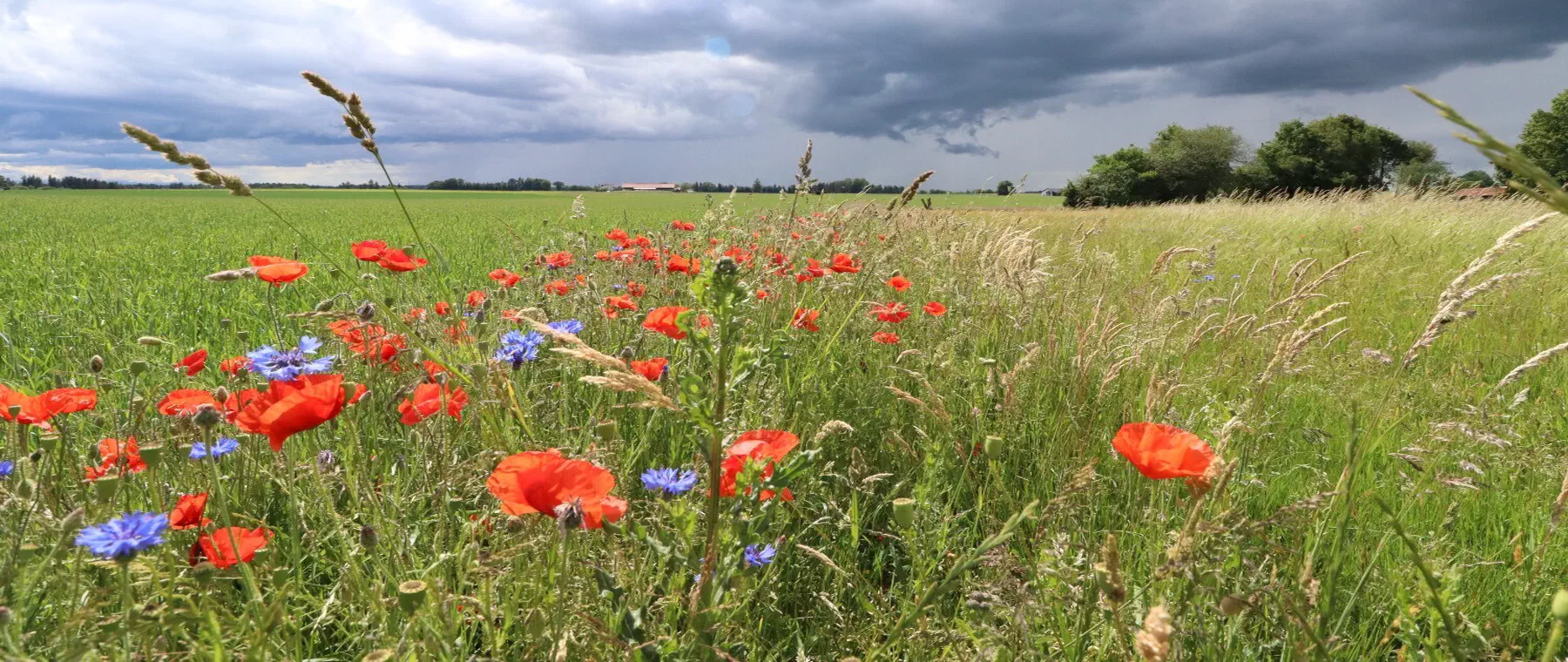
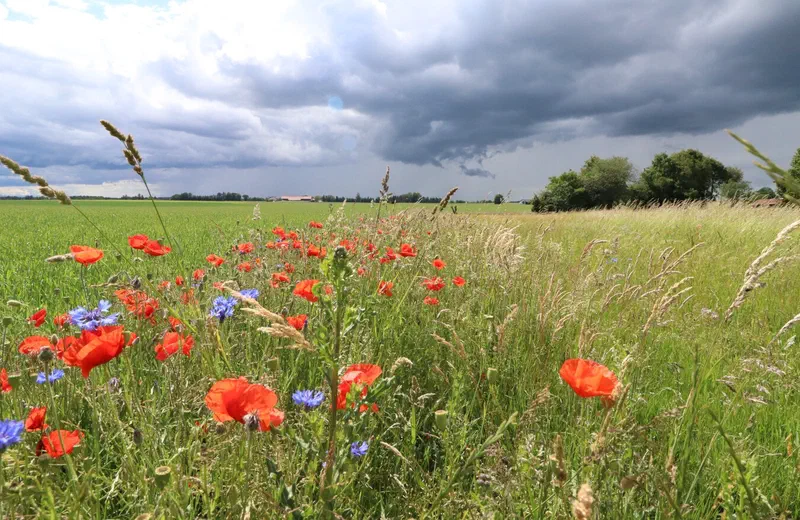
Skylark patches, flower and arable buffer strips and extensive management on the loess soils of the plains. This creates habitats for skylark, grey-headed bunting and grey partridge and simultaneously advance compensatory measures (CEF) for field-breeding birds.
Floodplain and grassland development
Extensification and rewetting of grassland at Oker, Altenau and Innerste, supplemented with shallow pools and flood channels. This creates breeding and feeding areas for northern lapwing and other meadow-breeding birds and a lasting compensation value.
Flowing water restoration
Removal of bank defences, self-dynamic watercourse development and floodplain fringes on Oker and tributary streams. This improves watercourse structure and habitats of kingfisher, fish and dragonflies.
Broadleaf forest and forest edge
Development of structured forest edges, enrichment with old and dead wood as well as conversion of coniferous forest to native broadleaf forest on Elm and Asse. This promotes bats, European wildcat and hazel dormouse.
Hedgerows and habitat network
Creation of new hedgerows, field copses and margins in the denuded arable landscape. As stepping stones and guide structures, they network the uplands with river floodplains.
Species protection CEF and FCS
Replacement spawning waters for great crested newt and amphibians, sunny sand and stone structures for sand lizard and replacement roosts for bats, each coordinated with the lower nature conservation authority and documented under § 44 BNatSchG.
Protected species in the East Braunschweig uplands and Oker valley
Skylark and field birds
The skylark breeds on the wide arable areas of the plains and is regularly to be considered in the special species protection assessment. Skylark patches and flower and arable buffer strips act as advance compensatory measures (CEF) and secure its breeding sites.
About this species ›Northern lapwing in the Oker lowland
The northern lapwing uses wet hollows in arable and grassland of the floodplains as breeding site. Its breeding sites are protected under § 44 BNatSchG. Shallow pools, grassland extensification and nest protection support as CEF measures the endangered meadow-breeding bird.
About this species ›European wildcat in the Elm
The limestone beech forests of the Elm harbour a well-known population of the European wildcat, which is strictly protected under Annex IV of the Habitats Directive. Structured forest edges, dead wood and unfragmented forest complexes are decisive for the species.
About this species ›Bats of the beech forests
In the old beech stands of Elm and Asse, several strictly protected bat species hunt and roost, including Bechstein's bat and greater mouse-eared bat. Retention of cavity trees as well as replacement roosts and guide structures safeguard their ecological function.
About this species ›Great crested newt and amphibians
The great crested newt is strictly protected under Annexes II and IV of the Habitats Directive and spawns in sunny, fish-free small water bodies of floodplains and arable land. Creation and management of networked replacement spawning waters secure its populations (CEF).
About this species ›Kingfisher on Oker and Innerste
The kingfisher inhabits near-natural sections of Oker, Altenau and Innerste and depends on steep banks for breeding burrows. Restored bank erosion and structured watercourse courses create lasting breeding habitats.
About this species ›Which projects trigger a compensation obligation?
Transport and infrastructure
Motorways and federal roads (A36, A395, B79, B82), bypasses and maintenance and expansion of railway lines in the Braunschweig area regularly trigger compensation and replacement obligations. greeNature supplies suitable compensation land and undertakes authority consultation.
Energy transition and network expansion
Repowering of wind energy installations on open loess plains, utility-scale photovoltaic facilities and supra-regional power lines create compensation requirements and frequently species protection requirements (CEF and FCS) for field and birds of prey.
Raw material extraction and agro-industry
Stone and lime extraction at the uplands as well as agro- and food industry facilities (sugar beet processing, grain industry) lead to impacts to be compensated under the impact mitigation regulation.
Settlement and commercial development
Residential and industrial areas around Wolfenbüttel and in the surrounding area of the Braunschweig region require nature conservation compensation. Landowners with suitable areas can participate as land providers.
From enquiry to monitoring
Contact and enquiry
Tell us your compensation requirement and the natural region. We check availability.
Offer and advice
A transparent offer covering measure types, scope and availability.
Coordination with authorities
Full coordination with the lower nature conservation authority. We handle everything.
Long-term monitoring
Permanent securing of the land, management and documentation across the contract term.
Eco-points in adjoining districts
All about eco-points
in the district of Wolfenbüttel
Request eco-points in the district of Wolfenbüttel
We will promptly prepare a transparent offer with matching eco-points held in stock in the district of Wolfenbüttel.