Eco-points and compensation areas
District of Schaumburg
Legally sound compensation in Schaumburg District under Lower Saxon nature conservation law. greeNature accompanies project developers from impact assessment through to recognition of compensation areas and determines compensation requirements using the biotope value procedure, coordinated with the lower nature conservation authority in Stadthagen.
The District of Schaumburg at a glance
Schaumburg District is located in central Lower Saxony west of Region Hannover and covers approximately 676 km² with around 156,000 residents. District seat and administrative centre is Stadthagen. The district is divided into five unitary municipalities and seven combined municipalities, comprising 38 cities and municipalities. Lower Saxony no longer has administrative districts, compensation is governed by state and federal law.
Geographically, Schaumburg is divided in two. The south belongs to the Weser-Leine Highlands (BfN major natural region D36) with the wooded uplands of Bückeberge, Weser Hills, Süntel and Deister and the Weser near Rinteln. The north is situated in the Weser-Aller Lowlands (BfN major natural region D31) with the large forest area of Schaumburg Forest and the lowlands towards Steinhuder Lake.
Ecologically distinctive are the Schaumburg Forest FFH site and EU Special Protection Area, the Süntel, Weser Hills and Deister FFH site and the Meerbruchswiesen nature reserve on the edge of Steinhuder Lake. The floodplains of Bückeburg Stream and Rodenberg Stream connect the highlands with the lowland and form important corridors for the habitat network.
Compensation requirements arise mainly along the Federal Motorway 2, on federal roads B65, B83 and B238, on the Hannover to Minden railway line as well as through wind energy, photovoltaics, raw material extraction and settlement development in Stadthagen, Bückeburg and Rinteln. greeNature operates nationwide and knows Lower Saxon impact mitigation regulation and NLWKN working guidelines from practical experience.
🗺️ Associated natural regions
Go to natural region D36 ›
Go to natural region D32 ›
📍 Selected municipalities
🌿 Ecological features
- FFH site 340 and EU Special Protection Area V67 Schaumburg Forest, large-scale near-natural forest of the Loccum Geest
- FFH site 112 Süntel, Weser Hills and Deister with beech forests and limestone rock sites
- Meerbruchswiesen nature reserve at Steinhuder Lake, meadow-breeding bird and roosting bird habitat
- Wooded uplands of Bückeberge, Weser Hills and Süntel as refuge area for the European wildcat
- Floodplains of Bückeburg Stream and Rodenberg Stream as flowing water and habitat network corridors
- Weser in the south near Rinteln, habitat for kingfisher and fish fauna
- Numerous nature and landscape conservation areas, predominantly contiguous forest areas
✅ greeNature on the ground
greeNature works nationwide and accompanies compensation projects in Lower Saxony under the impact mitigation regulation of §§ 13 to 15 BNatSchG, specified by the Lower Saxon Implementing Act (NAGBNatSchG). Assessment uses the biotope value procedure using eco-points in accordance with NLWKN working guidelines. We undertake consultation with Schaumburg District's nature conservation office in Stadthagen, land securing and documentation.
Typical measures in the district of Schaumburg
Floodplain and watercourse restoration
Near-natural conversion of Bückeburg Stream, Rodenberg Stream and Weser sections, creation of riverbank buffer strips and oxbows as habitat for kingfisher, fish and dragonflies.
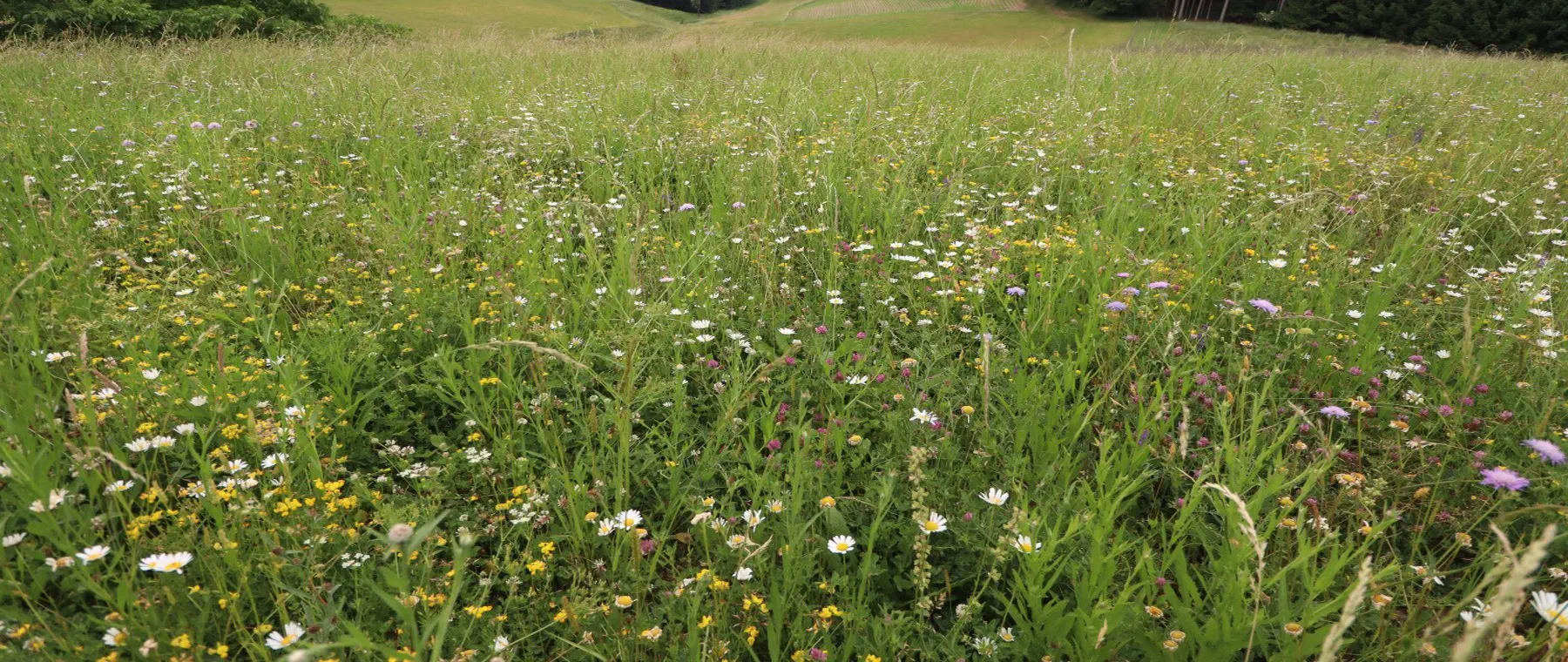
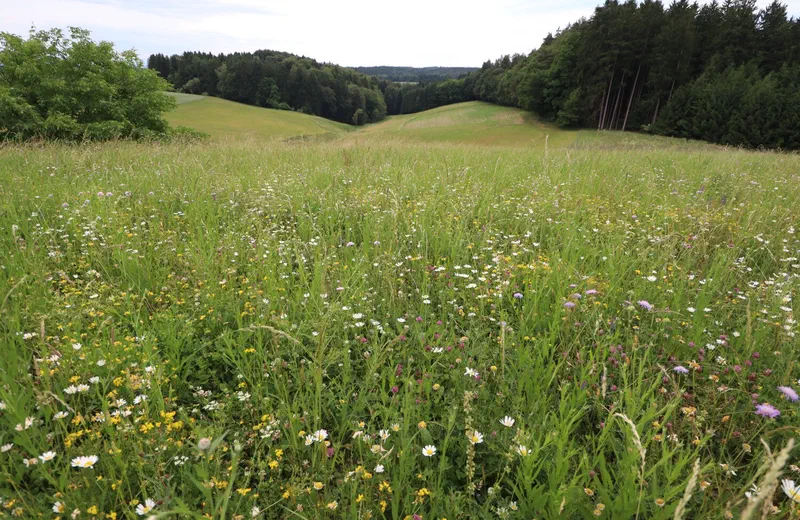
Meadow-breeding birds and grassland extensification
Extensification of wet grassland in the Meerbruchswiesen and stream floodplains, adapted mowing and rewetting for northern lapwing and other meadow-breeding birds.
Near-natural forest development
Conversion of coniferous plantations to site-appropriate broadleaf mixed forests in Schaumburg Forest, the Weser Hills and Süntel, enrichment with dead wood and habitat trees for bats and hazel dormouse.
Species protection CEF and FCS
Advance compensatory measures under § 44 BNatSchG, such as stone ridges and sunny margins for sand lizard on railway embankments and excavations and replacement roosts for bats.
Small water bodies and amphibian protection
Creation and restoration of spawning waters in forest edge locations for great crested newt and other amphibians, networking with existing wetland biotopes in the highlands.
Hedgerows and habitat network
Creation of hedgerows, field copses and arable margin strips in the denuded loess-plain areas as stepping stones for skylark, grey partridge and brown hare.
Protected species in the Schaumburg region between the Weser Hills and Steinhuder Lake
Northern lapwing
The northern lapwing breeds in the wet meadows of Meerbruchswiesen and the stream floodplains. Rewetting and extensive grassland management are typical measures for stabilising populations.
About this species ›Kingfisher
On the Weser, Bückeburg Stream and Rodenberg Stream, the kingfisher finds steep banks and fish-rich watercourses. Riverbank restoration and creation of cliff edges promote suitable breeding sites.
About this species ›Bats
The old beech and oak forests in Süntel, Weser Hills and Schaumburg Forest provide roosts for forest-dwelling bat species. Habitat trees and replacement roosts secure the nursery colonies.
About this species ›Sand lizard
Railway embankments, excavations and sunny margins are home to sand lizard. For impacts, advance compensatory measures (CEF) with replacement habitats are regularly required.
About this species ›European wildcat
The European wildcat is spreading northwards from the highlands and has reached Süntel and Weser Hills. Near-natural forest edges and low-disturbance connectivity corridors are decisive for its expansion.
About this species ›Great crested newt
The great crested newt is documented in wetland biotopes of the Süntel, Weser Hills and Deister FFH site. New and restored spawning waters in forest surroundings secure its breeding sites.
About this species ›Which projects trigger a compensation obligation?
Transport and infrastructure
Motorway 2 crosses the district with several junctions, plus federal roads B65, B83 and B238 and the Hannover to Minden railway line. Expansion, bypass and maintenance measures regularly trigger compensation and replacement obligations.
Wind energy and photovoltaics
Wind priority areas in the regional spatial planning programme and utility-scale photovoltaic require nature conservation compensation and species protection assessments, such as for birds of prey and bats.
Raw material extraction
Sandstone and gravel extraction, including the famous Obernkirchen sandstone and excavations in the Weser floodplain, are linked to compensation requirements and reclamation conditions.
Settlement and commerce
Residential and industrial areas in Stadthagen, Bückeburg and Rinteln create impacts on soil and green structures. Landowners with suitable land can participate as providers of eco-account land.
From enquiry to monitoring
Contact and enquiry
Tell us your compensation requirement and the natural region. We check availability.
Offer and advice
A transparent offer covering measure types, scope and availability.
Coordination with authorities
Full coordination with the lower nature conservation authority. We handle everything.
Long-term monitoring
Permanent securing of the land, management and documentation across the contract term.
Eco-points in adjoining districts
All about eco-points
in the district of Schaumburg
Request eco-points in the district of Schaumburg
We will promptly prepare a transparent offer with matching eco-points held in stock in the district of Schaumburg.