Eco-points and compensation areas
District of Region Hannover
Region Hannover combines the densely populated conurbation of the state capital with wide loess plain landscapes, the Leine floodplain and the geest in the north. For impacts on nature and landscape, we plan and secure natural-region-appropriate compensation under Lower Saxon law, from assessment using the biotope value procedure through to permanent land management.
The District of Region Hannover at a glance
Region Hannover is a municipal association of special type and comprises the state capital Hannover and twenty further cities and municipalities. On approximately 2,300 square kilometres, around 1.17 million people live, making the region one of the most densely populated administrative regions in Lower Saxony.
Geographically, the region extends from the fertile loess plains in the south through the Leine valley to the geest and bogs in the north. In the south-west, the forested Deister shapes the landscape, in the north-west Steinhuder Lake as the largest inland lake in the state.
The high settlement and infrastructure pressure in the vicinity of the state capital regularly leads to impacts, for which compensation must be provided under the impact mitigation regulation. At the same time, floodplains, grassland and bog locations offer good conditions for high-quality compensation measures.
Responsible for enforcement of nature conservation law is the lower nature conservation authority of Region Hannover, which assesses impacts and maintains compensation areas in the compensation register.
🗺️ Associated natural regions
Go to natural region D32 ›
Go to natural region D36 ›
📍 Selected municipalities
🌿 Ecological features
- Steinhuder Lake in the north-west is the largest inland lake in Lower Saxony, EU Special Protection Area and core of the nature park of the same name.
- On the region's territory lie 27 FFH sites and one EU Special Protection Area, which are part of the European Natura 2000 network.
- The Leine floodplain FFH site between Hannover and Ruthe protects floodplain forest remnants, calcareous tufa springs and near-natural flowing water sections of the Leine.
- The Deister forms as a wooded upland in the south-west a natural contrast to the open loess plains and the Leine lowland.
- In the north, the Hannover bog geest extends with raised bog remnants, whose rewetting is of high nature conservation importance.
- Approximately half the region's area is under landscape or nature conservation protection, which makes planning and location of compensation demanding.
✅ greeNature on the ground
greeNature operates nationwide and manages compensation projects also in Region Hannover. We undertake impact assessment using the biotope value procedure customary in Lower Saxony, develop natural-region-appropriate compensation and replacement measures and coordinate these with the lower nature conservation authority. From the first specialist assessment through securing suitable land to long-term management and monitoring, we accompany project developers throughout the process. We work along NLWKN working guidelines and consider species protection requirements of special species protection.
Typical measures in the district of Region Hannover
Floodplain and grassland development
Extensification and rewetting of grassland in the Leine floodplain, to restore and upgrade wet habitats and retention areas.
Small water bodies and amphibian biotopes
Creation of sunny still waters and spawning waters, which serve species such as great crested newt as habitat and create stepping stones in the habitat network.
Arable extensification for field birds
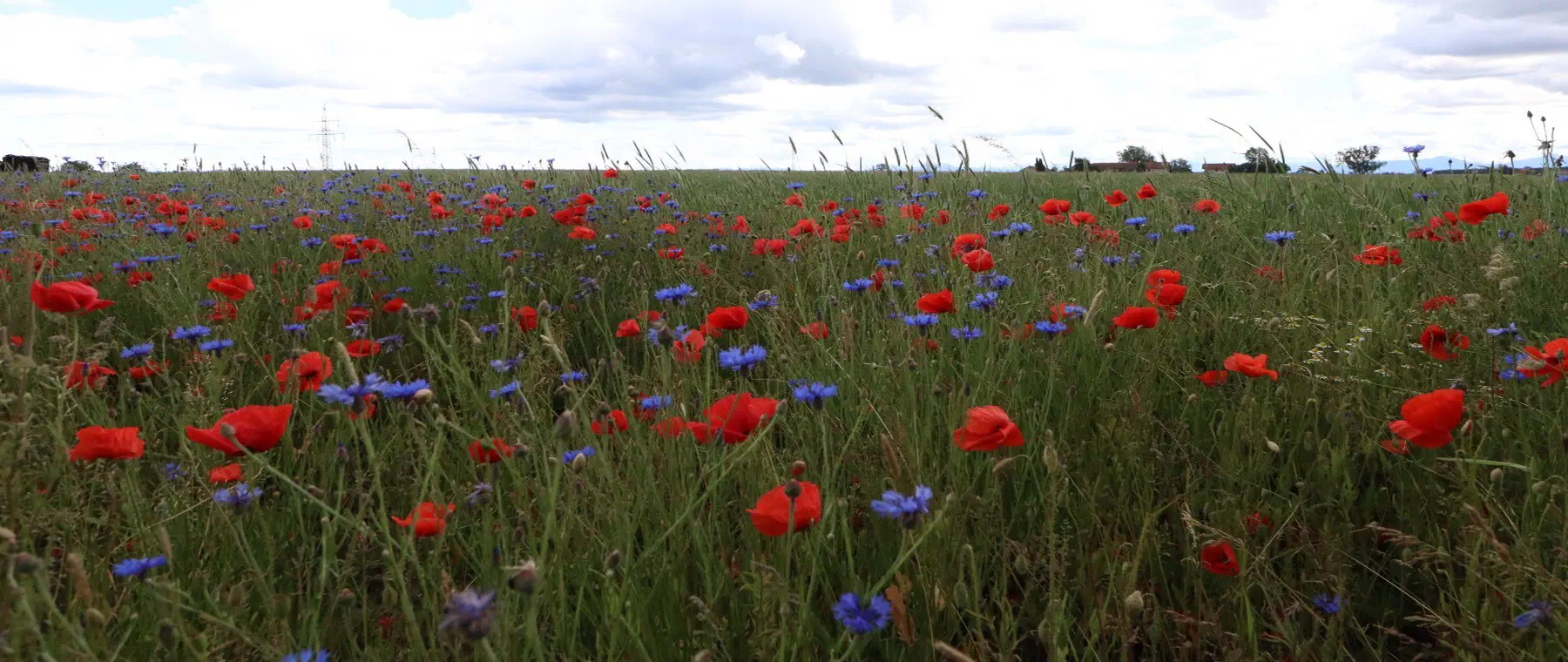
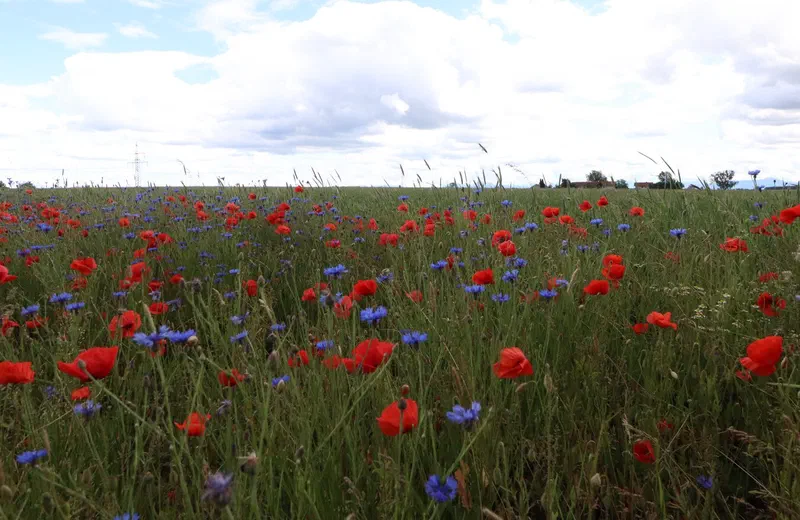
Conversion of intensively used arable areas in the loess plains to flower areas and extensive grassland for skylark and northern lapwing.
Bog restoration on the geest
Rewetting of drained raised bog remnants in Hannover bog geest for regeneration of peat-forming vegetation and climate protection.
Forest conversion and forest edges
Development of structured, site-appropriate broadleaf forests and tiered forest edges in the Deister and other forest areas of the region.
Watercourse restoration
Removal of riverbank defences and creation of watercourse buffer strips on Leine, Innerste and flowing waters, which provide habitat for kingfisher.
Protected species in the Leine valley, Calenberg loess plains and geest around the state capital
Skylark
The skylark breeds in the open loess plains and agricultural landscapes of the region. As a species of open arable land, it benefits from extensively managed areas and flower strips, which are deliberately created in compensation measures.
About this species ›Northern lapwing
The northern lapwing inhabits wet grassland and lowlands, such as in the vicinity of Steinhuder Lake and the Leine floodplain. It depends on open, little-disturbed breeding habitats, which are promoted by rewetting and extensification.
About this species ›Kingfisher
At near-natural flowing waters such as the Leine, the kingfisher finds cliff walls for breeding and clear waters for hunting. Watercourse restoration directly improves living conditions.
About this species ›Great crested newt
The great crested newt, protected under Habitats Directive law, requires fish-free still waters with rich underwater vegetation. Newly created small waters in networks secure its populations.
About this species ›Bats
Several strictly protected bat species use forests, waters and settlement margins of the region as hunting and roost habitat. In impacts, roosts must be examined under § 44 BNatSchG and if necessary replaced by advance measures.
About this species ›Sand lizard
The sand lizard inhabits sun-exposed slopes, railway embankments and sand-dry grassland of the geest. Advance compensatory measures (CEF) with habitat creation and relocation are frequently considered for this species.
About this species ›Which projects trigger a compensation obligation?
Settlement and housing
New residential and commercial areas in the Hannover conurbation lead to land sealing and trigger compensation requirements under the impact mitigation regulation.
Transport infrastructure
Expansion and new construction of federal motorways, federal roads and rail links at the Hannover junction require compensation and replacement measures.
Raw material extraction
Extraction of gravel and sand, particularly in the Leine lowland, is linked to impacts that must be professionally assessed and compensated.
Renewable energy
Wind energy installations and utility-scale photovoltaic occupy areas and landscape image and entail species protection assessments and compensation.
From enquiry to monitoring
Contact and enquiry
Tell us your compensation requirement and the natural region. We check availability.
Offer and advice
A transparent offer covering measure types, scope and availability.
Coordination with authorities
Full coordination with the lower nature conservation authority. We handle everything.
Long-term monitoring
Permanent securing of the land, management and documentation across the contract term.
Eco-points in adjoining districts
All about eco-points
in the district of Region Hannover
Request eco-points in the district of Region Hannover
We will promptly prepare a transparent offer with matching eco-points held in stock in the district of Region Hannover.